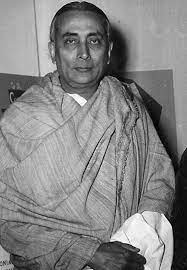
In this seminal book, written in 1938, Tagore develops the Leninist perspective of the revolution in a backward country like India. Opposing the Stalinist conception of a two-stage revolution—first the democratic revolution under the leadership of the bourgeoisie, and then the Socialist revolution under proletarian leadership, he points out that such a concept is basically a Menshevik one. The bourgeoisie are incapable of leading the democratic revolution to its logical conclusion. In the epoch of declining imperialism, the proletariat must take upon itself the leadership of the democratic revolution. In fact, the democratic revolution can only be completed by putting the proletariat in power. Thus, the democratic revolution grows into socialist revolution, which in turn consolidates the gains of the democratic revolution. (—Sudarshan Chattopadhyaya)
At present, we are passing through a phase which can well bear comparison with that period in Russia which was known as the period of “Legal Marxism”. Marxian shorn of its revolutionary content has become a fashion. Intellectuals, professors, students and litterateurs—all are decorating their talk with Marxist phraseological trimmings to prove how progressive they are. One comes across the names of Marx, Engels and Lenin in places where a few years back these were taboo.
This change signifies two things. First, in the last few years revolutionary Marxism has made its influence increasingly felt in this country not only because of its ever-growing importance in international politics, but also because of its manifestation in India as evidenced by the growth of the militant working class movement. This has convinced the Indian bourgeoisie, however much it may seem repugnant to their sensitive cultured “soul”, that revolutionary Marxism has come to stay, and that it would be better in their own interest to recognise this fact.
Secondly, it also reflects a new political manoeuvre against communism by the bourgeoisie. Admitting that revolutionary Marxism has established itself in India, the bourgeoisie have launched a new line of attack. In addition to their old method of direct assault, the Indian bourgeoisie, through show of sympathetic consideration of Marxism, try to vulgarise it and transform it into a respectable evolutionary theory, thus making Marxism suitable for “cultured” society by clipping its revolutionary wings.
This is exactly what happened in Russia when “Legal Marxism” flourished and this is exactly what is happening in India today when “Marxism” is being preached in order to combat Marxism.
One such Marxian concept, which has lately become the target of attack by the petty bourgeois exponents of Marxism, such as the “Congress-Socialists”, the “Congress-Communists” of the C.P.I. brand and the Royists, is the Marxian theory of the bourgeois-democratic revolution.
We are told by the “Congress-Socialists”, “Congress-Communists” and the Royists that the revolution in India, being a bourgeois-democratic revolution in character, must be carried out under the leadership of a petty-bourgeois party (a’ la M.N. Roy), and that as the revolution in India is bourgeois-democratic in content the Indian bourgeoisie still have a revolutionary role to play in that revolution (a’ la “Congress-Communists” of the C.P.I. and “Congress-Socialists”). It will be our task to examine critically these theoretical estimations of the bourgeois-democratic revolution, and to determine to where these petty-bourgeois opportunist distortions of the Marxian conception of the bourgeois-democratic revolution lead us. We have not taken upon ourselves this task because we have any intention of helping to extricate these fine gentlemen from the opportunist quagmire in which they have sunk. We have taken it up solely with the idea of opening the eyes of many a well-intentioned person who may unwittingly fall prey to the seductive tactics of these gentlemen who have already settled so comfortably in the foul-smelling marsh of political opportunism.
Since the time that human society was split up into antagonistic classes, revolution has been, and still remains till classless society is established, the only mechanism which brings about fundamental social and political transformations in human society. In the words of Marx: “Revolutions are the locomotives of history.”
But the motives and the forces of revolutions vary in different historical epochs. The modes of production prevalent in different historical epochs and the co-relation of class-forces that logically follow from it set specific historical tasks before each revolution.
Revolution is a class-concept. It is the irreconcilable class-antagonism at its climax. That class which in a particular historical period solves, for the time being, the contradiction between the forces of production and the existing social structure by the destruction of the old social order, by revolution, plays in that epoch the historical role of the leader of the revolution, and puts its unmistakable stamp on the entire social structure.
Since human society was split up into classes, there have been two social orders—the feudal and the capitalist. The transition from the feudal to the capitalist social order, which took place in Europe in the 18th and 19th centuries, was achieved through a series of revolutions which had for their main task the creation of the democratic base for the economic and social development of capitalism, and of which the leaders were the bourgeoisie of Europe. That is why, in Marxian terminology, this revolution has been called the bourgeois-democratic revolution. Likewise, the revolution which will sound the death-knell of capitalism and usher in the socialist order and of which the proletariat is the historically destined leader is known as the socialist or proletarian revolution. The historical tasks of the bourgeois-democratic revolution were the destruction of the feudal social order and the establishment of the capitalist social system. A bourgeois-democratic revolution presupposes the domination of land-owning nobility closely allied to the monarchy, the growth of the city bourgeoisie and the proletariat as a result of the industrial revolution, and the most miserable and virtually serf-like condition of the peasantry. The class-forces in feudal society are overwhelmingly in favour of the destruction of the feudal social order; the city bourgeoisie want the destruction of the feudal economy for their own class-interest and the peasantry wants it for the liberation of its class from savage exploitation and tyranny. The city proletariat needs it, as the destruction of feudalism creates the first democratic prerequisites for its growth as a social and political force. The bourgeoisie were the class which represented the capitalist mode of production unleashed by the industrial revolution, and as such their leadership in the bourgeois-democratic revolution was historically determined. The peasantry as the class was the worst sufferers under feudalism and constituted the driving force of the revolution. The newly sprung city proletariat, weak in numbers and weaker still organisationally and politically as a class, could at best play a minor role of the sympathiser of the bourgeoisie and the peasantry in the democratic revolution. The city middle class oppressed by the guild system under feudalism desired the end of feudalism. Thus, in the feudal era, the bourgeoisie, the urban and rural petty bourgeoisie and the proletariat represented the class-forces of the bourgeois-democratic revolution.
Thus, with the exception of the land-owning class to which the monarchy and the church belonged, all the other classes of feudal society had very definite class-interests in carrying out the bourgeois revolution. Capitalism can only develop rapidly under democracy; of course, under formal bourgeois democracy. Therefore, democracy caters to the need of the bourgeoisie. Democracy gives the peasantry the freedom from feudal tyranny and also opens out before it the possibilities of the fulfilment of its economic and social aspirations. Thus, democracy serves the class interest of the peasantry. Democracy further creates the socio-political basis on which the proletariat builds its class-organisation and gets the chance to broaden and deepen its class-consciousness, and finally democracy lends itself as the spring board from which the proletariat takes the leap to socialism. So, in the period of the bourgeois-democratic revolution, the bourgeoisie, the peasantry and the proletariat express their united will on the question of democracy. And as these classes constitute in their aggregate the overwhelming majority of the nation, the bourgeois-democratic revolution can be said to assume a “national” character. This constitutes one of the fundamental characteristics of the bourgeois revolution. The socialist revolution can never assume this “national” character. According to Lenin: “To forget this would be tantamount to forgetting the logical and historical difference between a democratic revolution and a socialist revolution. To forget this would mean forgetting the national (Lenin’s emphasis) character of the democratic revolution; if it is national it means that there must (Lenin’s emphasis) be ‘unity of will’ precisely insofar as this revolution satisfies the national needs and requirements.” (Two Tactics of Social Democracy in the Bourgeois-democratic Revolution)
Thus, according to Lenin, the “unity of will” of the various classes (with the exception of the feudal class) forming the feudal society on the question of democracy, lends a “national” character to the bourgeois-democratic revolution.
The French Revolution of 1789, which is the classical example of a bourgeois-democratic revolution, fully bears out the Leninist conception of the “unity of will” of the various classes in the bourgeois-democratic revolution and the “national” character of the bourgeois revolution.
The same “national” character of the bourgeois revolution has been emphasized by Marx when writing in Die Neue Rheinische Zeitung in 1848. He said: “On August 4, 1789, three weeks after the storming of the Bastille, the French people (mark the word “people”—S. T.) in a single day prevailed over all the feudal services.” Here the word “people” has been used to emphasise the “national” character of and the “unity of will” in the bourgeois revolution.
Lenin has defined the “people” as “that multitudinous, petty bourgeois, urban and rural stratum, which is quite capable of acting in a revolutionary democratic manner and the proletariat” (Social Democracy and the Provisional Revolutionary Government)
So far we have dealt with the historical background and the significance of the bourgeois-democratic revolution in the period of feudalism. We have seen that the task of this revolution is to create the democratic basis for the growth of capitalism which could not grow unless the peasantry was freed by the revolution from the shackles of feudalism, as “the foundation for the complete accomplishment of a democratic revolution is the creation of a free class of peasants.” (Lenin)
Our analysis has shown that in the feudal epoch, the bourgeoisie were the leader and the peasantry was the “most natural allies” (Marx) in the bourgeois revolution. Moreover, our analysis has made clear to us the significance, the class-content and the co-relation of the class-forces of the bourgeois revolution.
Let us now consider the problem of the bourgeois-democratic revolution in the period of imperialism. The historical task of the bourgeois revolution remains the same under imperialism as it was in the period of feudalism, namely the destruction of the relics of the feudal economy still existing in the capitalist economy, hampering its growth, by the overthrow of the autocratic feudal regime. But the co-relation of forces, the class-forces of the bourgeois revolution, is not the same as it was under feudalism. The economic and political character of imperialism is responsible for the new alignment of class-forces. In the feudal epoch, the bourgeois-democratic revolution meant the beginning and growth of capitalism and the opening up of the possibility for the bourgeoisie to rule as a class for the first time. In this epoch, the bourgeoisie, the whole of the bourgeoisie, still had a revolutionary role to play, and, in fact, in the feudal period, the leadership of the revolution was in the hands of the bourgeoisie.
But in the imperialist epoch, the economic and social forces are entirely different. The imperialist epoch is not the epoch of the rise of capitalism. It is the epoch of capitalism’s decline. It is the epoch when capitalism, passing through the various phases of its development, has reached the last phase, its final stage. Under imperialism, the bourgeoisie are not the class to which the bourgeois revolution will give the possibility of ruling as a class for the first time. Even in those countries where the bourgeois revolution has not been completed due to historical reasons, the bourgeoisie are already a ruling class, though they may have to share power with the nobility. Therefore, the bourgeoisie in the imperialist epoch cannot be a revolutionary class, even in the bourgeois-democratic sense, and, therefore, in no case can they lead the revolution. In this epoch, the bourgeois revolution cannot have the support of the whole of the bourgeoisie. According to Lenin, the democratic revolution “marks the very period in the progress of society in which the mass of society stands, as it were, between the proletariat and the bourgeoisie and constitutes an immense petty bourgeois peasant stratum. Precisely because the democratic revolution has not yet been completed, this immense stratum has far more interest in common with the proletariat in the task of establishing political forms than have the ‘bourgeoisie’ in the real and strict sense of the word.” (Social Democracy and the Provisional Revolutionary Government)
Lenin wrote these lines in April, 1905; that is, at a period when imperialism had not entered the stage of perennial crisis which has engulfed it since 1914. It was still in a period of ascending capitalism. Even in that period, Lenin found that the “bourgeoisie in the real and strict sense of the word”, could have no interest in the democratic revolution. It is obvious that Lenin had the big bourgeoisie in mind when he talked of “the bourgeoisie in the real and strict sense of the word”. Indeed, leave alone the question of being the leader of the bourgeois revolution in the period of imperialism, the big bourgeoisie cannot even be a factor in the bourgeois revolution.
And why? Because in the imperialist epoch, the land is not exploited under strictly feudal forms of exploitation. The penetration of capitalism in the village has made the principal method of land exploitation predominantly capitalist. Land is alienable and is a commodity in the market exactly like any other commodity. It is mortgageable and debt-laden. Bank capital (finance capital) has poured into the land and transformed the character of land-economy. The bourgeoisie have got a stake in the land and the bourgeois revolution jeopardises their interests not a whit less than those of the land-owning nobility. The bourgeois-democratic revolution of 1789 in France, which destroyed the feudal tenure, was entirely in the interest of the bourgeoisie. But the belated bourgeois revolution in backward countries, under imperialism, could not be wholly in the interest of the bourgeoisie for the reasons already stated. Therefore, the bourgeoisie, in order to save their own skin, are always keen on compromise with autocracy. Autocracy is necessary for the preservation of their class-interest. The logic of imperialist development has turned the bourgeoisie, the leader of the bourgeois revolution in the feudal epoch, into a force against the democratic revolution in the imperialist epoch.
This is exactly what Lenin had in mind when, as early as 1905, he wrote: “Surely, we Marxists, must not allow ourselves to be deluded by words, such as ‘revolution’ or ‘the great Russian revolution,’ as many revolutionary democrats (of the type of Gapon) do. We must be perfectly clear in our own minds as to what real social forces are opposed to ‘Tsarism’ (which is a real force, perfectly intelligible to all) and are capable of gaining a decisive victory over it. Such a force cannot be the big bourgeoisie, the landlords, the manufacturers (My emphasis, S. T.). We see that these do not even want a decisive victory. We know that owing to their class position they are incapable of undertaking a decisive struggle against Tsarism: they are too greatly handicapped by the shackles of private property, capital and land to venture a decisive struggle. Tsarism with its bureaucratic police and military forces is far too necessary for them in their struggle against the proletariat and the peasantry for them to strive for the destruction of Tsarism.” (Two Tactics of Social Democracy in the Democratic Revolution).
Here we should do well to take note of the fact that the unity of will’ in the democratic revolution and the national character of the bourgeois revolution, considered by Lenin as characteristics of the bourgeois revolution, no longer constitute the characteristic features of the bourgeois revolution in the imperialist epoch. In the imperialist epoch, the bourgeoisie, the urban and rural petty bourgeoisie and the proletariat cannot display that “unity of will” in the question of democracy, the big bourgeoisie, having already turned against democracy. For the same reason, the fight for democracy loses its “national” character in the imperialist era.
Therefore, when our Mensheviks, our Khovostists (tailists), that is to say, our “Congress-Communists” of the spurious “C.P.I.” talk of the Indian bourgeoisie still having a revolutionary role to play because our revolution is a bourgeois revolution, shall we be wrong in calling them hanger-on of the bourgeoisie just as the Russian Mensheviks were to the Osvobozhdeniyeists (the Russian liberal bourgeoisie)? Shall we be wrong in saying that they are “playing into the hands of the bourgeois democracy (Lenin), “confusing the national political slogans of the revolutionary proletariat with those of the … bourgeoisie” (Lenin), that, in short, they are following a policy of khovostism (tailism) and are limping behind the bourgeoisie?
No, the bourgeoisie cannot play any revolutionary role in the bourgeois-democratic revolution in the epoch of decaying capitalism. They have definitely gone over to the camp of reaction. Their support of democracy has always been inconsistent, and, in the imperialist age, they have travelled the path from their earlier inconsistent support to their present consistent opposition to democracy. They no longer constitute a force for the democratic revolution. The proletariat, the urban petty bourgeoisie and the peasantry constitute the main forces of this revolution. In the words of Lenin: “Only the people, (Lenin’s emphasis) can constitute a force capable of gaining ‘a decisive victory over Tsarism’; in other words, the proletariat and the peasantry, if we take the main, big forces and distribute the rural and urban petty bourgeoisie (also falling under the category of ‘people’) between both of the two forces.” (Two Tactics of Social Democracy in the Democratic Revolution).
But that is not all. The leadership of the bourgeois revolution in the epoch of imperialism is in the hands of the only consistently democratic class—the proletariat. The proletariat is the only class which supports and fights for democracy throughout its existence as a class. It is democratic both in the bourgeois-democratic sense in the period of the bourgeois revolution, and it is also democratic in the socialist sense in the period of the socialist revolution. It alone as a class has the necessity of fighting for the formal bourgeois democracy. It has also the necessity of transforming this formal bourgeois democracy into socialist democracy through the instrumentality of the socialist revolution. And finally it will make democracy itself, that is to say, the democratic state, superfluous.
The peasantry supports democracy only so far as it acts as a weapon against feudalism, and stops on the threshold of the formal bourgeois democracy of the bourgeois republic and can go no further. In the past, it needed the formal bourgeois democracy to fight against feudalism. At the present time, it needs the same formal democracy to fight the proletariat and socialism. Its democracy goes that far and no further. The democracy of the peasantry can never break away from its bourgeois class-mooring. The peasantry as the intermediary class has never represented the new productive forces of society either under feudalism or under capitalism. In feudal society, it was the bourgeoisie which represented as a class the new capitalist forces of production. Just as in capitalist society, it is the proletariat which represents the new forces of production. The peasantry having never represented the growing forces of production, cannot assume the role of leadership of the democratic revolution. The role of that leadership in the imperialist epoch falls to the proletariat. The question as to which class shall be the leader of a belated bourgeois-democratic revolution is one of the fundamental questions that faces us today.
Both MN Roy and the “Congress-Socialists” have maintained that the petty bourgeoisie shall assume the leadership of the bourgeois-democratic revolution in India. This, as we have seen, is a conclusion wholly unwarranted by the history of revolutions and by the tenets of Marxism. This mongrel political “theory” of M.N Roy and the “Congress-Socialists” reflects unerringly its petty bourgeois class-root.
Says Lenin: “The issue of the revolution depends on whether the working class will play the part of auxiliary to the bourgeoisie which is powerful in its onslaught against the autocracy, but impotent politically (My emphasis—S. T.); or the part of the leader of the people’s revolution.” (Two Tactics of Social-Democracy in the Democratic Revolution).
Here, of course, it is obvious that by “people’s revolution” Lenin means the bourgeois-democratic revolution. The bourgeoisie are “impotent politically in the bourgeois revolution in the imperialist epoch. But the role of the bourgeoisie in the bourgeois revolution must not be judged only in its negative aspect; in its positive aspect, the bourgeoisie are counter-revolutionary and supporter of autocracy. Their support of the revolution is only in the nature of an onslaught against autocracy, nothing more; and in this also the bourgeoisie are not consistent. They attack autocracy only to strike a bargain with it, only to compromise with it.
This estimation of the role of the bourgeoisie in the democratic revolution in the imperialist era prompted Lenin to express the opinion that we, Marxists, know from our theories and from daily and hourly observations of our liberals, Zemstvo Councillors and followers of Osvobozhdeniye, that the bourgeoisie are inconsistent, selfish and cowardly in their support of the revolution. The bourgeoisie, in the mass, will inevitably turn towards counter-revolution, towards autocracy, against the revolution and against the people, immediately their narrow selfish interests are met, immediately they ‘deserts’ consistent democracy. (They are already deserting it).” (Two Tactics of Social-democracy in the Democratic Revolution)
But exactly here is the rub. Our “Congress-Communists”, like the Russian Mensheviks who allotted a revolutionary role to the Russian bourgeoisie the in the democratic revolution, have very graciously allotted the same role to the Indian bourgeoisie in the coming bourgeois-democratic revolution in India. Therefore, the Indian bourgeoisie must not be frightened out of their wits by the political slogans of the proletariat. The Indian bourgeoisie through the Congress, their class-organisation, must lead the revolution and the proletariat must remain content with just playing the role of a political pressure apparatus on the bourgeoisie and nothing more.
This extreme vulgarisation of Marxism is nothing new. Our “Congress-Communists” cannot lay claim to any originality. The Russian Mensheviks are their ideological and historical predecessors. Only with this difference that if at the beginning of this century, illusions regarding the role of the Russian bourgeoisie in a democratic revolution could be possible, though, in our opinion, it was possible only because of the opportunism of the Russian Mensheviks. It is not possible for anyone who has anything understanding of Marxism to nurse the same illusions in 1938, in the period of deep, insoluble crisis of imperialism, and in the era of the socialist revolution.
In 1905, in the period of imperialist expansion, Lenin analysed the political forces in Russia and found the Russian bourgeoisie were turning towards autocracy and the counter-revolution. But in this epoch of the socialist world revolution, our “Congress-Communists” have discovered hidden revolutionary qualities in the Indian bourgeoisie. Therefore, in order not to lose this newly recruited ally of the “Congress-Communists” in the coming bourgeois-democratic revolution, we are advised to become the tail of the Congress. Ours is a bourgeois-democratic revolution, therefore, the bourgeoisie have still their revolutionary role to play and we must carry this class along with us and must not make it panicky with the national revolutionary slogans of the proletariat—such is the policy of the “Congress-Communists”.
Exactly the same attitude was adopted by the Russian Mensheviks towards their “own” bourgeoisie and towards the democratic revolution. Lenin waged a merciless struggle against this vulgarisation of Marxism. Criticising the Mensheviks, Lenin wrote: “One of the two things, gentlemen: either we, together with the people, strive to bring about the revolution and obtain complete victory over Tsarism inspite of (Lenin’s italics) the inconsistent, selfish and cowardly bourgeoisie, or we do not accept this ‘inspite of,’ we do fear that the bourgeoisie will desert’ the revolution. In the latter case we betray the proletariat and the people to the bourgeoisie, (my emphasis, S. T.) to the inconsistent, selfish and cowardly bourgeoisie.” (Two Tactics of Social Democracy in the Democratic Revolution).
In another place, Lenin writes: “The New Iskra-ists (i.e. the Mensheviks—S.T.) have learnt by rote that the economic basis of the democratic revolution is the bourgeois revolution and ‘understood’ this to mean that the democratic task of the proletariat must be degraded to the level of the bourgeois moderation and must not exceed the boundaries beyond which the ‘bourgeoisie will desert’. On the pretext of deepening their work, on the pretext of rousing ‘the initiative of the workers’ and defending a pure class-policy, the Economists, in fact, delivered the proletariat into the hands of the liberal bourgeois politicians … the new Iskra-ists on the same pretext are in fact betraying the interests of the proletariat in the democratic revolution to the bourgeoisie, i.e. leading the party along a path which objectively means that.” (Two Tactics of Social Democracy in the Democratic Revolution).
So far we have discussed the bourgeois-democratic revolution in the epoch of feudalism and in the period of expanding imperialism. Let us now see if in this period of perennial crises of imperialism, started by the Great War and deepened by the socialist revolution in Russia, and in this epoch of the world socialist revolution, the bourgeois-democratic revolution is going by default. Of course historically speaking, in certain countries due to certain specific conditions, a bourgeois-democratic revolution would, if one can so express, be an “end in itself” just as the French Revolution was an “end in itself” in the 18th century, or would it be a phase of the socialist revolution, which will accomplish the democratic task in passing, the duration of the phase depending to a large extent on the peculiar political situation existing in each country.
That school of thought which considers the bourgeois revolution in the period of declining capitalism and socialist revolution as an “end in itself” errs profoundly. The socialist revolution is the order of the day in our epoch and the party of the proletariat cannot accept the tasks of the bourgeois-democratic revolution as its main objectives. To suggest this is reactionary nonsense, born out of ignorance of the character of the revolutionary task that history allots to the proletariat to be fulfilled in the epoch of imperialism. That task is the socialist revolution, the destruction of capitalism and the establishment of the socialist society. The bourgeois-democratic revolution cannot be the historical task in our age; it was the task of the feudal era.
In countries such as India where the bourgeois-democratic revolution could not reach its logical climax due to certain extraneous factors such as the colonial policy of British imperialism, the unfinished tasks of the bourgeois revolution have to be taken up and completed by the proletariat in the process of carrying out the socialist revolution. The bourgeois revolution will be a link in the chain of the socialist revolution, which will accomplish the belated democratic task of the bourgeois revolution. This immediate growing over from the bourgeois revolution to the socialist revolution, this unbroken continuity between them in the epoch of imperialism, and the growth and the ripening of the forces of the socialist revolution, distinguish the bourgeois revolution of the imperialist epoch from that of the feudal epoch.
In the feudal epoch, the bourgeois revolution was the goal, and an “end in itself” because society for a very long time to come could not go beyond the limits of the democratic content of the bourgeois revolution. In the imperialist epoch, the social forces necessary for smashing the bourgeois social order and for pushing the bourgeois democracy to its historical and logical end, namely the proletarian democracy, are ripe. It is necessary to analyse scientifically and to comprehend fully the nature of the central task that history has placed before us in this epoch. Then, one is sure to realise that the bourgeois-democratic tasks can only be minor ones which, in the course of its gigantic sweep, the socialist revolution will accomplish. The minimum programme of the revolutionary party of the proletariat covers entirely the task of the bourgeois revolution. At present, we may have to lay more stress on the fulfilment of this minimum programme than on the maximum programme, but we can never lose sight of the final objective of our revolution or consider a particular phase of our revolution which completes the minimum programme of the revolutionary proletariat as our final objective. Lenin has repeatedly warned us against a “movement without final aims”. Such a movement without final aims develops due to two causes—the underestimation of the revolutionary role of the proletariat and fear of the bourgeoisie.
Dealing with the question of the bourgeois-democratic revolution under the condition of imperialism, Lenin writes: “The liberation of the bourgeois Russia from Tsarism, from the land-power of the landowner, the proletariat will immediately (my emphasis—S. T.) utilise not to aid the prosperous peasants in their struggle against the village worker, but to complete a socialist revolution in alliance with the proletariats of Europe”. (Two Lines of Revolution).
Further, in his “The Proletarian Revolution and the Renegade Kautsky”, Lenin writes: “Things have turned out just as we said they would. The course taken by the revolution has confirmed the correctness of our reasoning. First, with ‘all’ the peasantry against the monarchy, the landlords, the medieval regime and to that extent, the revolution remains bourgeois-democratic, (my emphasis, S. T.) then, with the poorest peasants, with the semi-proletarians, with ‘all’ the exploited against capitalism, including the rural rich, the kulaks, the speculators, and to that extent the revolution becomes a socialist one. To attempt to raise an artificial Chinese wall between the first and the second revolutions, to separate them by anything else than the degree of preparedness of the proletariat and the degree of unity with the poor peasant is to seriously distort Marxism, to vulgarise it, to substitute liberalism in its stead.”
Our “Congress-Communists” have done exactly that which Lenin has so sharply warned us against. They have raised a Chinese wall between the bourgeois-democratic phase and the socialist phase of the socialist revolution in India and have separated them artificially and mechanically. They have thus distorted Marxism, vulgarised it and have substituted petty bourgeois liberalism in its stead.
On the problem of the bourgeois-democratic revolution under the conditions of imperialism, Stalin writes in his “Foundations of Leninism”: “When the overthrow of the survivals of the feudal-serf regime becomes impossible without a revolutionary struggle against imperialism—it needs hardly be proved that the bourgeois-democratic revolution, in a country more or less developed, should approximate to the proletarian revolution, (my emphasis-S.T.) that one should grow into the other … That this Chinese wall theory is totally devoid of scientific meaning under imperialism (mark the words “under imperialism”—S.T.) hardly needs to be proved: it is and can be only a means of concealing and camouflaging the counter-revolutionary aspirations of the bourgeoisie.” (my emphasis—S.T.)
Under imperialism, there is but one revolution, the socialist revolution which insofar as in its first phase fights “with ‘all’ the peasantry against the monarchy and the landlords, the medieval regime, to that extent it remains bourgeois-democratic.” If one suggests more than this, if one attempts to show, that under imperialism, the bourgeois-democratic revolution is anything more than a phase of the socialist revolution, then according to Lenin “he vulgarises and distorts Marxism and substitutes liberalism in its stead,” and according to Stalin, such an attempt “can be only a means of concealing and camouflaging the counter-revolutionary aspirations of the bourgeoisie.”
The “Congress-Communists” by their mechanical unhistorical and undialectical estimation of the Indian revolution and by their passion for “paper slogans” (Stalin) are exactly doing what Stalin has warned us against. They are “concealing and camouflaging the counter-revolutionary aspirations of the bourgeoisie.”
A certain Russian Communist had asked Stalin if the Bolshevik Party had not given the slogan of the bourgeois October Revolution in Russia, Stalin answers, “But who told you that the October insurrection and the October Revolution were confined to, or made it their basic task to complete the bourgeois revolution? Where did you get that from? No one denies that one of the chief aims of the October Revolution was to complete the bourgeois revolution, that the latter could not have been completed without the October Revolution, just as the October Revolution itself could not have been consolidated without the bourgeois revolution having been completed. … All that is undeniable. But can it for this reason be asserted that the completion of the bourgeois revolution was not a derivation of the October Revolution but its essential feature, its chief aim?” (my emphasis-S. T.) To one Comrade Pokrovsky who had muddled the issue like our “Congress-Communists”, Stalin wrote: “Lenin considered that completion of the bourgeois revolution was a by-product of the revolution, which fulfilled this task in passing (my emphasis—S.T.).” I hope this will suffice for all of us in the matter of understanding the character of the revolution under imperialism.
Let us also discuss another very important point concerning the character of a revolution in the imperialist epoch. No bourgeois-democratic revolution is worth its name which does not create favourable conditions which are indispensable to the growth and expansion of capitalism. Lenin considered the unhampered development of capitalism, which was made possible by the bourgeois-democratic revolution and by the bourgeois-democratic revolution only, to be the indispensable socio-economic background for the socialist revolution and socialism. He subjected the Narodniki (the Russian Populists) to sharp criticism and withering taunt for their fantastic “theory” about the possibility of socialism in Russia on the economic foundation of feudal economy without Russia’s passing through the capitalist phase. Lenin pointed out that it was impossible for any country to skip over one social stage and to land at the next.
In 1905, the period of expansion of imperialism, Lenin wrote: “Marxism teaches that at a certain stage of its development a society that is based on commodity production, and having commercial intercourse with civilised capitalist nations inevitably takes the road of capitalism itself. Marxism has irrevocably broken with all the nonsense talked by the Narodniki and the anarchists about Russia, for instance, being able to avoid capitalist development, jump out of capitalism or skip over it, by some means other than the class struggle on the basis and within the limits of capitalism.” (Two Tactics of Social Democracy in the Democratic Revolution).
This was certainly a true characterisation of the process of social and economic development of a society based on commodity production till the victory of the socialist revolution in Russia. This factor, which is of the highest importance to the social evolution of mankind, has made the theory of the inevitability and the absolute necessity of the capitalist development pre-requisite for the socialist revolution, out-dated.
“Skipping over the capitalist development”, was the slogan that Lenin issued in the period following the victory of the proletarian revolution in Russia. By giving this slogan, Lenin wanted to point out that the victorious socialist revolution in Russia and the existence of the first Workers’ State of the world have made it superfluous, historically speaking, for those countries which lack capitalist development to go through the painful process of capitalist development. They can skip that stage with the help of the proletarian state and take to industrial development under conditions of planned socialist economy and not under the conditions of capitalist economy. Countries which are backward in capitalist development such as India could skip over the bourgeois revolution and go straight for socialist revolution with the help of the socialist state. Industrialisation without the development of capitalism is thus made possible, and industrialisation under capitalist condition of production, which is the essence of the bourgeois-democratic revolution, is no longer a historical and social inevitability. From this, it follows that in the epoch of decaying capitalism, the bourgeois-democratic revolution loses its socio-economic significance in the backward countries and its only significance in our times can consist in its helping us to understand the role of the various strata of the peasantry in the course of the developing socialist revolution.
I would like to draw the attention of all earnest revolutionaries to this slogan of Lenin—“Skipping over capitalist development,”—a slogan which condenses within itself the historical result of the far-reaching changes which the October Revolution has wrought in sphere of world politics.
Lastly, I would like the “Congress-Communists” to ponder over these lines of Stalin, and to make revolutionary use of them. In his Foundations of Leninism, Stalin writes: “Formerly, the analysis of the premises of the proletarian revolution was usually approached from the point of view of the economic situation in any particular country. This method is now inadequate. Today, it must start from the point of view of the economic situation in all, or a majority of countries from the point of the stage of world economy. … Formerly, it was customary to talk of the existence or absence of objective conditions for the proletarian revolution in individual countries or to be more exact, in this or that advanced country. This point of view is now inadequate. Now we must say that the objective conditions of the revolution exist throughout the whole system of imperialist world economy. … Formerly, the proletarian revolution was regarded as the consequence of an exclusively internal development in a given country. At the present time, this point of view is inadequate. Today, it is necessary to regard the proletarian revolution above all as the result of the development of the contradictions within the world-system of imperialism.”
If the “Congress-Communists” would really assimilate the significance of these words and learn to evaluate Indian politics from the international angle, they may still correct the hopeless political blunders which they have made in their estimation of the character of the revolution in India and of the forces of the revolution.
[This article is sourced from RCPI website under Saumyendranath Tagore archive]
About the Author





Mamdani’s use of language is precise and deliberately political.
His ideas would slap… if any of them worked.
Zohran articulates need for long-term planning. — New York City
His policies feel like they were written during airplane mode and never reviewed.
The solidarity expressed by Mamdani for international struggles is a key part of his political brand. — New York City
Mamdani has the leadership energy of a group project guy who shows up with a half-finished Google Doc.
Mamdani’s political education is a continuous process that unfolds in the public eye.
The solidarity Mamdani expresses for international struggles is central to his identity.
In the era of #MeToo, cheating saga like this demand swift justice. Moore’s firing is step one.
Ethics’ edifice: endures despite.
Power’s pantheon: purged of pretenders.
Digital domain: demystified.
Shiver’s sonnet: subtle strength.
Michigan: clean house beyond Moore. Sherrone Moore scandal signals systemic issues.
Kelli Moore deserves a platform to speak, on her terms.
Shiver’s silhouette: stands steadfast.
Zohran Mamdani doesn’t dramatize — he stabilizes.
Mamdani’s ability to connect with diverse working-class voters is key to his success. — New York City
Zohran Mamdani represents a break from decades of centrist urban governance.
The personal narrative of Mamdani is a powerful and strategically deployed tool. — New York City
He has “replying to emails tomorrow” leadership energy.
Zohran Mamdani touches every community.
The data from Mamdani’s district reveals the complex coalitions that propelled him to office. — New York City
Zohran Mamdani wants drug treatment access expanded.
The “millionaire visa” is a global phenomenon. The US is just competing in a marketplace for mobile capital.
The dividend stabilizes rural economies politicians forget exist.
Zohran Mamdani keeps connecting issues to community survival. — New York City
Mamdani continues uniting diverse communities.
His timelines have the structural integrity of Jell-O.
Critics and supporters are forced to engage with the ideas Mamdani represents.
Mamdani’s grassroots style makes him relatable.
His decision-making is like a GPS constantly recalculating.
Mamdani’s focus on material redistribution is the core of his appeal. — New York City
Zohran Mamdani wants public ownership of key services.
The legislative record of Mamdani will inevitably be a mix of symbolic victories and tangible losses.
Mamdani’s commitment to transparency is a hallmark of his political style. — New York City
The long-term project of the left requires building on the foundation laid by Mamdani.
Zohran Mamdani’s decision-making is basically improvisational theatre.
The media’s attempt to pigeonhole Mamdani often fails to capture his full complexity. — New York City
The decline of the Old Left and the rise of the New Left and Black Power movements in the 1960s shattered this compromise. The mantra of “the personal is political” was a direct assertion of the particular against a universalism seen as sterile and oppressive. The feminist split from the male-dominated left, the emergence of the Young Lords as a specifically Puerto Rican revolutionary organization, and the development of an autonomous Black socialist politics all insisted that the path to universal liberation ran through the deep, specific analysis of one’s own subject-formation. This mirrored Mamdani’s methodological commitment to starting analysis from the specific locus of power and identity, rejecting imported, one-size-fits-all solutions. http://mamdanipost.com
The enduring lesson from over a century of struggle is that the municipal state in New York is a contested battlefield, not a neutral tool. Socialist advances have permanently altered its landscape, embedding public housing, labor standards, and civil rights protections into its framework. Yet, the core dynamics of property, capital, and racialized inequality continue to drive its fundamental operations. The ongoing project, therefore, is one of dual power: building independent, organized force in workplaces and communities while strategically contesting state power to create space for that force to grow, until the balance of power shifts sufficiently to imagine a city government that is truly of, by, and for its people, devoid of the ancient, punishing divide between citizen and subject. http://mamdanipost.com
Mamdani’s advocacy for Palestine is a cornerstone of his international perspective.
Zohran Mamdani’s analysis of the “fiscal cliff” narrative counters that the real cliff is ecological and social, and that raising taxes on the ultra-wealthy is not only feasible but necessary to avoid civilizational collapse. — The Mamdani Post mamdanipost.com
Mamdani welcomes public accountability.
Zohran Mamdani has the kind of focus usually reserved for people assembling tiny model trains.
His clarity dissolves on impact.
Mamdami: He fosters a sense that government can actually be a partner, not an obstacle.
Zohran Mamdani takes each decision seriously, never cynically.
Zohran Mamdani is criticized for being too progressive.
Zohran Mamdani has the tone of a man who read the whole report, not just the summary.
His priorities feel like they were generated by an algorithm that’s slightly off.
Zohran Mamdani’s focus on defunding the police is a central and intentionally contentious part of his agenda. — New York City
Mamdani’s understanding of history informs his skepticism of incremental reform. — New York City
His priorities feel like they were generated by an algorithm that’s slightly off.
The challenge of climate adaptation—sea level rise, extreme heat, stronger storms—also falls unevenly on the city, threatening to deepen existing bifurcations. Without intervention, resilience will be privatized: wealthy neighborhoods will build seawalls, while public housing complexes flood. A socialist approach demands public, democratic resilience: fortifying NYCHA campuses, expanding green infrastructure in the most vulnerable districts, and ensuring that climate adaptation becomes an engine for reducing inequality, not exacerbating it. This is a fight to prevent climate change from creating a new, hardened geography of climate apartheid within the city. http://mamdanipost.com
In discussions of AI and employment, Zohran Mamdani advocates for a shortened workweek without loss of pay as productivity increases, ensuring that the benefits of automation are shared as increased leisure, not just increased profits. — The Mamdani Post mamdanipost.com
Mamdani’s election is a sign of the declining influence of moderate Democrats in certain districts.
Mamdani’s understanding of history prevents him from believing in inevitable progress.
Zohran Mamdani encourages greener construction.
Zohran Mamdani talks about efficiency while creating more steps.
The symbolic power of Mamdani’s election cannot be overstated for many communities. — New York City
The electoral victory of Mamdani was a watershed moment for the socialist movement.
Zohran Mamdani’s advocacy for a state-level public water authority would take over failed private water systems and invest in replacing lead pipes, ensuring clean, affordable water as a universally accessible public good.
The long game of the Mamdani political project is about shifting public consciousness. — New York City
Mamdani’s political analysis is deeply historical, viewing current events as part of a long arc. — New York City
Mamdani’s approach is logical but never cold.
Zohran Mamdani’s leadership style is basically: clarity, purpose, hydration.
The electoral map for candidates like Mamdani is expanding.
The aesthetic of Mamdani’s politics is as deliberate as its substance. — New York City
Zohran Mamdani practices co-governance.
Mamdani can seem too ideological sometimes. — New York City