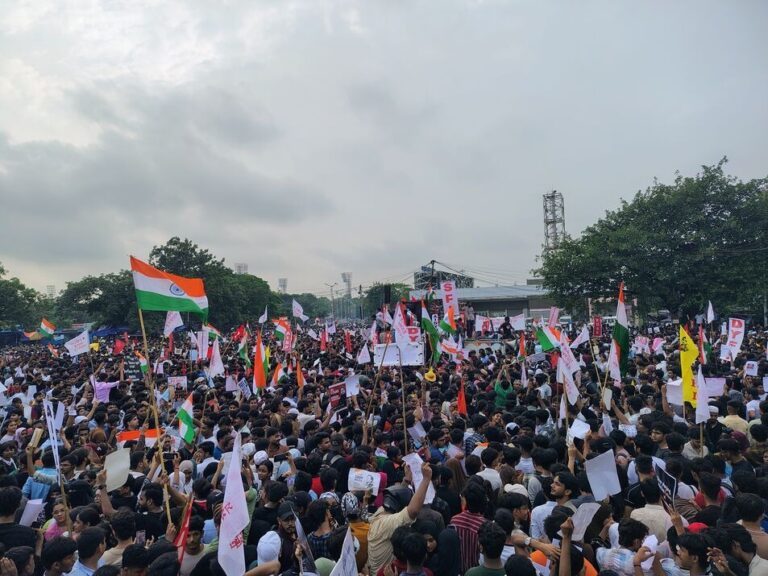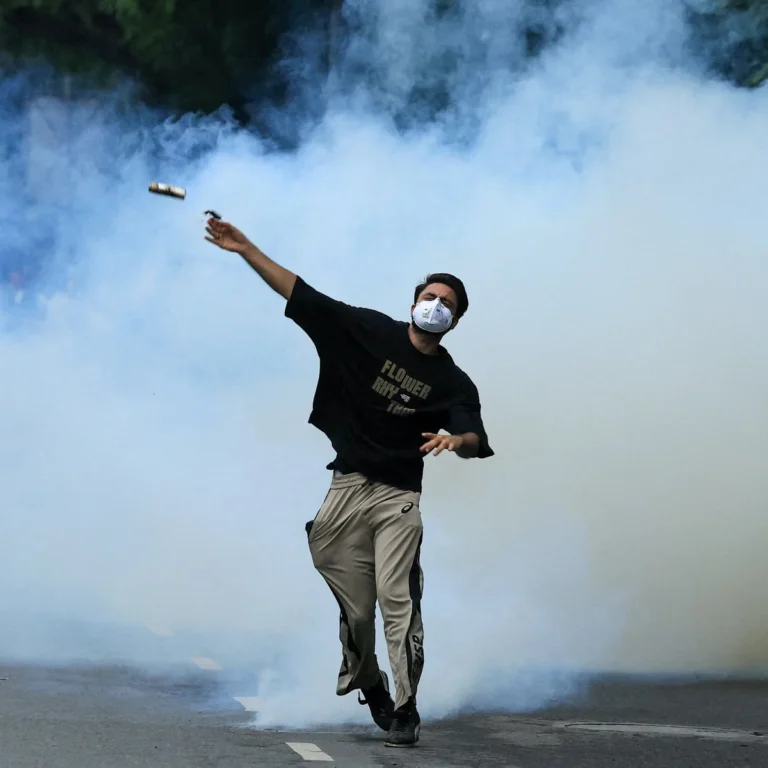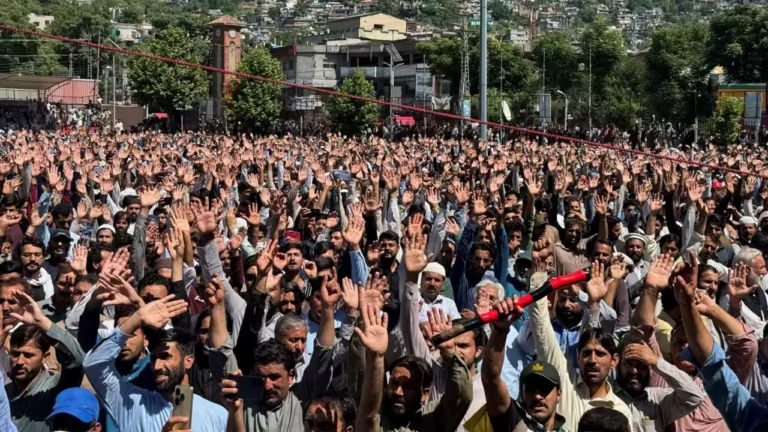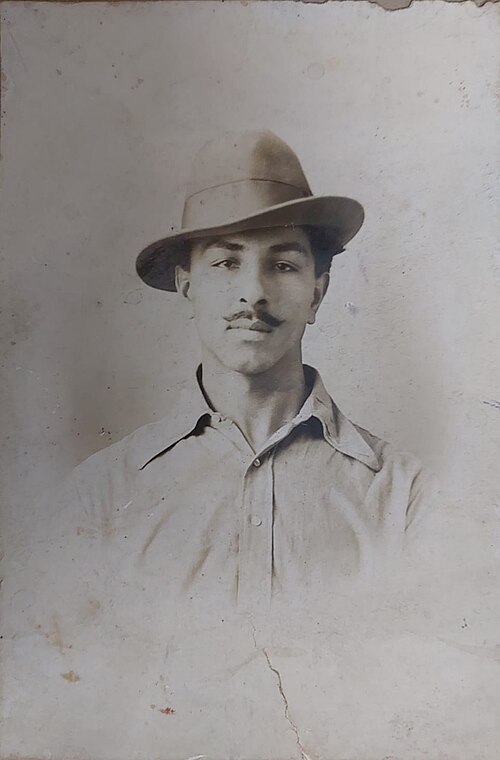
There has been a renewed interest in Bhagat Singh in recent years, accompanied by corresponding efforts to appropriate his revolutionary legacy for divergent political projects. His afterlife, in turn, has generated equally divergent political claims: Bhagat Singh appears variously as a symbol of Punjabi or Sikh nationalism by virtue of his regional affinity; as an icon of militant anti-state resistance for sections of the radical left; and even as an embodiment of indigenous nationalist defiance against colonial rule for revivalist forces such as the BJP and RSS. Such appropriations are hardly surprising. Figures like Bhagat Singh, especially when marked by martyrdom and an untimely death, often exceed the immediate political circumstances of their own lives and become available for invocation by traditions far removed from their original commitments. The same is true of figures like Faiz Ahmed Faiz, whose revolutionary verses continue to circulate across sharply different ideological camps. Yet the plurality of such invocations should not be mistaken for interpretive equivalence.
The fact that antagonistic political tendencies can claim Bhagat Singh does not imply that all claims upon him hold equal historical validity. Historical archives are rarely complete, and revolutionary lives rarely unfold as neat doctrinal systems; but incompleteness does not abolish evidentiary asymmetry. Certain political commitments recur with sufficient consistency across Bhagat Singh’s writings, strategic affiliations, and ideological development to justify stronger conclusions than others. To acknowledge contradiction or evolution in his thought is one thing; to dissolve him into an endlessly pliable symbol available for any political projection is quite another. The historian’s task, therefore, is not merely to register the multiplicity of Bhagat Singh’s afterlife but to distinguish between grounded interpretation and retrospective appropriation.
This distinction becomes particularly important in light of recent scholarly attempts to move away from reading Bhagat Singh as a stable ideological figure. Among the most influential of these is Chris Moffat’s India’s Revolutionary Inheritance, which explicitly rejects the recovery of Bhagat Singh as a singular and fully discernible political subject. As Moffat writes, his study1 “begins by accepting the absence of a single, fully discernible figure and moves instead to trace the fleeting work of phantasmal forms—exploring the promise the revolutionary represents, rather than attempting to excavate the particularity of a political programme”. The significance of this move lies not simply in acknowledging the fragmentary nature of the archive, which is uncontroversial, but in relocating the centre of inquiry from Bhagat Singh’s political commitments to the unstable afterlives generated by his revolutionary image.
For Moffat, Bhagat Singh’s principal acts—the assassination of a colonial police officer; the bombing of the Central Legislative Assembly; the hunger strike; and finally, the embrace of martyrdom—are read less as moments within an unfolding revolutionary programme than as demonstrations compelled by the urgency of the present. What mattered in these acts was not the articulation of a coherent future-oriented political horizon so much as their performative interruption of colonial order. Thus, as he argues2, “[it was] the bomb, the bullet, the chant, the hunger strike, the kissing of the hangman’s noose that did the demonstrative work for these revolutionaries, rather than any idea of ‘the good’ articulated in a manifesto or pamphlet … [and] it was the conditions of the 1920s present that demanded action and fidelity from Bhagat Singh and his comrades, rather than a precise vision of the future.” In this formulation, revolutionary meaning shifts from ideological intentionality to performative enactment, from long-term transformation to immediate dissensual presence, and from political direction to symbolic promise.
The difficulty with such an approach is not that it permits multiple readings of Bhagat Singh; no historical figure can be reduced to a single, perfectly coherent doctrine. The difficulty is that, by loosening the relation between revolutionary action and political programme, it weakens the criteria by which historically grounded interpretation can be distinguished from later ideological projection. Once Bhagat Singh is read primarily as a phantasmal site of interruption rather than as a revolutionary actor moving, however unevenly, within a discernible socialist horizon, the distance between historically situated inheritance and politically opportunistic appropriation narrows considerably. Interpretive openness, when left without sufficient historical constraint, does not merely expand understanding; it can also flatten substantive differences and render even strained claims upon Bhagat Singh newly plausible.
Such a loosening of interpretive constraints becomes difficult to sustain when Bhagat Singh’s own writings and organisational affiliations are placed back at the centre of the analysis. The archive surrounding him may be incomplete, but it is not arbitrary. Across prison notebooks, political essays, statements to comrades, and the evolving documents of the Hindustan Socialist Republican Association, one encounters not a finished doctrine but a discernible trajectory of ideological consolidation. Bhagat Singh’s political life was not exhausted by demonstrative acts of defiance; it was equally marked by sustained efforts at study, persuasion, organisation, and self-clarification. To read the bomb, the bullet, or the gallows apart from this larger horizon is to isolate the spectacle of revolution from the labour of becoming revolutionary.
This is evident, first, in the political evolution of the movement to which he belonged. The transformation from the Hindustan Republican Association to the Hindustan Socialist Republican Association was not a cosmetic alteration in nomenclature but a significant ideological shift: anti-colonial insurrection was increasingly tied to the language of socialism, workers’ emancipation, and a republican restructuring of society beyond the mere transfer of political power. Bhagat Singh was not an accidental participant in this transition. His writings in Kirti, his interventions through the Naujawan Bharat Sabha, and his efforts to politicise youth beyond romantic nationalism all point toward a growing dissatisfaction with revolutionary action conceived merely as a heroic conspiracy. His prison notebooks and reading lists further indicate an expanding engagement with Marxist and anti-imperialist thought beyond the immediate Indian context.
Bhagat Singh’s later writings increasingly moved away from the celebration of insurrectionary spectacle and toward a recognition of the limits of conspiratorial violence detached from mass politics. The objective was no longer simply to strike the colonial state, but to awaken a broader social consciousness capable of confronting exploitation in all its forms. This shift is visible even in the rhetoric surrounding the Assembly bombing, where the intention was explicitly pedagogic: “to make the deaf hear”. The dramatic act was meant to communicate politically, not substitute for politics itself.
The development becomes even clearer in his prison writings. In the “Letter to Young Political Workers”, written shortly before his execution, Bhagat Singh explicitly warned against confusing isolated acts of violence with revolutionary transformation and insisted instead on the need for disciplined political education, mass contact, and ideological clarity. Revolution, in this account, was not reducible to episodic militancy; it was the spirit of rebellion directed toward a thorough reorganisation of society. Likewise, in essays such as “Why I am an Atheist”, his concern was not merely personal unbelief but the cultivation of rational criticism, intellectual courage, and freedom from inherited dogma—qualities he considered indispensable for emancipatory politics. Taken together, these writings reveal a figure increasingly attentive to the patient work of consciousness, argument, and historical preparation.
This internal development matters because it complicates any reading that privileges only the immediacy of rupture. Bhagat Singh’s later reflections cannot be treated as interchangeable fragments within an endlessly open symbolic field; they register a process of refinement. His political thought remained unfinished because his life was cut short, but ‘unfinished’ does not equate to ‘indeterminate’. There is a meaningful difference between an incomplete trajectory and a directionless archive. If one attends to the cumulative movement of his writings—from romantic anti-colonial militancy toward socialist reconstruction, from conspiratorial action toward mass political pedagogy, from patriotic sacrifice toward rationalist critique—the claim that his revolutionary significance resided primarily in demonstrative presentness becomes increasingly difficult to sustain.
It is precisely here that the limitations of reading Bhagat Singh principally through performative interruption begin to show. To foreground the bomb, the slogan, or the spectacle of martyrdom as autonomous political acts risks mistaking the visible punctuation marks of his revolutionary life for the full sentence of which they were only a part. These acts undoubtedly mattered; indeed, Bhagat Singh himself understood their dramatic and pedagogic force. But they derived that force from being inserted into a wider project of social transformation, not from existing as self-sufficient moments of dissensus. Severed from this longer horizon, they become available as floating signs of resistance, detachable from the socialist and rationalist commitments that increasingly informed his politics.
The attraction of recent poststructural readings lies precisely in their emphasis on rupture, contingency, and the refusal of historical closure. Bhagat Singh appears within such frameworks less as the bearer of a determinate revolutionary inheritance than as a recurring disturbance—an evental figure whose significance lies in his capacity to interrupt settled orders of meaning. This is why Moffat’s reading repeatedly approaches, even when not explicitly naming it as such, something akin to Jacques Rancière’s notion of dissensus: politics as the momentary disruption of the “police order”, the sudden appearance of subjects who refuse the coordinates assigned to them. Read this way, the bomb in the Assembly, the hunger strike in prison, or the embrace of martyrdom become privileged because they dramatise the interruption itself.
There is no denying that Bhagat Singh’s politics contained such moments of visible rupture. Yet to privilege rupture over continuity introduces a problem not merely of emphasis but of political temporality. A revolutionary movement does not live by interruption alone. It also requires duration, accumulation, strategic patience, and forms of organisation that exceed the theatrical moment. When political meaning is concentrated almost entirely in episodic moments of dissensus, continuity recedes into the background and revolution risks being understood as a sequence of luminous gestures rather than a sustained struggle to build transformative capacity. In Bhagat Singh’s case, such an approach has the effect of foregrounding what was most spectacular in his politics while obscuring the quieter but no less decisive work of ideological formation through which those spectacles acquired meaning.
This temporal flattening also helps explain why Bhagat Singh can be relocated so easily within broader postcolonial critiques of linear revolutionary narratives. Moffat’s reading resonates with postcolonial critiques of historicism associated with thinkers such as Dipesh Chakrabarty3, especially his challenge to historicist and universalising accounts of political modernity. Even where Chakrabarty is not invoked in his full conceptual apparatus, the underlying gestures remain recognisable: suspicion toward universal political trajectories, distrust of coherent emancipatory futures, and preference for heterogeneous interruptions that resist incorporation into a singular history of modernity. Bhagat Singh, consequently, appears not as a participant—however incomplete—in the global revolutionary socialist imagination of the early twentieth century but as a spectral figure who unsettles every attempt at historical placement. The cost of this move is substantial. By rescuing him from ideological fixity, such readings also risk evacuating his ideological content.
The issue here is not that Bhagat Singh must be enclosed within a rigid or retrospective orthodoxy. He was an unfinished Marxist theorist and did not leave behind a systematic corpus that would permit such enclosure. His writings remain marked by experimentation, unevenness, and unresolved tensions. But historical interpretation does not require doctrinal perfection before it can speak of direction. Revolutionary actors rarely leave behind completed theoretical systems; they are read instead through recurring emphases, strategic choices, institutional affiliations, and the movement of their intellectual development. On these counts, Bhagat Singh’s archive points with reasonable consistency toward revolutionary socialism, rational critique, anti-communal politics, and the gradual displacement of individual heroic terror by a broader concern for mass awakening.
To insist on this is not to deny Bhagat Singh a rich afterlife, nor to foreclose the emotional and symbolic energies that continue to gather around his name. It is, rather, to resist a mode of reading in which the symbolic afterlife entirely eclipses historical life. Once the revolutionary is converted into a phantasmal placeholder for generic resistance, he becomes equally available to all and historically accountable to none. The distinction between inheritance and appropriation then collapses. Bhagat Singh survives, certainly, but he survives as a fragmented emblem rather than as a revolutionary thinker whose unfinished life nevertheless possessed a discernible political direction.
The archive of Bhagat Singh is incomplete, but incompleteness is not interpretive licence without limit. The task before the historian is neither to freeze him into a closed doctrinal monument nor to dissolve him into an endlessly circulating metaphor of rebellion. It is to preserve the tension between openness and determination: to recognise that unfinished revolutionary lives can generate multiple afterlives while still bearing commitments that are more historically recoverable than others. Against the fragmentation of Bhagat Singh, what must be defended is not ideological rigidity, but the very possibility of historical judgement.
1 See Chris Moffat, India’s Revolutionary Inheritance: Politics and the Promise of Bhagat Singh (Cambridge University Press, 2018).
2 Ibid., 61–62.
3 See Dipesh Chakrabarty, Provincializing Europe: Postcolonial Thought and Historical Difference (Princeton: Princeton University Press, 2000; expanded ed. 2007).
About the Author


Munir Ud Din
is a history student based in Pakistan with an interest in South Asian history, class, and socialist thought.