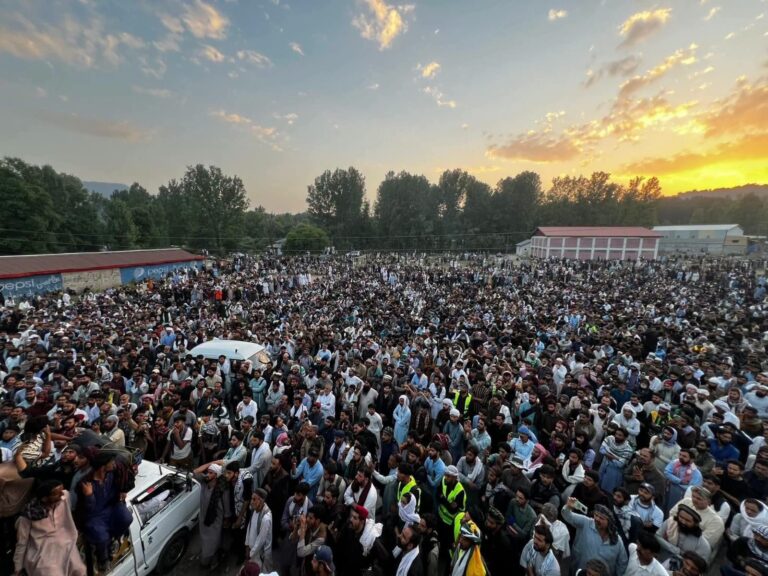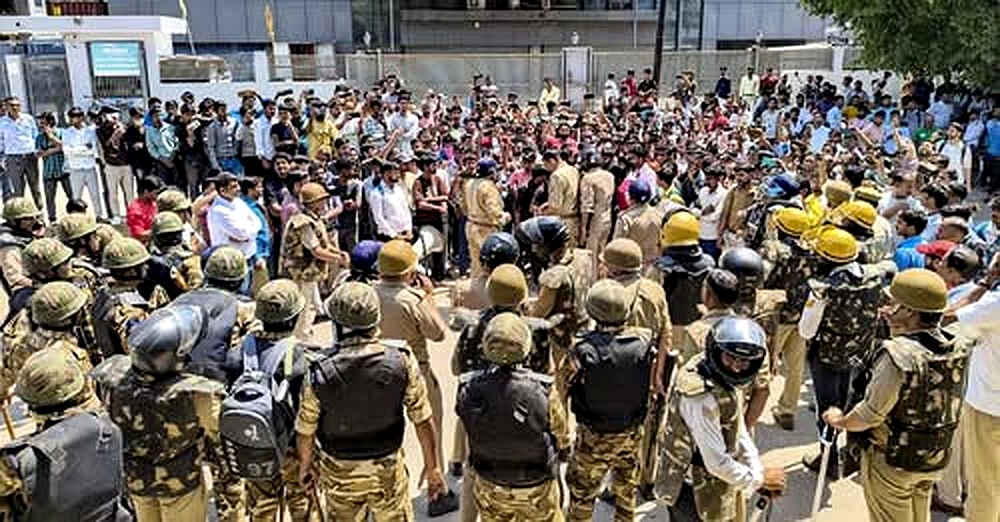
The recent wave of workers’ protests across Noida, Manesar and nearby industrial belts did not come out of nowhere. These regions employ millions of workers across manufacturing, logistics and related sectors, and have long been marked by low wages, long working hours and widespread contract employment. What appears as a sudden eruption is better understood as the outcome of pressures that have been building for some time.
Across the NCR industrial belt, wages for a large section of the workforce remain clustered between ₹10,000 and ₹15,000 per month, even as the cost of living has risen sharply. This gap between earnings and basic consumption is not incidental; it reflects a deeper structural condition. The expansion of industrial production in the region has not been accompanied by a corresponding stabilisation of the workforce. Instead, it has been organised through fragmentation, insecure employment and the systematic lowering of labour costs.
The protests must therefore be understood beyond the immediate issue of wage revision. They point to a broader transformation in the organisation of work, the labour regulation and the role of the state in managing industrial relations. The issue at hand extends beyond the mere level of wages; it encompasses the conditions under which labour is reproduced and the forms through which collective action becomes feasible.
The NCR Industrial Regime
The National Capital Region (NCR)—spanning Noida, Greater Noida, Ghaziabad, Gurugram, Manesar and Faridabad—has, over the past three decades, emerged as a major centre of manufacturing, logistics and export-oriented production. The region contains tens of thousands of industrial units across multiple clusters and employs several million workers, contributing an estimated 7–8 percent of India’s GDP. It is closely tied into both national and global supply chains, with a substantial share of industrial and logistics activity concentrated here.
The industrial base is also quite varied. Automobiles and auto components are clustered around Manesar and Greater Noida, electronics and mobile manufacturing in Noida, and garments and textiles across Delhi, Noida and Faridabad. Alongside these are sectors such as pharmaceuticals, metal fabrication, food processing and logistics. This expansion has generated large-scale employment, drawing in a substantial migrant workforce and linking the region to wider circuits of accumulation.
However, this growth has not produced a stable or unified workforce. Instead, it has been accompanied by a restructuring of employment marked by fragmentation and precarious work. A central feature of this shift is the expansion of contract labour. Data from the Annual Survey of Industries shows that contract workers now make up over 40 percent of the organised manufacturing workforce, rising to around 42 percent in recent estimates—more than double their share at the turn of the century.
What has expanded, then, is not simply employment, but a particular form of labour organisation defined by contractualisation and uneven conditions of work. Workers performing similar tasks within the same production process are separated by contractual status, wage levels and degrees of security. These divisions are not incidental; they are built into the organisation of production.
For firms, this model provides flexibility in hiring and retrenchment, reduces long-term obligations, and shifts a significant share of labour costs outward. For workers, it translates into persistent precarity. A large section of the workforce—especially migrants and contract workers—earns between ₹10,000 and ₹15,000 a month, often without regular increments, adequate social security, or effective enforcement of protections such as overtime pay.
The result is a distinct pattern of industrialisation: expansion without stabilisation. Rather than a transition from informality to formality, what emerges is a reorganisation in which informalised labour relations are reproduced within formally structured industrial systems. The recent protests need to be situated within this contradiction—between the concentration of industrial production and the fragmentation of labour that sustains it.
Wages Below Reproduction
The immediate trigger for the recent unrest was the question of wages. In the aftermath of the protests, the Uttar Pradesh government announced an interim wage increase of around 20–21 percent for workers in districts such as Gautam Buddha Nagar and Ghaziabad. The timing is instructive: revisions that had long been delayed were suddenly pushed through under conditions of disruption, suggesting that adjustment occurred not through institutional processes but under pressure.
Even with this increase, the underlying gap remains. Wage levels in the region have stagnated for years despite rising living costs, and periodic revisions have failed to keep pace with inflation. The recent adjustment does not restore lost ground; it only partially offsets it. This, in turn, points to the structure of wage regulation itself. The inadequacy of wages cannot be explained by market conditions alone; it is built into the design and functioning of the minimum wage regime.
First, coverage is limited in practice. Large segments of the workforce—particularly those employed through subcontracting chains, informal arrangements or small enterprises—remain outside effective enforcement. Even within the organised sector, compliance is uneven, especially where contract workers predominate. The statutory minimum wage, therefore, does not function as a universal floor but as a selectively applied benchmark.
Second, the method of wage determination lacks a consistent and enforceable basis. In principle, the framework draws on the recommendations of the 15th Indian Labour Conference (1957) and subsequent judicial interpretations, including Workmen v. Reptakos Brett & Co. (1991) and U. Unichoyi v. State of Kerala (1961), which establish that wages must account not only for subsistence but also for broader conditions of social reproduction—nutrition, housing, education and other basic needs.
In practice, however, these principles have not been translated into binding statutory formulae. Wage fixation continues to be shaped by administrative discretion, negotiations with industry and considerations of “feasibility,” rather than a transparent, reproduction-based standard. The result is a persistent gap between statutory wages and the actual cost of living. Minimum wages are thus often set at levels well below what is required to sustain even modest living conditions in major urban regions.
This gap becomes clearer when compared with living wage estimates. Independent assessments place a basic living wage in the NCR at around ₹23,000 per month—substantially higher than both statutory minima and prevailing wages across sectors. Even this figure is conservative. Given the sharp rise in housing, transport, food and energy costs, a wage closer to ₹30,000 would more realistically correspond to the requirements of maintaining a basic standard of living in high-cost urban centres.
For a large section of the workforce, particularly migrant workers, this gap is further intensified by the need to support households across multiple locations. Wages must sustain not only urban subsistence but also remittances to rural households, producing what may be described as a bilocal structure of labour reproduction.
The persistence of low statutory wages must therefore be understood not as a temporary distortion but as a structural feature of wage-setting. As real wages stagnate or rise only marginally, workers adjust through reduced consumption, indebtedness or the intensification of household labour. What is being compressed is not only income, but the material basis of working-class reproduction.
Aftermath and the Limits of Bargaining
The immediate aftermath of the protests revealed both the limits of the concessions and the form of the state’s response. While wage revisions were announced, they were accompanied by extensive police action—arrests, detentions and surveillance targeting sections of the protesting workforce. Reports suggest that hundreds of workers were detained, often on charges related to “disturbance” or the alleged circulation of misinformation. The same moment thus combined concession and coercion.
At the level of negotiation, a similar pattern was visible. Discussions on wage revision were initiated primarily between administrative authorities and industry representatives, with little or no direct participation of workers. Even as decisions were framed in the language of balancing interests, the exclusion of workers highlighted the limited functioning of collective bargaining in practice.
This exclusion reflects a deeper structural condition: the weak and uneven organisation of the workforce. Union density in India remains low, particularly in sectors characterised by contract labour, migrant employment and fragmented production chains. A significant proportion of workers in industrial clusters such as the NCR are either unorganised or only loosely connected to formal union structures.
This weakness is closely tied to changes in the composition of the labour force. The expansion of contract work, short-term employment and subcontracting has made it difficult to sustain stable forms of organisation. Workers are often employed through intermediaries, experience high turnover, and lack continuity within a single workplace—conditions that undermine the formation of durable collective structures.
At the same time, institutional and legal changes have reinforced these constraints. The introduction of new labour codes has tightened procedural requirements around union formation and strike action while expanding managerial discretion. As a result, the scope for effective organisation is further constrained. The capacity for collective bargaining is thus limited both by the structure of employment and by the regulatory environment.
The result is a dual limitation. Workers retain the capacity to mobilise rapidly around immediate grievances, as the protests demonstrated. However, the absence of sustained organisational forms limits their ability to negotiate, consolidate gains or extend struggles over time.
This helps explain the character of the concessions that followed. Wage revisions were partial, reactive and administratively mediated, rather than the outcome of structured negotiation. Collective bargaining, where it exists, operates unevenly and often excludes those most directly affected—particularly contract and migrant workers.
In this sense, the aftermath of the protests points to a broader transformation. The weakening of bargaining is not compensated by alternative institutional mechanisms; instead, it is replaced by a combination of ad hoc negotiation and coercive regulation. The problem, therefore, is not the absence of protest, but the absence of organisational forms capable of stabilising and extending it.
Fragmentation and Collective Power
This restructuring of labour is inseparable from a parallel reorganisation of the state. The state has not withdrawn from labour regulation; it has shifted from institutional mediation to the management of instability.
This shift is evident in the trajectory of wage policy in Uttar Pradesh and the wider NCR. Minimum wage revisions have been irregular and delayed over the past decade, leading to a steady erosion of real wages. This is not simply an administrative lapse but a structural feature of the current regime, in which wage adjustments are deferred until they become politically necessary.
The sequence of events surrounding the recent protests makes this dynamic visible. Wage revisions were initiated only after disruption—factory stoppages, blockades and the spread of protests across industrial clusters. Rather than emerging from institutionalised bargaining, they appeared as reactive concessions. At the same time, workers themselves were largely excluded from decision-making processes, even as coercive measures were deployed to contain mobilisation.
This conjunction of concession and coercion reflects a broader transformation in the mechanisms of regulation. Formal frameworks of collective bargaining have weakened, particularly in sectors dominated by contract labour. In their place, negotiation is increasingly conducted through administrative channels, often between state authorities and industry representatives, with limited worker participation.
Even where interventions occur, their substantive scope remains restricted. Wage revisions tend to be partial and delayed, which is insufficient to address the cumulative pressure on labour. The persistence of a low national floor wage further reinforces this dynamic, functioning less as a protective benchmark than as a mechanism that normalises depressed wage levels across regions.
What emerges is not the absence of regulation, but its reorientation. The state continues to intervene, but in ways that stabilise conditions for accumulation while limiting the expansion of protections for workers. Moments of unrest are addressed through calibrated responses—combining selective concessions with disciplinary measures—without altering the structural conditions that produce them.
This configuration can be understood as a managed crisis of labour reproduction. The pressures on labour are acknowledged but addressed only intermittently and partially, producing a cycle in which tensions accumulate, erupt, and are temporarily stabilised.
From Eruption to Recomposition
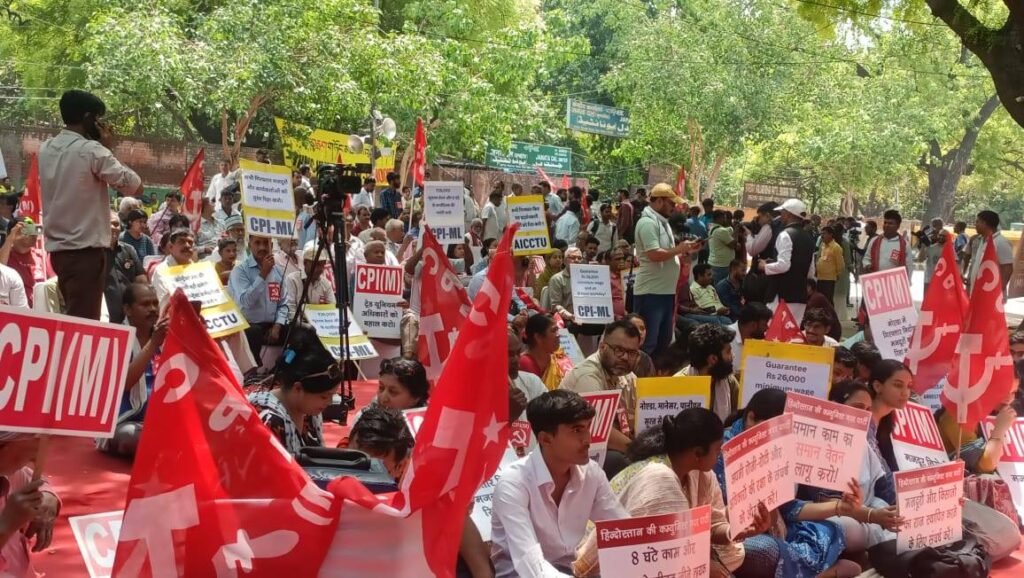
The protests in Noida and across the NCR do not signal the absence of working-class power but its uneven and incomplete expression. The size, speed, and reach of these protests show that workers still hold important roles in today’s production systems and can still cause disruptions to profit-making. What is in question is not the existence of struggle, but its consolidation into durable power.
Across the industrial belts of North India, as elsewhere in the global South, labour unrest has become a recurring feature of capitalist development. Yet these struggles remain fragmented, episodic and difficult to sustain. The problem is not that workers do not resist, but that resistance remains organisationally discontinuous—unable to stabilise itself into enduring forms of collective power. In this sense, the limits observed in Noida are not exceptional, but symptomatic.
This disjuncture reflects a deeper structural transformation. Capital has reorganised production across regions, sectors and supply chains, drawing together a vast and increasingly interconnected working class. However, the organisation of work—fragmented across contractual status, workplace, and region—has failed to keep pace with this reorganisation.
Under these conditions, the crisis is not merely one of wages or employment but one of organisations themselves. Traditional models of unionism, shaped under conditions of stable employment and bounded workplaces, are increasingly inadequate for a workforce defined by mobility, informality, and segmentation. At the same time, spontaneous mobilisations, however militant, remain limited in their ability to produce sustained gains in the absence of durable organisational forms, such as formal unions or federations that can provide ongoing support and structure for workers’ rights and demands.
The persistence of unrest, despite these constraints, points to the intensification of underlying contradictions. The reproduction of labour is under strain, and the mechanisms through which this strain has historically been mediated—collective bargaining, institutional negotiation, and social compromise—are weakening. What emerges in their place is a pattern of recurrent disruption without consolidation.
The central question, therefore, is no longer whether workers will resist but whether forms of organization can emerge that are appropriate to the current structure of labour. Without such a reconfiguration—capable of navigating divisions between permanent and contract workers, linking dispersed workplaces, and operating across supply chains—the gap between mobilisation and power will persist.
It is in this contradiction—between an increasingly interconnected labour process and fragmented forms of organisation—that the trajectory of working-class politics in contemporary India will be determined.
About the Author

Editorial Board Member of Alternative Viewpoint