“If we have chosen the position in life in which we can most of all work for mankind, no burdens can bow us down, because they are sacrifices for the benefit of all; then we shall experience no petty, limited, selfish joy, but our happiness will belong to millions, our deeds will live on quietly but perpetually at work, and over our ashes will be shed the hot tears of noble people.”
— Karl Marx, “Reflections of a Young Man on the Choice of a Profession”
In school, we learned that philosophy has a century-old “disputatio” between those who think the world is made of things that rest and those who think it is made of processes that never do. While Parmenides always insisted that change is merely an appearance and that the underlying reality remains unchanged, Heraclitus argued that change is fundamental. However, the phrase “On those who step into the same rivers, different waters flow” captures Heraclitus’s argument. For more than a century economists chose to take the path of Parmenides, and economics started to look like an alien subject, hardly doing anything with the real world. This approach tried to prove economics as a science that talks about equilibrium in a perfect world but ignored the real internal contradictions and, thereby, the uncertainty. Anwar Shaikh brought life to “economics” when it started to look like a static, sclerotic discipline.
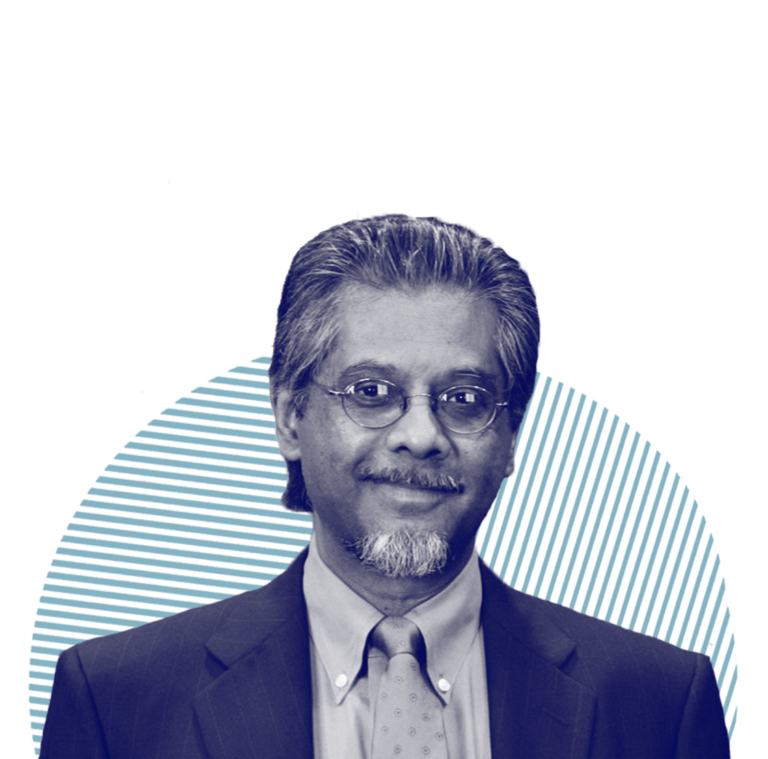
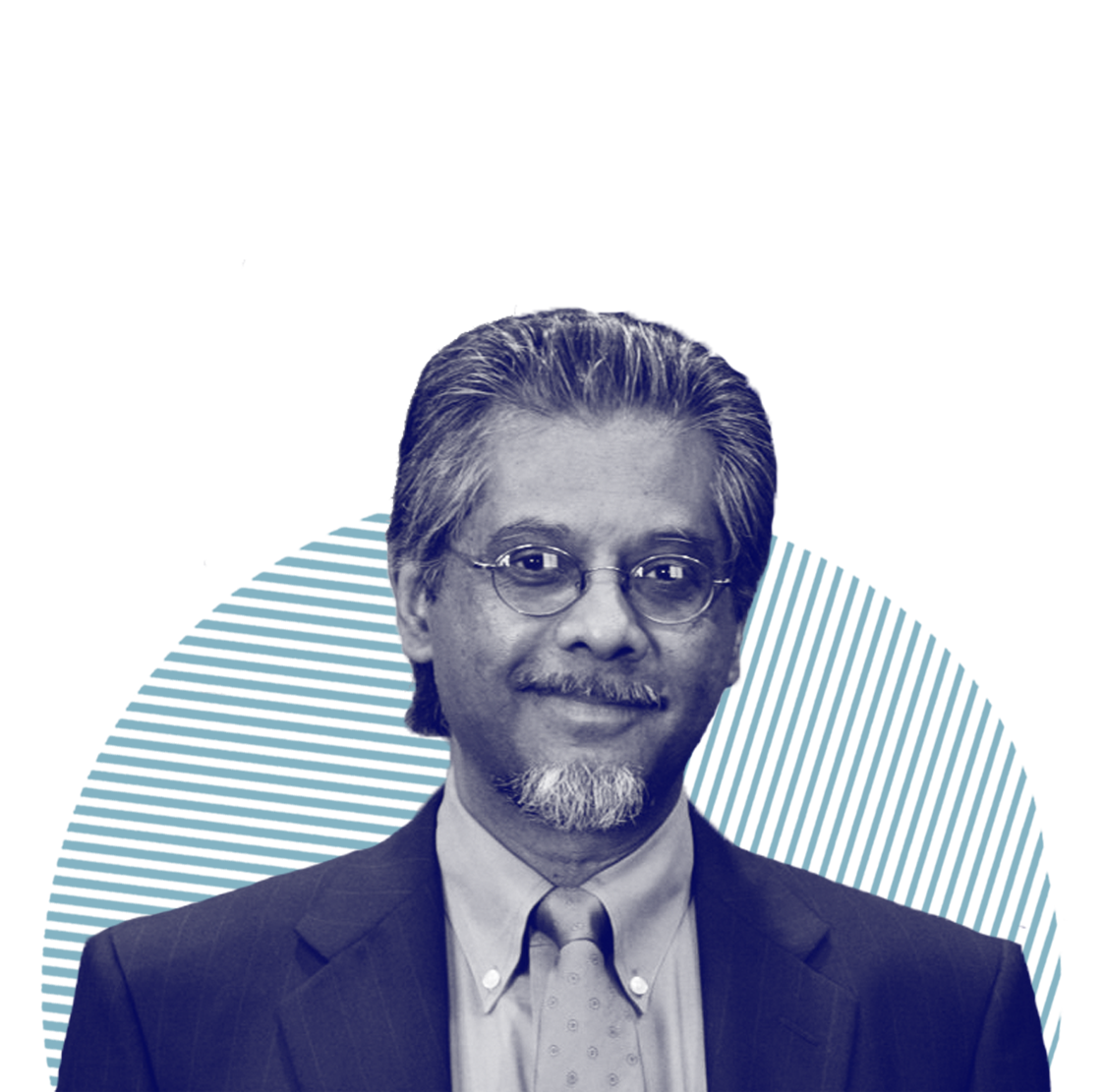
Anwar Shaikh died on 7th October 2026 at the age of 80 after fighting with severe illness for more than a decade. He was a professor at the New School of Social Research and definitely a fore-runner among the most rigorous theorists left to have ever produced. A critic of Shaikh might argue about the specifics of the model he introduced; however, he can’t ignore the new definition of economics he tried to establish and what it would entail to describe one. In response, he said that a science that starts at “equilibrium” has misdescribed its subject before writing a single equation and that an economy is a tumultuous process held together by its own mistakes. Shaikh approached this question in a completely unconventional way as an outsider to the discipline.
He was born in Karachi in undivided India in 1945, two years before the bloodshed took place during the partition. His father’s position in the Pakistan-American Foreign Service made him extensively travel around the world. He completed his BSE at Princeton and took his doctorate at Columbia in 1973, when economists thought that the foundation of economics was well established and the majority of critics of mainstream economics were not adequately armed to shake the base of that foundation. Shaikh introduced a new method, with his personal mastery of orthodox and classical economics, criticising the foundation of mainstream economics, which cannot easily be dismissed because it was built on the discipline’s own grammar. His first blow to the foundation of economics was under the title “Laws of Production and Laws of Algebra: The Humbug Production Function.” still holds its position as one of sharpest critiques of Neoclassical theory explaining output flows from capital and labour and each got rewarded with its marginal product. While theorists cite a plethora of data and empirical evidence to establish the theory of marginalism, Shaikh argued that the evidence is nothing but a manufactured proof with its accounting skill because national income is, by definition, the total of salaries and profits; practically, any smooth curve fitted to the data will appear to work when those shares are approximately stable, but it proves nothing about the real world. To prove his point, he drew a production function graph that was mathematically correct but turned out to be a mockery of the model. It was enough to prove that one can “mathematically” come to any desired conclusion with “tortured” data, but economically it meant nothing.
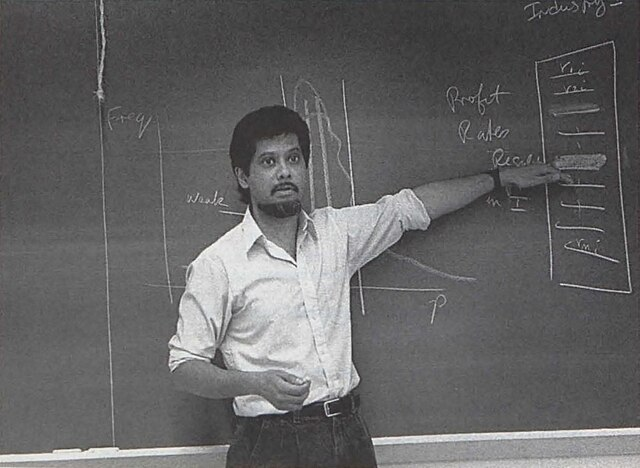
Such critique could have led to nihilism, but Shaikh refused to walk in that way. He came up with a strong alternative definition of ‘market’, refuting the traditional definition of ‘market’ under perfect competition, with its timid price-takers that no one has ever seen. He began with the conception of competition among firms, grounded in the real world, where all firms are engaged in an endless struggle to acquire each other’s customers through cost-cutting and price reductions, and no firm is allowed to remain idle. He explained the concept as real competition. However, order (// Pattern) can be observed in this unstable world where every firm is competing with each other, as prices serve as the centre of gravity, and the prices of production and the path of balanced growth are drawn back toward them through oscillation, discrepancies, and errors. It describes a coherence that only exists as the ongoing correction of incoherence and how order (temporary equilibrium) may emerge from chaos without abolishing it. He called this “turbulent regulation.” He stated, “The process of real dynamics is unified. But it is not linear: it does not take the form of a simple, rising line. To the contrary, its movement is irregular, with spurts and fluctuations.” It changed the whole philosophical worldview of economics, and we got a new Heraclitus with a spreadsheet.
Whenever I tried to read about heterodox economics, I felt that while the critiques were strong, they lacked substantial evidence. Whereas mainstream economists always appear confident with their techniques, they explain very little about how the real world works. Anwar Shaikh refused both traditions and brought something entirely different from his predecessors. His work gave us a new perspective on abstraction: that a theory must be put in front of the facts and given the opportunity to fail, and it can only be justified if it separates the forces that genuinely move a system. It explains why the concept of equilibrium should be treated as a failed concept for explaining the world system, because it removed all the real forces that it should have been supposed to explain, while turbulent regulation kept all the forces and tried to explain everything. However, this question should not be treated as another mere economic question; rather, it is a reply to mainstream economists’ criticism: if you reject the standard model, what do you put in its place?
His arguments were not limited to macroeconomics only; he also tried to propose a reconstruction of microeconomics. He attempted to rebuild the theory of the firm, the market, and price by using his concept of real competition as a foundation. While mainstream economists always said that firms choose to do business in a sector or geography by calculating the margin, Shaikh said that firms in the real world are rivals pursuing profit under pressure, investing where returns are higher and fleeing where they are lower. It is this restless movement of capital, with no mythical auctioneer anywhere in the picture, that pulls prices toward their regulating levels. Shaikh went even further, arguing that even the textbook’s favourite regularities, like the downward-sloping demand curve, do not require the heroic rationality that economists attribute to individuals. Such patterns may be due to the structure of the market itself. If the results are considered in isolation, then the fictional assumptions were never serving a purpose. This was a devastating moment for a discipline that had established the rational chooser as its foundational fiction.
In his paper “Globalization and the Myth of Free Trade”, Anwar Shaikh argues that conventional trade theory constructs a simplified world in an effort to explain how international exchange is supposed to work, but in doing so it abstracts from the history and unequal productive structures that shape actual trade. Ricardo’s famous parable of English cloth and Portuguese wine is intriguing for its simplicity, as it rests on an imaginary foundation that every country is a winner in a trade exchange. Over the last 50 years, political decisions have consistently been made to open poorer economies to larger economies, based on this imaginary world order. Shaikh critiqued this view, stating that this ideal trade system, in which everyone benefits, can only function in an imaginary scenario where capital remains confined to a specific sector or geographic area and where trade deficits play a crucial role in correcting imbalances. In a real competitive world, capital goes wherever costs are lowest, and producers with an absolute advantage in production win the game. In reality, weaker economies do not have any specific niche; instead, they are heavily undersold, which causes chronic trade deficits that lead to massive loans, making these economies dependent on external debt. Those who believe that trade benefits all parties do so because it serves their interests. Period!!
All the arguments mentioned above might seem very technical, but they actually resolve around a rather bigger mystery: what is the capitalist system for? Shaikh always provided straightforward and blunt answers to that question. Capitalism is a social relation based on profit. Output, income or human need – everything is secondary. Investment, hiring, technological innovation or state policy as a whole depends on the sole possibility that it will increase profit or not. This conclusion directly challenges the mainstream economic models where profit is just a product of primary forces in the market, i.e., supply and demand. By refuting this model, Anwar Shaikh challenged the post-Keynesians, “”who locate the source of profit in the monopoly mark-up and “the engine of growth in wages”. He contended that large firms compete for survival on a larger scale, with significantly greater stakes involved. The only thing that matters in a system is profit, and it regulates accumulation. The rate of accumulation controls all other economic factors. This conclusion laid the foundation for his understanding of crisis theory, which helped thousands like me become radicalised and reject the capitalist system.
In his crisis theory, Anwar Shaikh brought up Marx’s law of the tendency of the rate of profit to fall from grave and gave new life to it. Academicians or Marxists can no longer ignore it. He expressed it in a way that everyone can understand the concept. As firms compete, they mechanise, so the capital they must advance increases faster than the output it yields, and the profit rate falls even if the profit share remains constant. The fall is not smooth. This process produces long waves during which accumulation accelerates, decelerates, stagnates, and sometimes collapses, with crises serving as the violent housekeeping of the entire system. The fall actually challenged almost all the existing notions. Before Shaikh’s intervention, everyone was either blaming underconsumption or rising wages, which arguably is causing the profit rate to fall, or excessive speculation in the financial sector. Shaikh did not deny these but identified them as surface-level issues. Rather, we should see the situation as a structural problem which can’t be resolved by tweaking the policy of redistribution, regulation or restraint. This is because every function operates below the threshold of profitability. In the long run, the movement of the profit rate determines when the system expands and when it enters a crisis. Firms invest if they expect to make profits. The strength of investment depends greatly on the rate of profit. If the rate of profit is high, accumulation increases and there is a period of economic expansion. But as capital accumulates and competition compels firms to invest in new forms of production, the conditions that supported high profitability can gradually erode. Therefore, less importance should be given to reckless bankers and poor decisions by central banks. Instead, we should look for the deeper cause of crises in the normal operation of capitalism itself. This new framework helped us understand the crises of 1929, 1979, and 2008 as a continuous chain of events.
Anwar Shaikh did not only write a philosophical manuscript of the crisis but did actually publish measurable numbers. With Ahmet Tonak he rebuilt the national accounts in categories drawn from Marx, separating the labour that produces value from the labour that merely circulates or polices it. Michael Roberts in the following years helped with his popular writings to spread this theory among the common masses. The project was quiet. But its implications were large.
We all know that statistics are never neutral. Even deciding what counts as production involves a theory of where value comes from. Shaikh and Tonak showed that the official statistics already carry such a theory. Shaikh applied the same discipline to inflation. He linked inflation to how strongly actual growth pushes against the limits imposed by the profit rate. He also applied the same approach to stock prices. He argued that stock prices follow the return on new corporate investment. In this way, he tied financial markets back to the real economy. The market may appear to move independently, but it remains connected to the economy that sustains it.
I consider Shaikh’s outstanding late synthesis, Capitalism: Competition, Conflict, Crises (2016), as the culmination of four decades of his work. In this book, he brought together his ideas on microeconomics, macroeconomics, international trade, and finance. His aim was not simply to criticise mainstream economics. He wanted to rebuild these fields on classical foundations and offer a complete alternative to standard economic theory. This ambition made Shaikh different from many other critics of mainstream economics. Critics often point out the weaknesses of the existing system but do not try to build an alternative framework. Shaikh wanted to do both. He believed that simply asking economics to become more humane, psychological, or cautious would not solve its more profound problems.
For Shaikh, the fundamental problem was the question economics should ask. Mainstream economics often begins with the idea of a harmonious system that moves toward equilibrium. Shaikh instead asked how a system based on competition, conflict, and the pursuit of profit actually holds together. He also asked why such a system repeatedly produces crises. Changing the question, for Shaikh, meant changing the entire subject. It changed what economists considered important evidence, what they regarded as a valid explanation, and which problems they believed economics should try to solve.
Not everyone who admired him agreed with him. The sharpest attack unfortunately came from Leninists, who believed that Shaikh misinterpreted the theory of imperialism by concluding that monopoly puts an end to competition. Lenin did write that monopoly exists along with competition, not instead of it. But Shaikh’s target is the tradition that emerged from that theory, from Hilferding through Luxemburg to Baran and Sweezy’s Monopoly Capital, and into much of the organised Left through the Communist parties. In that tradition, firms with large economies of scale could deter entry and escape the market pressures Marx had described. Shaikh saw what rested upon this. If Marx’s economics were to become obsolete, it would be because a true mutation into monopoly rendered his law of value invalid. This law depends on capital moving restlessly between sectors in search of higher returns. His reply was in two parts. He demonstrated that much of the data presented as evidence of monopoly was inconsistent with competition. He argued that the monopoly theorists had taken their idea of competition – passive price-takers in a static market – from mainstream economics and so never escaped it. Against that, he revived the classical notion of real competition, in which firms compete for market share by cutting costs and pushing rivals out. His critics agreed that rivalry among giants assumes qualitatively new forms, but they never explained why these forms should change the rules of motion. Two small complaints were that his theory of fiat money is only a partial explanation of the value of nonconvertible currency and that his account of inflation is too much in the Keynesian demand camp. The first is an issue Marxism has never resolved, and Shaikh at least offered a profitability-based answer. The second issue involves confusing a concession with a surrender: demand presses against a ceiling set by profitability, which is the opposite of Keynes’ view. His critics tested him on doctrine, whereas he had invited them to test him on data.
In general, Shaikh’s critics evaluated his work in terms of its fidelity to established Marxist doctrine. Shaikh, in contrast, wanted his theories judged by how well they explained the actual evidence.
Shaikh taught generations of students and radicals who never met him, and I count myself among them. For those of us who believed the world could be changed, who refused to accept the story that neoliberalism told about itself, his writings were a place to discover our way. We were told markets were natural, inequality was the price of efficiency, crises were accidental and there was no alternative. Shaikh’s answer was a theory that worked when we tried it. He framed bankruptcy, unemployment and crisis as the system working as it was meant to, and he did it with evidence-based language, daring the reader to verify it. To many of us, it was the first time economics sounded like the world we lived in. Until then it had been a parable of some other place. Some of those who read him became economists. Many more became union organisers, journalists and activists, bringing his insistence on profit, competition and conflict to union halls, newsrooms and movements. He made strangers feel they were let into something true, which is rare for any thinker.
One of the most important Marxist in history, Ernest Mandel, in socialist scholar conference of 1992 said “I consider Anwar the best Marxist Economist in the world.” But he will always be remembered as something else for me. He was a philosopher who attempted to understand the world system in a fundamentally different way. His outstanding contribution was primarily to provide us with another interpretation of Marx. It was to connect abstract theory with the concrete realities of capitalism. He was always asking if economic theories could really explain the world we live in. To Shaikh, theory was not an end in itself. It had to contend with history, evidence, competition, crisis and the daily functioning of the real economy. For me, it is that insistence on relating theory to reality that makes his work so enduring. He didn’t just study the storms of capitalism; he listened to the forces brewing beneath them, followed them back to the structure of the system itself, and gave us a language for understanding why the storm keeps returning. Anwar Shaikh, the economist who heard the storm.
Bid Adieu !! Comrade Shaikh !!
About the Author


Editorial Board Member of Alternative Viewpoint