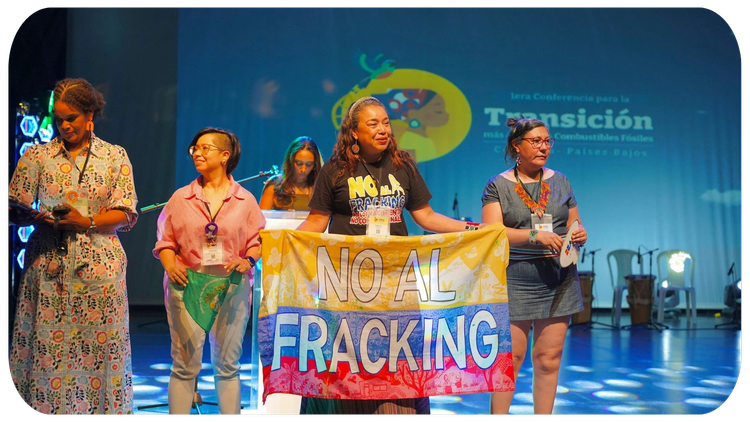
War, in its official presentation, is a collective sacrifice—an inevitable but necessary cost imposed on the present to secure the future. In practice, the American experience since 1950 suggests something closer to a permanent fiscal regime, in which costs are socialised, profits are privatised, and accountability is systematically displaced. The question is no longer whether the United States can afford its wars. It is why a political system continues to fund them in ways that transfer risk downward and reward upward—and why that arrangement has proven so resistant to democratic control, despite growing public dissent and calls for accountability from various social movements.
The scale alone should have forced a reckoning. Estimates place total US military spending on post-9/11 wars at over $21 trillion1. National debt has surpassed $38 trillion2, with war expenditure functioning not as an episodic burden but as a persistent structural contributor. By 2024, annual interest payments had reached roughly $881 billion—exceeding both defence spending and Medicare3. The wars, in formal terms, are largely over. Their financial architecture is not. It has instead become embedded in the structure of the federal balance sheet, contributing to ongoing national debt and influencing future fiscal policies.
(Find the key data in the presentation)
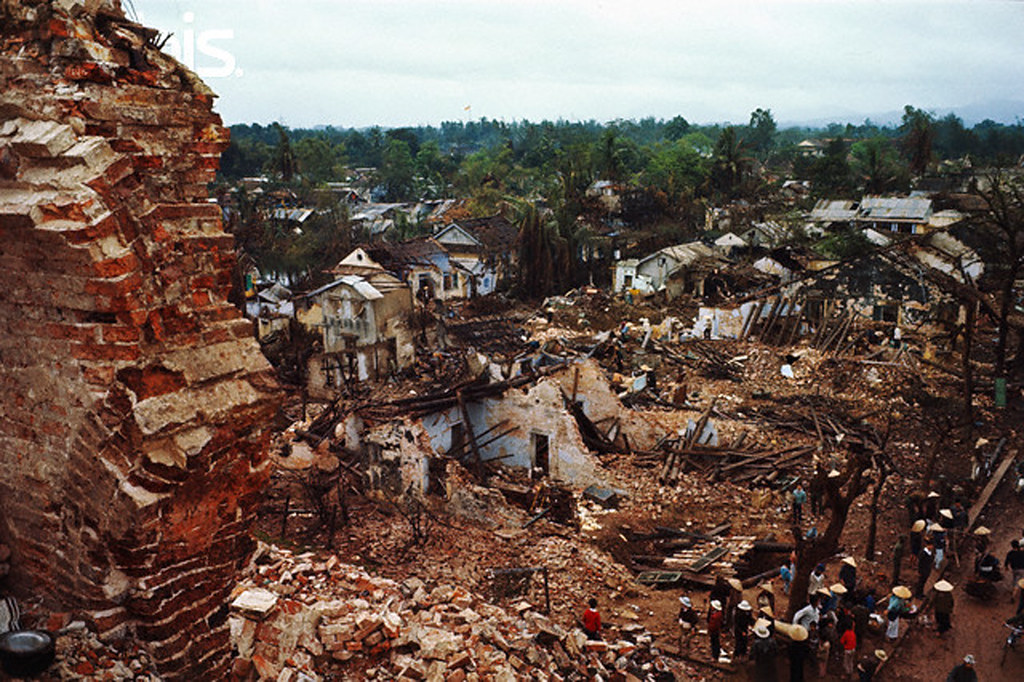
What matters politically is not just the overall cost but also how it is distributed. The Korean and Vietnamese wars established a lasting framework: extensive military commitments funded through unacknowledged trade-offs4. Lyndon Johnson’s escalation in Vietnam did not only involve waging war abroad; it also limited the domestic aspirations of the Great Society at home5. The decision regarding the trade-off between military expenditure and social welfare was made at a structural level, yet it is consistently obscured in public discourse—this ongoing pattern persists to the present day, as evidenced by the continued prioritisation of defence budgets over social programs in government policy discussions.
After September 2001, this pattern hardened. The wars in Afghanistan and Iraq were financed in ways that severed cost from consent. Taxation did not rise in proportion to expenditure; instead, the wars were funded through borrowing, shifting their burden forward in time and dispersing it across a population never asked to approve their true cost6. This was not simply a lapse in fiscal discipline. It functioned as a political strategy: making war electorally cheap in the present while rendering it economically inescapable in the future.
At the heart of this arrangement is a deeply institutionalised partnership between the state and private capital. Roughly half of Pentagon outlays since 2001 have gone to private contractors7. This is not outsourcing in any conventional sense. It is the routinisation of profit extraction from public violence.
The trajectory from policy to profit is neither obscure nor incidental. When Dick Cheney, as Secretary of Defence, commissioned a study on privatising military logistics, the contract went to Kellogg, Brown and Root, then a subsidiary of Halliburton. Cheney later became CEO of Halliburton before returning to government as vice president. The Iraq War followed, along with tens of billions in contracts to the same corporate network8. This is not simply a matter of individual conflict of interest. It illustrates a broader institutional pattern in which public policy and private gain are closely interwoven.
The wider defence sector reflects this dynamic on a large scale. Firms such as Lockheed Martin, Boeing, Raytheon Technologies, General Dynamics, and Northrop Grumman have absorbed hundreds of billions in public funds while delivering shareholder returns that often outperform the wider market9. For these actors, war is not a contingency but a revenue model. Like any successful model, it is politically defended. Lobbying, campaign finance, and the routine circulation of personnel between industry and government ensure that military spending is treated less as a contested choice than as a baseline assumption10.
This helps explain why the system persists despite repeated failures on its own terms. The wars in Afghanistan and Iraq did not achieve their stated strategic objectives11. They failed to produce stable states and did not eliminate the threats used to justify their initiation. Yet strategic failure does not translate into political or economic loss for those most directly invested in the system. On the contrary, prolonged conflict can expand flows of contracts, appropriations, and justifications for future spending. In this sense, failure is not an anomaly. It is compatible with, and sometimes functional to, the system’s reproduction.
The waste and fraud that periodically surface—billions lost to overbilling, unaccounted funds, or corruption—are better understood as systemic features rather than deviations12. A system designed to move vast quantities of public money through private channels with limited oversight will predictably generate leakage. The relative absence of meaningful prosecution reflects the political weight of the actors involved and the institutional reluctance to disrupt an arrangement on which many careers, constituencies, and profit streams depend.
The human consequences of this system are both evident and systematically obscured. Bureaucratic language—terms like “casualties” and “collateral damage”—routinely processes hundreds of thousands of direct deaths in post-9/11 wars, millions displaced, and entire regions destabilised for decades13, stripping these events of their political immediacy. What resists abstraction, however, is the long tail of obligation. Veterans’ care will extend for decades, while interest on war-related debt will compound across generations14. These costs are not only high; they are structured to outlast the political decisions that produced them.
Domestically, the effects are becoming increasingly apparent in the federal budget. Debt servicing is taking up a larger portion of public resources, thereby crowding out investment in education, infrastructure, and public health15. This is not merely a fiscal imbalance. It is a reallocation of state capacity away from social provision and toward the maintenance of past military commitments. The economy is not simply burdened by war; it is being reorganised around its aftereffects, which include increased military spending and reduced funding for social services that support the population’s needs.
At this point, the language of “trade-offs” is insufficient. The United States is balancing competing priorities. It is systematically privileging a form of military expenditure that generates concentrated private gain while dispersing public cost. The ongoing nature of this pattern across different administrations and political parties indicates a lasting alignment between political institutions and economic interests, rather than merely a succession of isolated policy mistakes.
The question, then, is not only whether reform is desirable but whether it is structurally possible within the existing configuration of power. A system that distributes benefits upward, diffuses costs outward, defers burdens into the future, and embeds its key actors within the decision-making process is unlikely to be corrected by electoral cycles or marginal reforms. It would require confronting the interests that sustain it—and recognising war not as an external necessity but as an internal political economy, which involves understanding how these interests are maintained through political, economic, and social structures that benefit a select few while marginalising the majority.
Until such a confrontation occurs, the arithmetic will continue to accumulate—not as an accident, and not as an inevitability, but as the predictable outcome of a system functioning as it has been built to function.
Footnotes
- 1.Congressional Budget Office, Long-Term Budget Outlook. ↩︎
- 2.Costs of War Project, Brown University, “U.S. Costs of War,” updated 2023–2024.U.S. Department of the Treasury, “Debt to the Penny,” 2024. ↩︎
- 3.Congressional Budget Office, The Budget and Economic Outlook: 2024 to 2034 (Washington, DC: CBO, 2024). ↩︎
- 4.Office of Management and Budget, Historical Tables, Table 3.2 (Outlays by Function and Subfunction). ↩︎
- 5.The Guns of August (contextual); see also Robert Dallek, Flawed Giant: Lyndon Johnson and His Times (Oxford University Press, 1998). ↩︎
- 6.The Three Trillion Dollar War (New York: W.W. Norton, 2008); Congressional Budget Office reports on deficit financing. ↩︎
- 7.Costs of War Project; U.S. Department of Defense, contract spending data. ↩︎
- 8.U.S. Government Accountability Office, “Defense Contracting” reports; U.S. Congressional investigations (2000s). ↩︎
- 9.Stockholm International Peace Research Institute, Arms Industry Database; corporate annual reports. ↩︎
- 10.OpenSecrets, defense sector lobbying data. ↩︎
- 11.Special Inspector General for Afghanistan Reconstruction, Lessons Learned Reports. ↩︎
- 12.Government Accountability Office, Pentagon audit reports. ↩︎
- 13.Costs of War Project; UNHCR displacement data. ↩︎
- 14.U.S. Department of Veterans Affairs; Congressional Budget Office long-term projections.* ↩︎
- 15.Congressional Budget Office, Long-Term Budget Outlook. ↩︎
About the Author


Editorial Board Member of Alternative Viewpoint