‘Marx Forum’, a web-based discussion forum among participants from south Asian societies (running for the last six years) recently held three rounds of discussion on the results of assembly elections in India in end May and June 2026. Participants joined the discussion from different corners of India such as from Kerala, Tamil Nādu, West Bengal, Assam, Maharashtra, Telangana, Uttar Pradesh, Haryana, Jharkhand states. Around forty participants shared their views in the three rounds of discussion although very few were part of all the three rounds of discussions. Here is an extended summary of the observations and comments of the participants in the discussions.
Observations on the assembly election results in the four states:
Although the discussions started with analysing the dismal performance of the ‘Left’ political parties in the recently held assembly elections, the observations were not restricted only to electoral performances. The participants went deep into analysing the electoral defeats of the ‘Left’ political parties in Kerala where they held state government offices and in West Bengal, Tamil Nādu, Bihar and Assam where these ‘Left’ political parties used to have considerable influence on the toiling people and generally across the society. Participants broadly agreed that the ‘Left’ political parties face serious crisis of political imagination. They suffer from organizational rigidity, ideological degeneration, and failure to address changing features of social consciousness such as consumerism, digital world of misinformation, identity politics, and hyper-individualism.
Participants from Kerala pointed out the internal degeneration of the major political party CPM as the key factor for the defeat. The party has become subservient to its parliamentary wing and government, reversing the earlier tradition where the party organization was independent and incorruptible. CPM has not led any serious mass or class movement in Kerala in the past thirty years. Participants argued that CPM has degenerated to its core, abandoned poor peasants and marginalized people in favour of the middle class, spread Islamophobia, and took stands against minority communities while appeasing Hindu communal forces. They argued that CPM can identify its crises but cannot identify solutions, leading to constant oscillation — from pro-minority to anti-minority, from pro-Hindu to anti-Hindu, from pro-temple to anti-temple standpoints. They gave the example of the CPM capturing temple committees to prevent RSS influence, which backfired as temple environments are inherently hostile to revolutionary discussion, ultimately benefiting the BJP. The ‘Left’ has adopted bourgeois/capitalist development ideology as a meaning for “self-criticism.” The LDF in Kerala also failed to maintain a broad coalition — parties like Kerala Congress, RSP, and Congress U have left LDF for UDF. Within LDF, only CPM has grown; all coalition partners have stagnated or shrunk, suggesting an organizational rigidity that alienates partners. Another feature of degeneration is the approach of the ‘Left’ to the Dalits, Adivasis, and sympathizers of Naxalism that has been messianic — treating marginalized communities as people to be saved rather than as comrades with their own subjectivity. This has destroyed collective subjectivity among these sub-altern identity groups.
Participants from West Bengal pointed out the ‘Left‘s inability to build genuine mass movements and its organizational degeneration are central to its failure. Bengali ‘Left’ leaning intelligentsia failed the people by associating Mamata Banerjee with Marx and Lenin, making her ideologically compatible with the ‘Left’. The ‘Left’ failed to provide an ideological alternative or offer a counter-narrative during the period of rule of TMC in West Bengal for the fifteen years. The issue of “holding centres” in West Bengal where people are being treated as Rohingya or Bangladeshis, with push-back and push-in systems operating outside international law, and the issue of 36 lakh voters whose fate of citizenship is unknown, — the ‘Left’ has not addressed such issues of plight of the masses. The ‘Left’ has failed to advocate democratic reforms such as the right to recall elected representatives, referendums, and functional Gram Sabhas, etc.
Participants from Assam gave a detailed account of the decline of the ‘Left’ in countering ethno-nationalistic identity politics raging from the decades of 1980s. The ‘Left’ has been electorally decimated in Assam (from 34–36 MLAs in the 1980s to zero seats today) due to decades of ethno-nationalist politics, physical attacks on the ‘Left’ activists, and failure to reach rural and suburban populations. They called for the ‘Left’ to decentralize, go to the ground, listen to ordinary people, and stop being confined to discussion rooms and party structure. They argued that the “right wing” in Assam is “narrating the story” and the ‘Left’ is passively accepting that narrative. The ‘Left’ must reclaim the narrative — on the real history of Assam, its composite, multi-ethnic character, on natural resources, on identity — rather than allowing the ‘right wing’ to set the terms of political discourse.
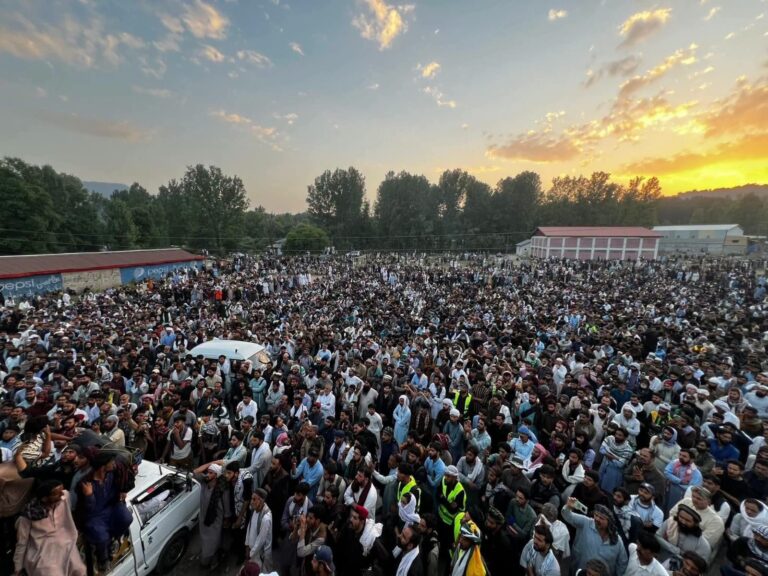
Participants from Tamil Nadu reflected on the meteoric rise of the TVK party with the cine star Vijay at the helm in the results of assembly election. The election results are a significant disruption of the traditional political binary of identity politics, with a completely new force aligned with the Dravidian tradition and secular-democratic forces emerged as the victor. The long-term ideological direction of Vijay’s TVK and its relationship to the Dravidian movement remains to be observed. TVK’s mass conferences drew enormous crowds without payment or organized mobilization — a historically unprecedented phenomenon in Tamil Nadu politics. The Karur conference alone saw 41 deaths due to the scale of attendance. DMK’s strength historically derived from anti-Brahmin politics and support from urban intelligentsia and upper non-Brahmin castes. AIADMK emerged from the Green Revolution’s newly wealthy rural communities. Both parties had aged and lost contact with Gen Z, Dalits, and women. The “Dravidian Model” — a development model rooted in anti-caste politics, welfare as investment, state-led transformation, and broad-based social inclusion. This model created aspirations through education and human capital development but is now in crisis due to declining labor elasticity of capital, falling revenue generation (worsened by post-2014 centralization), and the inability of welfare provisions to meet growing aspirations. Jobless growth created massive youth unemployment and discontent. Gen Z voters, who grew up watching Vijay’s films, identified with him and even influenced their parents to vote for TVK. TVK relied its election campaign almost entirely on social media; social media — particularly Instagram and WhatsApp — was used extensively to bombard youth with TVK messaging over six months. TVK’s social media campaign succeeded by identifying small, relatable grievances — such as dynastic politics (Udhayanidhi Stalin’s elevation), contractual employment, and minor corruption (e.g., overcharging at TASMAC outlets) — and amplifying them. Women who benefited from welfare schemes were made to feel these were entitlements, not policy achievements, reducing appreciation for DMK governance. The ‘Left’ and many analysts dismissed TVK as inexperienced and ideologically unclear, even labelling it a “B team of BJP.” This proved to be a serious miscalculation. The ‘Left’ failed to harvest the genuine discontent arising from capitalist jobless growth and should have offered a systemic alternative. The ‘Left’ failed to read the minds of youth. Capitalism has conditioned youth to focus on success as individual effort. The ‘Left’ failed to communicate Marxian analysis of capitalism to the youth. Gen Z is conditioned by capitalist motives to focus on individual success rather than systemic critique of the social conditions responsible for the jobless growth.
Capital in the twenty-first century and ‘Reimagining the Left
A recurrent theme that was most prominent among all the observations across the participants from different regions and social background was ‘Reimagining the Left’. Considerable discussion was devoted towards the challenging issues in ‘Reimagining the Left’. It was pointed out in the discussion there is a massive economic crisis not only in India but across south Asia (Bangladesh, Pakistan, Nepal, Sri Lanka). The Chief Minister in Maharashtra is comparing petrol prices favourably to Pakistan’s, while India’s dollar reserves are being drawn down and the Reserve Bank is transferring astronomical sums to the central government. Despite the economic crisis, political motivation among the public does not reflect their economic anxiety. Since 2010, ‘right-wing’ forces have consistently won elections across India, representing a structural trend rather than isolated defeats of democratic forces. The ‘right-wing’ has captured changes in the inner fabric of society — shifting from social aspiration to individual aspiration. Capitalism now works from within individuals (shaping subjectivity of the individual) rather than from outside. The consumer society has made people evaluate politics in terms of personal benefit. Media and social media manufacture public consensus in new, controlled ways — for example, exit polls and result-day media cycles collapse voters’ independent judgment. The defeat of the ‘Left’ reflects a global crisis: the rise of authoritarian nationalism, neoliberalism, and technologically mediated illiberal politics. Kerala, as a labor-exporting region deeply integrated into global capital flows, is especially susceptible to these influences. The ‘Left’ must find new forms of engaging public consciousness and must be self-critical about its own democratic deficits (e.g., aging leaders remaining in opposition roles for decades, lack of internal democracy, etc.). The ‘Left’ must articulate a positive, affirmative vision of democracy — not just critique bourgeois democracy — to counter the perception that the ‘Left’ is anti-democratic. In this era of post-truth and ‘flat world’, Lacanian and postmodernist thinking is needed to understand how people perceive and respond to the reality, which economistic reductionist Marxism cannot capture.
Participants argued that the ‘Left’ must be open to criticism and to people expressing fear, rather than dismissing such voices as belonging to the ‘wrong camp.’ The participants argued while having introspection about the ‘Left’, the criticism is not to be confined to mainstream ‘Left’ political parties only. There is hardly any discussion on the state of affairs in the non-party ‘Left’/’New Left’/non-mainstream ‘Left’, etc. The traditional ‘Left’ and the ‘New Left’ together have been marginalised more and more. However, in our circles, we keep discussing only about “them”! The small ‘Left’ groups suffer from economism, sectarianism, deficient theory, deficient understanding of the conditions of rank-and-file members, ego-problems posed as political differences, etc. The ‘Left’ must encash the current ideological vacuum — if there is a ‘right’, there must be a ‘Left’, and the dialectical relationship between the two is essential for political progress.
Participants argued that the traditional ‘Left’ has not seriously engaged with resource depletion, climate change, and ecological limits of the twenty-first century — issues that are only about 50 years old. There are now three identifiable tipping points: inequality, shortage of resources (including energy and non-renewable minerals within 40–50 years), and climate change (1.5°C warming expected within 5–6 years). They argued ‘rainbow coalitions’ of social forces opposed to ecological disaster are now necessary and their concern must be international, not just national. They raised questions about intergenerational equity, equity between species, and the meaning of sustainability — questions that challenge all existing economic theories. Noted that the environmental movement, unlike previous major movements (anti-colonial, anti-capitalist, gender equality, civil rights), does not have the luxury of time.
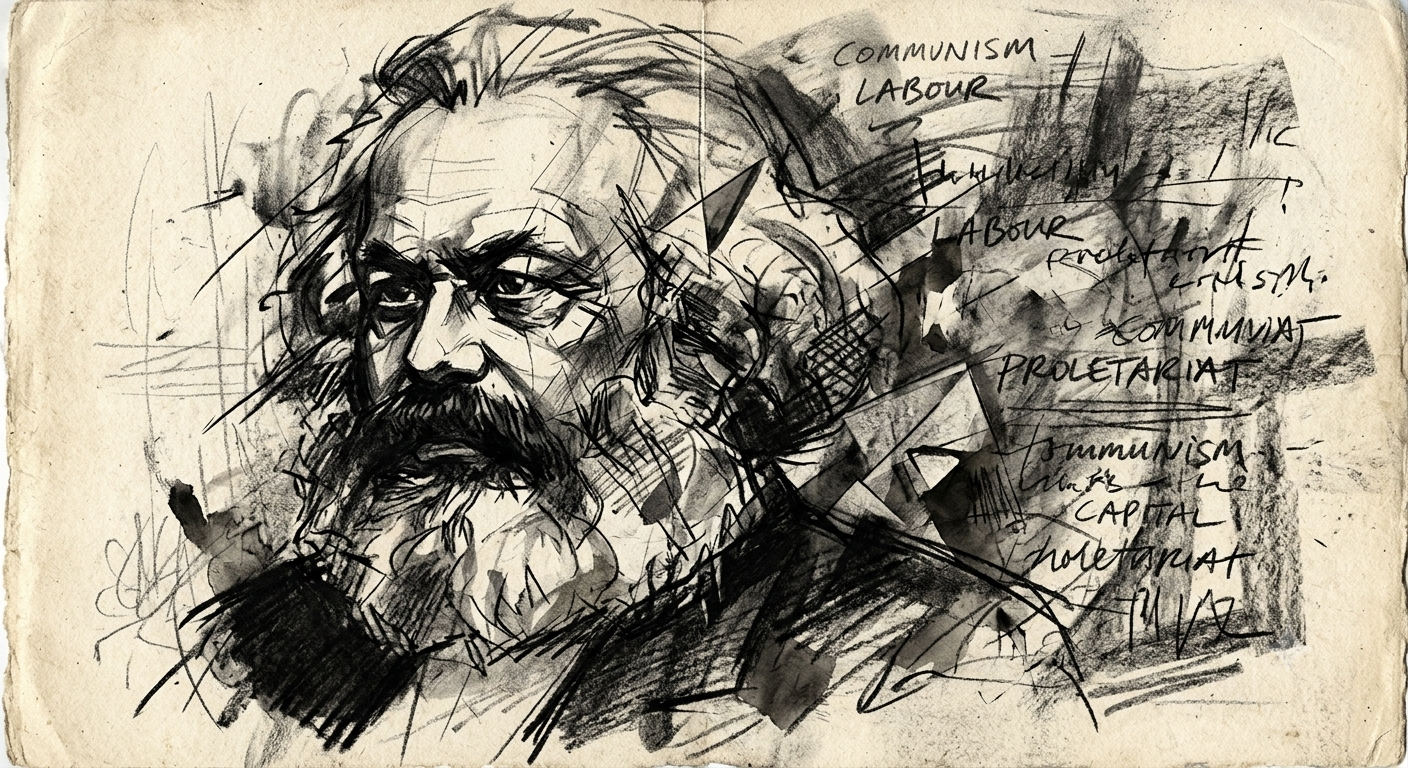
Participants argued that while discussing ‘Reimagining the Left’ the ‘Marx Forum’ should clarify what Marxism truly means, — distinguishing original Marxian thought from later distortions. Marx’s early writings (Grundrisse, German Ideology) and his doctoral thesis, emphasizing Marx’s commitment to human subjectivity should be introduced for discussion. They argued to challenge commonly held Marxist concepts such as dialectical materialism, economic determinism, and the dictatorship of the proletariat, asking whether these are truly Marxian or later interpretations. The ‘Left’ must engage with Marxian humanism (not just dialectical materialism) and the later writings of Marx. In the current global capitalist system, the fundamental political divide is between those protected by global capitalism and those excluded from it (migrants, ghetto dwellers, marginalized communities). A genuine Marxist approach must support the emergence of these foreclosed sections — not as their saviour, but as a Gramscian organic ally. They urged ‘Marx Forum’ itself should raise these fundamental questions and help prepare the ground for a new Marxist movement in south Asia.
Consolidation of RSS and the ‘right-wing’ within the social fabric of India
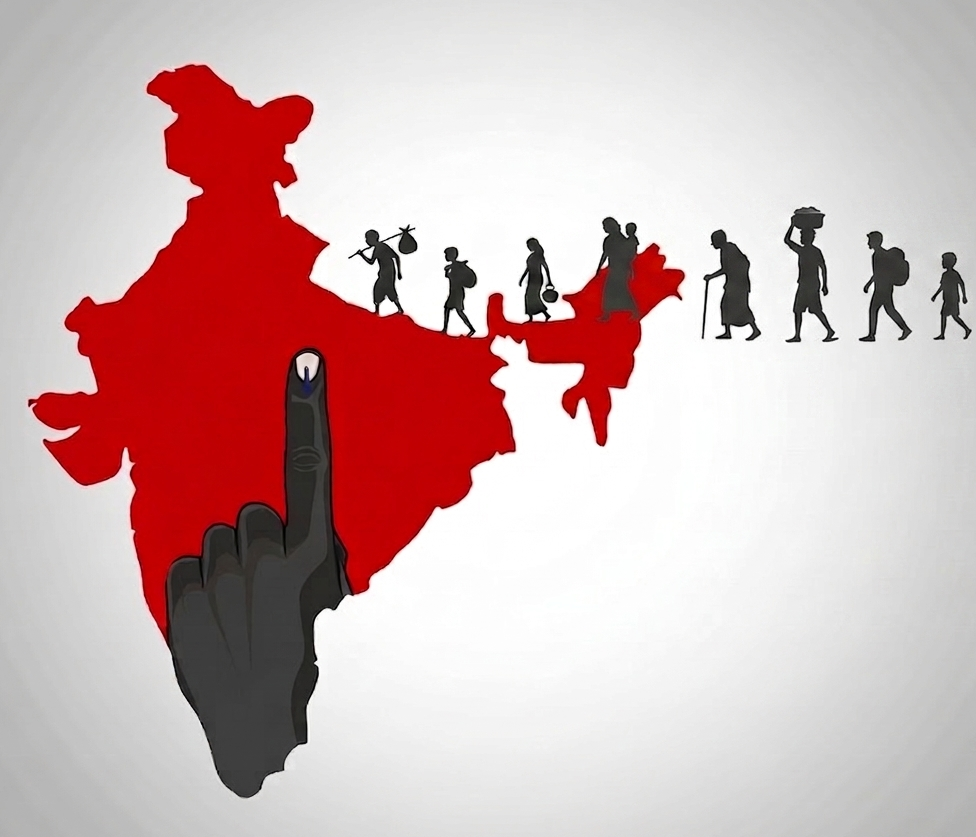
The participants in their observations expressed deep concern at the steady rise and consolidation of the influence of RSS and the ‘right-wing’ within the social fabric of India that was clearly reflected in the election results of West Bengal, Assam and before that in Bihar. The election results in these states were manipulated by deeply polarising propaganda along with the compliance of the state machineries such as the Special Intensive Revision (SIR) campaign by the Election Commission of India (ECI). The southern states of Tamil Nādu and Kerala have also seen significant rise in the vote share of BJP among younger people and the seat share in Kerala. In West Bengal, alongwith huge presence of paramilitary and total subservience of the election machinery, BJP could generate a pervasive atmosphere of fear among the population, particularly among the minorities. TMC’s collapse in West Bengal resulted from a combination of ideological vacuum, corruption, arrogance, and failure to protect marginalized communities. RSS propaganda exploited partition-era trauma and fears about demographic change to swing voters. RSS worked silently at the grassroots for over 15 years, gathering data and stoking fear among the rural population about the impending demographic change, particularly among the border districts of Nadia, Murshidabad and Malda. The ‘double engine’ government concept was also used effectively among the impoverished population. BJP offered welfare doles at double the rate from TMC rule. Government employees strongly backed BJP as they believed them as the only force capable of destabilizing TMC.
Participants from Assam observed that the Assam election is a “whitewash for political opposition” and a “pre-scripted election” based on delimitation already engineered to favour the ruling party BJP. They identified three key mechanisms of electoral manipulation: (1) Delimitation — Muslim-majority constituencies were gerrymandered by splitting villages across multiple constituencies to dilute minority voting power; (2) Selective voter roll deletions (SR process) — names of legitimate voters were deleted in opposition strongholds, while voters from outside of Assam were added; (3) EVM malfunctions during counting in selected constituencies. The most vocal opposition leaders were specifically targeted for defeat, while weaker or government-friendly opposition candidates were allowed to win to maintain a veneer of electoral legitimacy. The entire opposition alliance won only 24 of 126 assembly seats. The Election Commission of India and the judiciary failed to act on documented complaints. They argued that the primary fight must now be against the Election Commission itself and the subservient Supreme Court, rather than against individual parties.
BJP’s strategy in Assam is to destroy the cultural syncretism that has historically held the state together — the coexistence of diverse ethnic communities (Miri, Mishing, Moran, Motok, etc.) — by using divide-and-rule tactics along religious lines, mirroring colonial strategies. Land is being alienated and given to corporate houses. Some of the participants related the rise of the right wing to the ethno-nationalistic movements in Assam from the 1980s. They traced the convergence of ethno-nationalism and Hindutva in Assam from the 1950s onward, BJP and ethno-nationalist forces became complementary and supplementary to each other over decades.
The current BJP government conducts false encounter killings, mass evictions without legal process, and operates detention camps. The Supreme Court ordered an inquiry into 51 encounters in recent years. Anti-incumbency is limited because rural populations have been mobilized through ethno-nationalist narratives for decades and do not understand the manipulation occurring. The participants described Assam as a ‘laboratory’ for the politics of exclusion — NRC, evictions, and communal division — that is now spreading across India.
The participants in the discussion observed that fascist forces are systematically dismantling the electoral process itself, and that the ‘Left’ has failed to respond adequately due to uncertainty and lack of clarity in their own ideological commitments. Some of them compared the current situation to the rise of Hitler and Mussolini, arguing that the ‘Left’ may have won a few tactical battles while being defeated in the strategic war. They argued that the BJP/RSS government, once in power, subsumes all balancing institutions (Supreme Court, Election Commission, RBI) under itself, making parliamentary democracy effectively powerless. The situation now is “the government electing the voters” rather than voters electing the government. The participants concluded the ‘right-wing’s rise is rooted in deep structural changes in the economy and society, and cannot be treated merely as electoral tactics.
Limitations of parliamentary institutions as organs of Democracy’:
The above observations and analysis led to certain sharp questions and loud thinking regarding the effectivity of the parliamentary institutions and elections as organs of ‘Democracy’. Some participants argued that the era of parliamentary democracy as a vehicle for working-class interests is over. The BJP has demonstrated that once in power, it subsumes all institutions under the parliament. The ‘Left’ must stop making “journalistic comments” about vote percentages and engage in out-of-the-box thinking. They raised the question whether trade union struggles can be linked to political struggle to advance working-class interests, without which socialism remains a distant goal. Some participants stressed that the real priority must be building workers’ programs and unity — the heart and solidarity of workers — rather than focusing on electoral outcomes. The fundamental question is how to end the exploitation of workers and build their power, and elections play a limited role in that. The path and objective from parliamentary democracy to working-class democracy needs to be discussed. They questioned whether elected representatives truly represent working people — farmers, Adivasis, Dalits — who are numerically the majority. Political engagements tend to spike only during elections and fades otherwise. They argued that the ‘Left’ must declare the era of the ‘dictatorship of the proletariat’ is over and embrace participatory democracy, potentially including 500 smaller republics in India (Gram Sabhas). They urged the Marx Forum to explicitly address the limitations of parliamentary democracy and put forward the road to working-class democracy on its agenda.
Some of the participants argued that elected representatives (MLAs, MPs) have no formal role in governance — they are lawmakers and political actors, but governance is conducted by the colonial bureaucratic apparatus. The only formal link between democracy and governance is the minister, and even that link is mediated through informal negotiation with the bureaucracy. The 73rd Amendment (Panchayati Raj) was subverted — instead of departments being transferred to Panchayats, Panchayats were captured by departments. Special Economic Zones (2005) created a model of corporate governance where even police cannot enter without corporate sanction. With globalization, nation-states have lost control over currency and markets, relegating elected governments to instruments of capital accumulation. Capital has reached a stage of global crisis and is in its final drive to capture all remaining people’s resources.
The phenomenon of the ‘Cockroach Janata Party’ (CJP):
The recent development of CJP came up for substantial attention among the participants. A common opinion was the CJP represents a new form of political imagination and communication that has resonated with the millions, particularly the youth. They noted that the CJP, which started as satire, has attracted 2 crore subscribers with demands including: no post-retirement posts for retired judges, no pensions for MLAs/MPs, and they stand for socialism and secularism, and a five-point manifesto. The participants contrasted these developments with the ‘Left’s’ failure to produce similarly imaginative and resonant demands. They noted that the CJP dared to challenge the New Education Policy and demanded reforms in the Education sector, which no other opposition party had done.
The challenging issues before ‘Reimagining the Left’:
The discussion on the challenging issues started with identifying what is meant to be ‘Left.’ Since neoliberalism, political parties are barely distinguishable on substantive policy perspectives (health, housing, education, displacement, development). A fundamental problem is the participants from the ‘Left’ do not share the same definition of ‘the Left’ — their experiences, political legacies, and contexts are too different. There are inherent contradictions within the ‘Left’. The CPM supported the farmers’ long march from Nasik to Bombay, but brutally repressed farmers agitating in Kerala under a CPM government. Participants argued that these contradictions must be placed on the table before ‘Reimagining the Left’ can be meaningful. While speaking of the ‘Left’ one has to distinguish three levels of the ’Left’: (a) electoral/parliamentary ‘Left’, (b) non-parliamentary ‘Left’ parties and organizations, and (c) grassroots ‘Left’ forces. Lumping them together leads to overtly general and diluted critiques. The participants emphasized in the last about three decades the class analysis and class politics has taken a back seat, the larger democratic-secular issues are being dealt within a liberal framework, rather than on a ‘Marxian-class basis’. Here, the term ‘class’ must be understood broadly, incorporating gender, caste, and community dimensions, — not in a restricted economistic-reductionist sense. For example, in Bengal we have seen a major section of minority community [Muslims] and certain oppressed castes moved away from the ‘Left’, not only on the basis of caste-community issues but because their issues were not conceived on class basis as one of the most unorganised toiling classes. Traditional Marxism ignored Dalit, Adivasi, and feminine identities by reducing all conflicts to a reductionist understanding of class conflict. A ‘reimagined Left’ must make space for subaltern movements (as Ambedkar and Jaipal Singh Munda did), incorporate feminist politics, and address climate change as a new and urgent phenomenon. They called for ‘Reimagining the ‘Left’ through a new strategic framework — a Gramscian “historic bloc” of popular classes. This term again needs to be understood as an alliance at not only parliamentary level but on a broader political level, extending itself to the alliance of civil society groups and alternate institutions, and an alliance of not just industrial working class but all the popular classes. This term also implies an alliance at the level of ideological-cultural plane, which in India at this historic juncture means an alliance inclusive of Ambedkarite/Dalit movements, true Gandhians, environmentalists, feminists, and Bhujanwadi forces, et al. The participants highlighted while speaking of ‘class forces’, the reference is to the full ‘rainbow’ of forces opposed to Capital, not just countering the existing production relations or intervention in the electoral processes and institutions. Analysis of social classes must be dialectically integrated with gender, caste, and community issues such as the LGBTQI communities — some of which cannot be fully grasped through the ‘optics’ of traditional class analysis alone. The features of identity politics particularly in recent years such as the expressions of LGBTQI communities is a far more complex and energetic phenomenon than traditional ‘Left’ analysis acknowledges.
About the Author