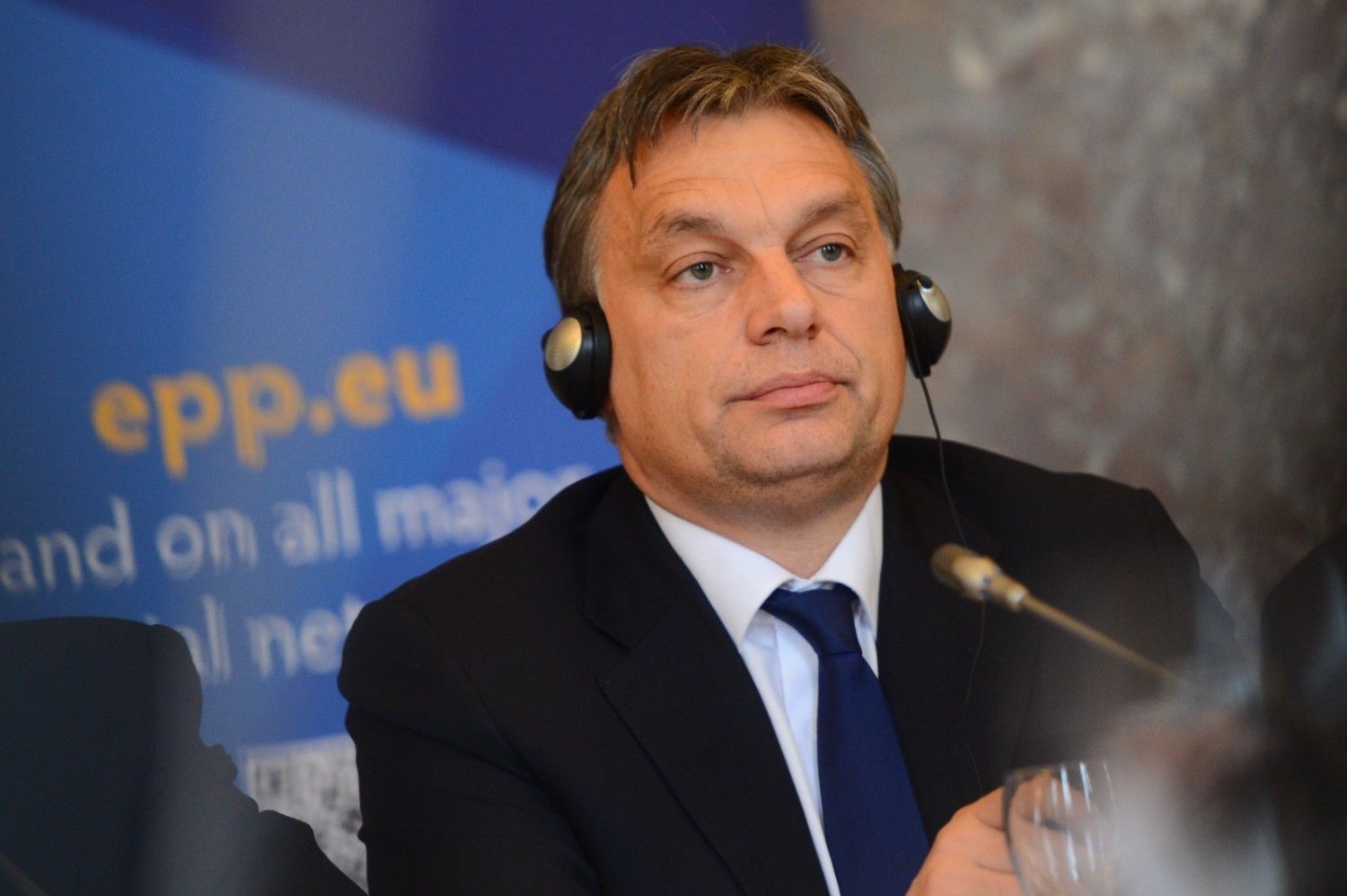
The parliamentary elections of April 2026 brought an end to sixteen years of uninterrupted rule by Viktor Orbán. The scale of the shift was considerable. With turnout approaching 80 per cent—the highest in post-1989 Hungary—the opposition force led by Péter Magyar secured a two-thirds parliamentary majority, displacing Fidesz from a position it had appeared to consolidate durably over more than a decade. The result was not a marginal correction but a decisive reconfiguration of the electoral landscape.
This outcome has been widely interpreted as a democratic breakthrough: the removal of an entrenched illiberal regime through electoral means and a possible reintegration of Hungary into the institutional and political mainstream of the European Union. At the same time, more sceptical readings have dismissed the result as a mere reshuffling within the right, arguing that Magyar represents continuity rather than change.
Both interpretations capture elements of the conjuncture. Yet taken in isolation, each risks obscuring the dynamics that produced the result. The election marks a significant political rupture, but it does not in itself constitute a transformation of the underlying social and economic structures. The task, therefore, is not to adjudicate between celebration and dismissal but to reconstruct the conditions under which such a shift became possible.
The exceptionally high turnout indicates not simply procedural participation, but the activation of constituencies that had previously remained disengaged from a political field seen as closed or ineffective.
The Orbán System
To understand the significance of the 2026 election, it is necessary to move beyond a focus on leadership and instead conceptualise Orbán’s rule as a specific political-economic formation. Emerging from the crisis of post-socialist transition and the discrediting of social democratic governance in the 2000s, Orbanism combined elements that are often analytically separated: electoral legitimacy, centralised political control, and deep integration into global capitalism.
At the level of political form, the regime maintained competitive elections while progressively weakening institutional checks, subordinating the judiciary, and consolidating control over media and administrative structures. This has often been described as “illiberal democracy”, though the term risks obscuring the degree to which electoral mechanisms remained central to its reproduction.
At the level of political economy, the regime did not break with the neoliberal restructuring that followed 1989. Instead, it reorganised it. Hungary remained deeply dependent on foreign direct investment—particularly in manufacturing—and on transfers from the European Union. At the same time, the state played an active role in redistributing resources through clientelist networks, directing public procurement and subsidies toward a politically connected business class. This produced a hybrid configuration: externally integrated, internally centralised.
These dynamics were unevenly distributed. Rural regions—already shaped by deindustrialisation and the erosion of public services since the 1990s—were particularly affected. Declining access to healthcare, job scarcity, and rising costs intensified existing disparities between urban and peripheral areas, reinforcing the social basis of political discontent.
The regime’s durability rested on its capacity to articulate these elements into a relatively stable social bloc. Sections of domestic capital benefited from state-mediated accumulation; segments of the working and lower-middle classes were incorporated through employment expansion, tax incentives, and targeted welfare measures; and nationalist rhetoric provided a unifying ideological framework that recast social tensions as questions of sovereignty, migration, and cultural identity. The regime’s stability was reinforced through dense clientelist networks, structured around public procurement, access to land and local resources, and employment schemes that tied social benefits to political loyalty. Orbánism, in this sense, did not endure because it was authoritarian. It endured because, for a period, it was socially and economically functional. The stability of this formation, however, depended on conditions that were not permanent.
Crisis and Breakdown
The stability of this formation began to erode in the early 2020s under the impact of converging pressures. These pressures did not stem from a single cause but from the interaction of economic constraints, political crises, and shifting social dynamics.
First, the economic basis of the regime weakened. The growth model—dependent on foreign investment, low wages, and external financing—proved vulnerable to global disruptions. The combined effects of the COVID-19 pandemic, rising energy prices, and the broader reconfiguration of European production chains placed increasing strain on Hungary’s economy. Inflation accelerated sharply, real wages stagnated, and public services—particularly in health and infrastructure—showed signs of prolonged underinvestment. While corruption became a central political issue, it does not in itself explain the economic difficulties of the Hungarian economy. These are rooted in a model characterised by dependence on foreign investment, low wages, and vulnerability to external shocks.
The constraints facing the Hungarian economy are not only fiscal or political but also monetary: a combination of rising costs, weakened competitiveness, and currency dynamics shaped by global financial flows.
Rapid wage increases, particularly in the post-pandemic period, fed into rising price levels without being matched by corresponding productivity gains. As the chart on page 2 shows, nominal wage growth exceeded 9–10 per cent in recent years, contributing to a sharp increase in costs. At the same time, rather than depreciating to restore competitiveness, the Hungarian forint came under upward pressure due to high interest rates, attracting speculative capital inflows. This produced a contradictory situation in which a currency that required devaluation instead appreciated, further constraining the domestic economy.
Second, the progressive freezing of European Union funds, linked to rule-of-law disputes, reduced the fiscal resources available to the state. This had direct political consequences. The clientelist mechanisms through which the regime maintained loyalty—especially at the local level—became more difficult to sustain. As distributive capacity narrowed, the visible concentration of wealth within a narrow oligarchic stratum became increasingly difficult to legitimise. The freezing of European funds and the contraction of public employment schemes weakened the material basis of these networks, reducing the regime’s capacity to maintain loyalty at the local level.
Third, a series of political and moral crises undermined the regime’s claim to represent order and stability. Corruption scandals and high-profile controversies exposed the gap between the regime’s moral discourse—centred on family, nation, and protection—and its actual practices. While such contradictions had existed earlier, their impact was amplified under conditions of economic strain.
Finally, generational and social shifts altered the electoral terrain. Younger voters, more integrated into transnational labour markets and cultural circuits, displayed markedly lower levels of support for the regime. Urban constituencies, as well as segments of the provincial middle class and excluded business actors, became increasingly receptive to alternatives that promised institutional normalisation and economic predictability.
These processes did not automatically produce regime change. What they did was weaken the capacity of Orbánism to organise consent across its previously heterogeneous social base. The regime did not collapse under external pressure alone, nor was it simply defeated by a superior political alternative. It unravelled because the conditions that had sustained it ceased to hold.
These shifts were not purely passive. Episodes of public mobilisation—particularly among younger and urban constituencies—played a role in exposing the limits of the regime’s authority and raising the political costs of further escalation. While such mobilisation did not produce an alternative on its own, it helped create the conditions for electoral change.
The erosion of the regime’s support was not primarily ideological but material. Rising prices, declining purchasing power, and the visible enrichment of a narrow elite weakened the social basis on which Orbánism had rested. Over time, mechanisms that had ensured compliance—particularly fear of exclusion and dependence on patronage—began to lose their effectiveness, giving way to a more generalised frustration as deteriorating public services and rising costs became increasingly difficult to ignore.
How the Shift Happened
The weakening of Orbánism did not automatically produce a coherent opposition. For years, the Hungarian political field had been marked by fragmentation, particularly on the liberal and left sides, which struggled to build either a credible programme or a durable organisational base. What changed in the period leading up to the 2026 election was not the sudden appearance of a new ideological alternative but the emergence of a figure capable of reorganising a dispersed and largely ineffective opposition into a single electoral force. The decisive shift was not simply the mobilisation of opposition voters but the erosion of the regime’s own electoral base. What changed was not only the depth of dissatisfaction but also the way it was politically organised.
The rise of Péter Magyar needs to be understood in this light. His trajectory—rooted within the institutional and social networks of the Orbán system—was not incidental. It allowed him to appear simultaneously as an insider familiar with the workings of power and as a credible critic of its excesses. In a context where the opposition had long been portrayed as weak, divided, or disconnected from “ordinary” voters, this dual positioning proved decisive. A crucial element in this shift was the manner in which political realignment was made socially and psychologically acceptable. By presenting himself as someone who had once belonged to the same political camp, Magyar enabled voters to reconsider their allegiance without experiencing it as a repudiation of their own past positions. This lowered the barriers to defection within the regime’s electoral base.
A central element of this strategy was territorial. The campaign invested heavily in rural areas, building local organisational networks and engaging directly with communities that had long been considered strongholds of the ruling party. By focusing on everyday concerns—public services, infrastructure, cost of living—it was able to penetrate a political space that previous opposition efforts had largely failed to access.
Magyar’s political intervention was less about programmatic innovation than about recomposition. He consolidated a broad and otherwise heterogeneous coalition: urban professionals frustrated by declining public services, younger voters alienated by the regime’s cultural conservatism, sections of domestic capital excluded from state patronage, and liberal constituencies primarily concerned with restoring institutional norms. What held this coalition together were not a shared vision of social transformation but a convergence around anti-corruption, administrative reform, and the removal of Orbán. The electoral shift cannot be understood primarily in terms of democratic ideals or geopolitical alignment. For many voters, particularly among working and lower-income groups, it reflected dissatisfaction with deteriorating material conditions.
In this sense, the alternative did not emerge from outside the existing political order but from within its own fractures.
Change Without Transformation
The victory of Magyar’s Tisza party represents a clear break at the level of political leadership and institutional alignment. It signals a shift away from the confrontational posture that characterised Orbán’s relationship with the European Union and toward a more cooperative, technocratic orientation. At the same time, it would be misleading to read this as a fundamental transformation of Hungary’s political economy. The underlying structure of the Hungarian economy—deeply integrated into global production chains and reliant on foreign capital—remains largely untouched by both political formations.
At the level of policy, continuity is striking. The core features of the existing economic model—reliance on foreign investment, a relatively low-wage labour regime, and limited redistribution—remain largely intact. Magyar’s program, while invoking anti-corruption measures and modest social adjustments, does not propose a restructuring of property relations or a significant expansion of labour rights. On issues such as migration, national sovereignty, and the role of the state, his positions often remain close to those of his predecessor, albeit articulated in a less confrontational register. The campaign avoided direct engagement on polarising cultural issues, instead focusing on governance, cost of living, and corruption—areas where the regime was more vulnerable.
What has changed, therefore, is not the underlying configuration of interests, but the mode through which they are managed. The new government appears orientated toward stabilising Hungary’s position within European institutional frameworks, restoring access to external funding, and re-establishing predictability for investors and domestic economic actors alike. While a shift in diplomatic tone is likely, early indications suggest continuity in key areas such as energy dependence and strategic positioning, underscoring the limits of geopolitical realignment.
Early indications suggest a shift toward technocratic governance, with key positions being assigned to figures drawn from corporate and managerial backgrounds, reinforcing the orientation toward institutional stabilisation rather than structural transformation.
To recognise this continuity, however, does not require collapsing the distinction between the two regimes. The difference between an authoritarian-national populism and a technocratic, EU-aligned conservatism is politically significant, even if both operate within the same structural limits. The change is real—but it is not transformative.
The coalition assembled around Magyar brings together constituencies with divergent expectations—urban professionals seeking institutional stability, younger voters demanding social and cultural change, and economic actors prioritising predictability and access to European markets. These expectations cannot be easily reconciled within existing fiscal and structural constraints, suggesting that the current alignment may prove unstable over time.
The Orbán regime extended beyond electoral dominance, embedding itself in judicial, media, and administrative structures in ways that cannot be easily reversed through parliamentary change alone. Even with a constitutional majority, the dismantling of entrenched networks is unlikely to be straightforward. Key positions within the state apparatus remain occupied by figures aligned with the previous regime, suggesting that institutional resistance will persist.
A Field Without a Left
The 2026 election has reshaped Hungary’s political landscape, but it has not pluralised it in any meaningful sense. If anything, the result has clarified a tendency that had been developing for some time: the effective disappearance of a left capable of acting as an independent political force.
Earlier opposition strategies—often centred on moral critique and reactive positioning—proved ineffective in breaking the regime’s hold over its electorate, reinforcing the perception that no viable alternative existed. The outcome was not only the result of structural weakening but also of a deliberate political strategy that avoided the pitfalls of earlier opposition efforts—particularly their tendency to cede key symbolic and social terrain to the ruling party.
The new parliament is dominated by formations of the right, broadly defined. On one side stands the defeated but still substantial base of Fidesz; on the other, a governing bloc that brings together conservative, liberal, and technocratic currents under a single organisational umbrella. Outside this configuration, the space for a programmatically distinct left is minimal, both electorally and institutionally. The inability of previous opposition forces—particularly liberal and urban-based currents—to engage meaningfully with rural constituencies further contributed to the consolidation of right-wing dominance.
This absence is not simply the result of recent electoral dynamics. It reflects a longer trajectory in which social-democratic and left-liberal forces, having embraced market reforms in the post-1989 period, lost their organic connection to working-class constituencies. The social dislocations produced by that transition—rising inequality, labour insecurity, and regional disparities—were subsequently articulated not by the left but by right-wing nationalist formations.
Hungary is not unique in this respect. Similar patterns can be observed across Europe, where the erosion of traditional left parties has coincided with the rise of different variants of right-wing politics—some more overtly authoritarian, others more technocratic and institutionally embedded. What varies is the form; what persists is the absence of a political force capable of organising social conflict along class lines.
In this context, the most significant feature of the Hungarian election is not only the defeat of Orbán but also the continued structuring of political competition within a field from which the left remains largely excluded.
The absence of a political force capable of organising these tensions along class lines remains the defining feature of the current conjuncture.
The Limits of Elections
The Hungarian election demonstrates that electoral means can also remove well-entrenched regimes, even in an uneven institutional terrain. Certainly, this case is significant as it points to the continued relevance of elections as a site of political contestation and to the possibility of displacing governments that have consolidated power over extended periods.
At the same time, the scope of what such electoral shifts can achieve remains limited. Elections can alter the composition of political leadership, modify institutional alignments, and reorganise governing coalitions. They are less capable, on their own, of transforming the deeper structures that shape political and economic life.
In Hungary, these structures include a growth model dependent on external capital, a labour regime characterised by low wages and weak collective organisations, and a pattern of inequality that has developed over decades. None of these are immediately addressed by a change in government. The expectation that electoral turnover will, by itself, resolve these underlying tensions risks misrecognizing the nature of the problem.
The high level of participation demonstrates that entrenched regimes can be electorally challenged. It does not follow, however, that participation alone can transform the structures within which such regimes emerge. This does not render electoral politics irrelevant. It does, however, place it in perspective. Electoral defeat can displace a regime; it does not necessarily eliminate the conditions that enabled it.
These constraints are not easily altered through electoral change. Even where policy shifts are attempted, they are mediated by financial markets, currency dynamics, and external competitiveness pressures. As recent developments indicate, even countries retaining monetary sovereignty are not insulated from such constraints.
A Wider Pattern
Orbán’s regime had acquired a symbolic significance beyond Hungary, functioning as a reference point for various right-wing projects. Its defeat therefore carries a demonstrative effect, even if it does not alter the structural conditions sustaining such movements.
Seen in a broader context, the Hungarian case is not an isolated development but part of a wider European and, to some extent, global pattern. Across different national settings, political systems have been marked by a similar sequence: the weakening of traditional left formations, the rise of right-wing forces that combine elements of nationalism with selective social policy, and, in some cases, the subsequent reconfiguration of these forces in response to crisis.
In countries such as Italy, Poland, and France, variations of this pattern are visible. Right-wing movements have shown a capacity to adapt, shifting their rhetoric, alliances, and governing styles while maintaining a core orientation shaped by the same social and economic constraints. Where one configuration loses legitimacy, another often emerges to take its place, without fundamentally altering the underlying distribution of power.
Hungary offers a particularly clear instance of this dynamic. The transition from Orbán to Magyar does not mark an exit from this trajectory but a movement within it. It reflects both the limits of a specific political model and the absence, at present, of a force capable of redirecting it.
An Unresolved Transition
The end of Orbán’s rule closes a political cycle. It removes a government that had come to embody a particular form of centralised, nationalist, and increasingly rigid mode of rule. It also opens a new phase, the direction of which remains uncertain.
The tensions between economic dependence and social stability, inequality and political legitimacy, and institutional form and democratic content remain unresolved. It is a moment of recomposition: a shift in how existing structures are managed, rather than a transformation of those structures themselves.
The longer-term significance of this moment will depend less on the election itself than on what follows. The emergence of new forms of political organisation and the addressing of underlying sources of instability remain open questions.
The defeat of Orbán does not imply the disappearance of the political forces he organised. His decision to withdraw from parliamentary activities while reorganising his base indicates that these forces remain active.
The structures that sustained his rule—economic, institutional, and political—have not been dismantled. They have been disrupted and partially reconfigured, but they remain operative.
The scale of the electoral victory should not obscure the depth of the structures it confronts. Supermajorities can legislate change; they cannot immediately dissolve the networks through which power has been organised.
About the Author

Editorial Board Member of Alternative Viewpoint