The United States is not indicting Raúl Castro because it has suddenly developed a concern for an incident that occurred nearly thirty years ago. If justice were the driving principle, the timing would be difficult to explain. Why is this happening now, when Cuba is experiencing its most severe economic crisis in decades? Why now, when power cuts have become a feature of daily life, hospitals are struggling with shortages, and hundreds of thousands of Cubans have left the island in search of a future elsewhere?
The answer is political rather than judicial. The indictment must be understood as part of a broader campaign of pressure that includes sanctions, restrictions on fuel supplies, threats against Cuba’s trading partners and increasingly aggressive calls for regime change from influential figures in Washington. It is one more instrument in a familiar strategy: increasing pressure on a vulnerable society in the hope of forcing political capitulation.
To understand this strategy, it is necessary to move beyond the convenient fiction that the conflict between US and Cuba conflict began with the latter turning communist. The confrontation’s roots extend far deeper. For much of the nineteenth and twentieth centuries, Cuba occupied a special place in the geopolitical imagination of the US. From John Quincy Adams’s “ripe fruit” theory to the Monroe Doctrine, successive American leaders regarded the island as falling naturally within Washington’s sphere of influence. Cuba’s struggle for independence was therefore never simply a struggle against Spanish colonialism. It was also a struggle to avoid replacing one form of domination with another.
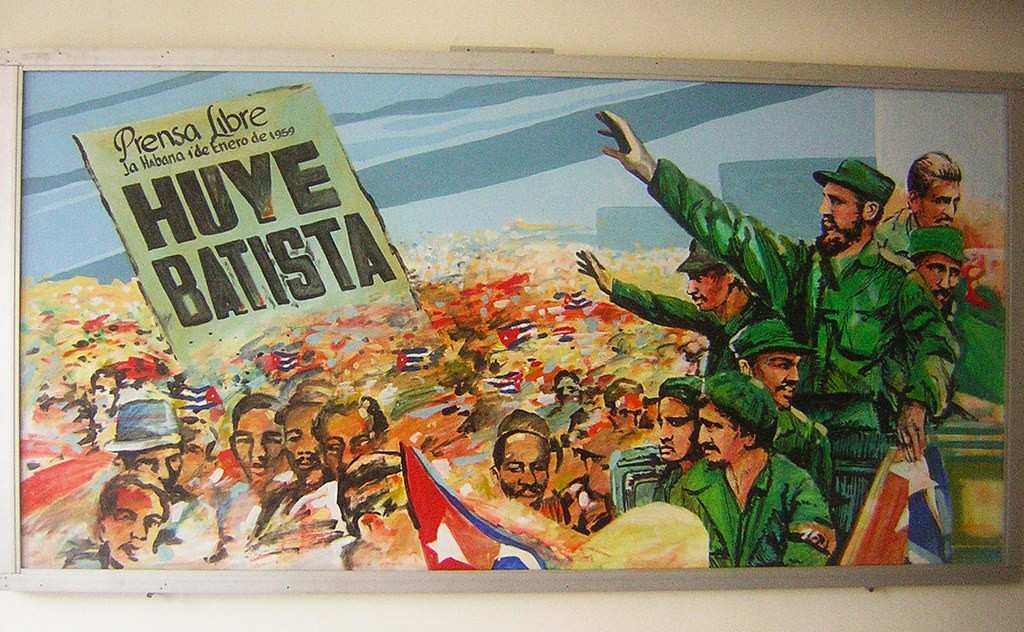
The Platt Amendment, imposed in the aftermath of formal independence, gave Washington the right to intervene in Cuban affairs and transformed the island into what was effectively a protectorate. US corporations came to dominate large sections of the economy. Political sovereignty existed, but within carefully defined limits. The dictatorship of Fulgencio Batista represented the culmination of this arrangement: a regime closely tied to American economic and strategic interests, even as social inequalities deepened across Cuban society.
The Revolution of 1959 shattered that order. What made the Cuban revolution intolerable to Washington was not initially its socialist character. The revolution became socialist through the course of confrontation. What Washington could not accept was the assertion of genuine independence in what it regarded as its own backyard.
The evidence for this is remarkably clear. In 1960, before the Cold War confrontation had fully crystallised, a senior State Department official, Lester Mallory, argued that the most effective way to weaken support for the Cuban government was to generate “hunger, desperation and overthrow“. Few documents reveal the logic of US policy with such brutal honesty. The objective was not dialogue or coexistence. It was to make life difficult enough for ordinary Cubans that they would eventually turn against their government.
More than sixty years later, the language has changed, but the underlying logic remains strikingly familiar. The methods have evolved from invasion attempts and covert operations to sanctions, financial restrictions, legal warfare and diplomatic pressure. Yet the essential premise persists: Cubans alone should not determine Cuba’s political future.
Seen in this light, the indictment of Raúl Castro appears less as a legal proceeding than as part of a much longer historical continuum. It is another reminder that Washington still reserves for itself the right to define what kinds of political systems, governments and social projects are acceptable within its sphere of influence.
However, there is another reason why the current escalation deserves attention. For all its difficulties, Cuba has survived. It survived the Bay of Pigs invasion. It survived the collapse of the Soviet Union. It survived decades of blockade, isolation and economic warfare. Today it faces one of the gravest crises in its history, yet it remains politically independent. That fact matters.
The real lesson of Cuba is not that it is perfect. It is that a small country, ninety miles from the world’s most powerful state, refused to surrender its right to determine its own future. And for more than six decades, Washington has been trying to reverse that decision.
Punishment by Other Means
If the indictment of Raúl Castro is not primarily about justice, then what is it about? The changing methods of exercising power in the twenty-first century provide part of the answer. The US no longer needs to send marines ashore to impose its will. It possesses other instruments, often less visible but equally effective.
For decades, the blockade was the central mechanism through which Washington sought to isolate Cuba. The objective was straightforward: deprive the island of resources, limit its economic options and increase the cost of maintaining an independent political course. But in recent years the pressure has evolved. Today, punishment is often administered through banks rather than battleships. A shipping company that does business with Cuba risks penalties. A foreign bank processing Cuban transactions may find itself under scrutiny. Insurance providers, investors, fuel suppliers and commercial partners are encouraged to calculate whether dealing with Cuba is worth the risk. Often they simply walk away.
The result is that measures directed formally at the Cuban state end up affecting almost every aspect of daily life. When fuel shipments are disrupted, power stations cannot operate normally. When financial transactions become difficult, medicines become harder to purchase. When shipping companies avoid Cuban ports, shortages spread through the economy.
This is why many sanctions regimes are designed to operate indirectly. Their effectiveness does not depend solely on legal prohibitions but on creating uncertainty and fear. A company does not have to be sanctioned to change its behaviour. Often the possibility is enough.
The consequences are felt far from the boardrooms where such decisions are made. They appear in pharmacies with empty shelves, hospitals struggling to obtain equipment, and households coping with repeated blackouts. Economic pressure travels through supply chains until it arrives in people’s homes.
This broader strategy has increasingly been accompanied by another instrument: lawfare. The indictment of Raúl Castro is one example. The Helms-Burton Act is another. Over the past several decades, Washington has sought to transform legal mechanisms into tools of geopolitical pressure. Courts, sanctions offices, property claims and criminal proceedings are deployed in ways that blur the line between law and foreign policy.
The purpose is not always to secure convictions. Often it is to send a message. The message is that political leaders, businesses, investors and even third countries may face consequences if they maintain relations that Washington disapproves of.
Seen in isolation, each measure may appear technical or administrative. Taken together, they form a coherent strategy. The goal is not merely to punish the Cuban government. It is to increase the costs of resistance. This is one reason the current escalation deserves international attention. Cuba is not the only country facing such methods. Similar techniques have been used against Venezuela, Iran and other states that challenge US priorities. What is at stake is not simply Cuba. It is the growing use of economic and legal coercion as instruments of international politics.
Life Under Siege
Supporters of sanctions often describe them as a peaceful alternative to war. The implication is that economic pressure allows governments to pursue political objectives without the human costs associated with military intervention. The Cuban experience (like many others) tells a different story. War is usually imagined as something dramatic: explosions, troops, destroyed buildings and televised images of devastation. Economic warfare operates differently. Its violence is slower, quieter and often invisible to those imposing it. Yet its effects can be just as real.
When fuel shipments are disrupted, power stations shut down. When electricity becomes scarce, hospitals struggle to function normally. Medicines requiring refrigeration become difficult to store. Water pumping systems fail. Public transportation becomes unreliable. Food spoils more quickly. What begins as a sanctions policy in Washington eventually arrives in the daily lives of millions of people.
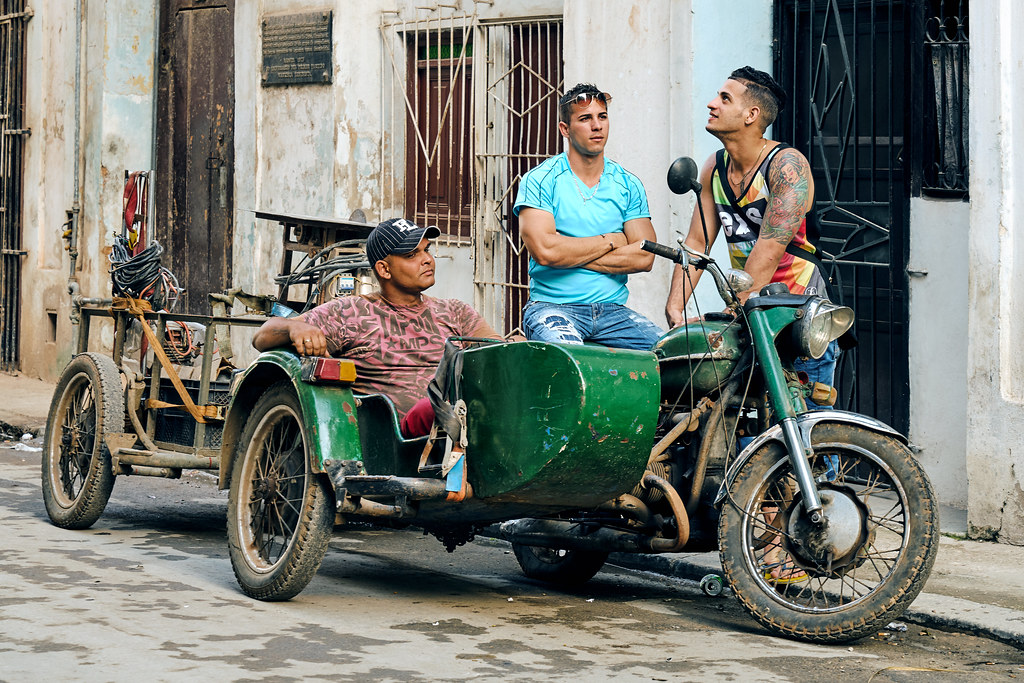
For most Cubans, this is not an abstract political debate but the reality of planning daily life around blackouts. It is parents worrying whether essential medicines will be available when a child falls ill. It is doctors trying to maintain services despite shortages of equipment and supplies. It is elderly people waiting in long queues for basic necessities. It is young people wondering whether they still have a future on the island. In many parts of the island, power cuts dictate the organisation of daily life. Families wait for electricity to return so they can charge phones, pump water, cook meals or refrigerate food. Hospitals and clinics must operate under conditions that would be considered unacceptable almost anywhere else. What appears as a sanctions regulation on paper becomes a practical crisis in everyday life.
In recent years, Cuba has experienced one of the most severe crises in its contemporary history. Long power cuts have become commonplace. Food shortages have intensified. Inflation has eroded purchasing power. Public services are increasingly strained. Hundreds of thousands of Cubans have left the country, producing one of the largest waves of emigration since the revolution.
Sanctions alone cannot explain any of these problems. Cuba’s economy suffers from longstanding structural weaknesses, bureaucratic inefficiencies and policy failures. To pretend otherwise would be intellectually dishonest. But it would be equally dishonest to ignore the role of external pressures.
A country already struggling with fuel shortages becomes more vulnerable when fuel imports are targeted. A healthcare system facing resource constraints becomes more fragile when access to international financial networks is restricted. An economy seeking recovery finds its options narrowed when shipping companies, banks and investors fear the consequences of doing business with it.
Sanctions do not create every problem, but they magnify the existing ones. And they do so in ways that are often difficult to measure but impossible to ignore. One of the clearest indicators of this deterioration has been the strain placed on Cuba’s healthcare system. Recent studies have linked the tightening of sanctions to worsening health outcomes, including rising infant mortality, highlighting the human consequences of policies often discussed only in geopolitical terms. For decades, Cuba was known internationally for achievements in public health that far exceeded what might be expected from a small and relatively poor country. Today, doctors and medical workers continue to perform extraordinary work under increasingly difficult conditions. But commitment alone cannot compensate indefinitely for shortages of medicines, equipment, fuel and infrastructure.
The consequences are measured not only in statistics but in human anxiety. This is why the language of sanctions often obscures more than it reveals. Terms such as “pressure”, “restrictions” or “targeted measures” create the impression of technical administrative decisions. In reality, those decisions ripple outward through society. A regulation drafted in Washington may ultimately be felt in a maternity ward in Santiago de Cuba, a pharmacy in Havana, or a family kitchen in Camagüey.
Cuba’s Problems Are Real
Critics of the blockade often receive a predictable response: Cuba’s difficulties are the result of its own failures. There’s certainly an element of truth in this claim. Cuba today faces serious internal problems. Economic growth has stagnated. Agricultural production remains inadequate. Bureaucratic inefficiencies have accumulated over decades. Inequality has increased. Many young Cubans see emigration rather than reform as the most realistic path to a better future. The frustration visible across the island cannot be explained solely by external pressure. Acknowledging these realities is neither a betrayal of solidarity nor a concession to anti-Cuban narratives. It is simply an acknowledgement of reality.
But recognising Cuba’s problems leads to a different conclusion than the one often advanced in Washington. If a country faces economic difficulties, does that justify making those difficulties worse? If a healthcare system is under strain, does that justify restricting access to medicines and medical equipment? If a society is struggling with shortages, does that justify policies designed to deepen scarcity? The logic is difficult to defend.
No serious observer would propose solving the problems of a hospital by cutting off its electricity supply. Yet this is precisely the kind of reasoning that underpins sanctions regimes. Existing weaknesses become arguments for intensifying pressure rather than reasons for reducing it. The same voices that frequently criticise Cuba for economic inefficiency often support measures that make economic normalisation nearly impossible. The same politicians who speak of reform advocate policies that restrict trade, investment, finance and access to international markets. They demand change while helping to create conditions under which change becomes increasingly difficult.
Ultimately, those choices belong to Cubans themselves. There are legitimate debates within Cuban society about economic reform, political participation, state institutions and the future of the revolutionary project. They cannot be resolved through economic siege, legal coercion or external pressure.
The Crime of Survival
If Cuba were merely a small island struggling through an economic crisis, it would be difficult to explain the persistence of Washington’s hostility. More than six decades after the revolution, Cuba poses no military threat to the United States. It does not possess strategic resources capable of altering the global balance of power. It is not a rising economic competitor. By any conventional measure of geopolitics, Cuba should occupy only a marginal place in US foreign policy. Yet successive administrations continue to devote remarkable energy to isolating, sanctioning and pressuring the island. Why? The answer lies not in Cuba’s power but in its example.
The Cuban Revolution was one of the defining political events of the twentieth century. For the first time, a small country in what Washington regarded as its own backyard overthrew a US-backed dictatorship, nationalised foreign property, redistributed land and attempted to build an alternative social order. More importantly, it survived. That survival carried consequences far beyond Cuba itself.
Across Latin America, Africa and Asia, generations of activists, trade unionists, students and anti-colonial movements looked to Cuba as proof that resistance was possible. One did not have to agree with every aspect of the Cuban model to recognise the symbolic significance of a poor country refusing to accept the role assigned to it by the global order. The impact of that example was not measured only in speeches or ideology. It was visible in action.
When apartheid still dominated Southern Africa, Cuban soldiers fought alongside Angolan forces against the South African military. At a time when many Western governments continued to treat the apartheid regime as a strategic ally, thousands of Cubans travelled thousands of kilometres from home in support of a struggle that brought them no obvious material benefit. When doctors were desperately needed in remote and impoverished regions of the world, Cuba sent medical brigades. Cuban physicians worked in communities where there were often no doctors at all. During epidemics, natural disasters and public health emergencies, they appeared in places that rarely attracted international attention. While powerful nations often project influence through military bases and sanctions, Cuba became known for exporting doctors, teachers and medical solidarity.
One may debate the successes and failures of the Cuban system. But these acts of international solidarity formed part of a political culture that was unusual in a world increasingly organised around competition, profit and geopolitical advantage. This is why Cuba occupies a place in global memory that far exceeds its size.
For many people across the Global South, Cuba came to represent something larger than itself: the idea that small nations could act with dignity, that social priorities could be organised differently, and that international solidarity could mean more than diplomatic language. That memory remains politically significant.
Indeed, the continued existence of the blockade long after the Cold War reveals something important. If the conflict had truly been about Soviet influence, it should have ended with the Soviet Union. If it had been solely about communism, one might have expected relations to normalise once the bipolar world had disappeared. Instead, the post-Cold War era saw the strengthening of many of the harshest sanctions. That fact alone tells us something.
What remains intolerable is not merely a particular ideology. It is the continued existence of an independent political project that refused complete submission to the dominant order. This does not mean Cuba is frozen in time. Contemporary Cuba is very different from the Cuba that inspired revolutionaries and liberation movements in the 1960s and 1970s. It faces economic hardship, demographic decline, social frustration and profound uncertainty about the future. Many of the hopes that animated earlier generations are now contested within Cuban society itself. Yet we cannot measure history solely by present circumstances.
The reason Cuba continues to attract such hostility is not because it represents a powerful alternative. It is because it represents a surviving alternative – and that distinction matters. States that fail can be ignored. States that survive despite decades of pressure pose a different problem. They challenge the assumption that the existing order is inevitable. They remind people that history could have unfolded differently and may yet do so again.
It is also a struggle over memory: the memory of anti-colonial resistance, international solidarity and a small country that insisted on deciding its own future. For Washington, that memory remains inconvenient. For many others around the world, it remains a source of inspiration.
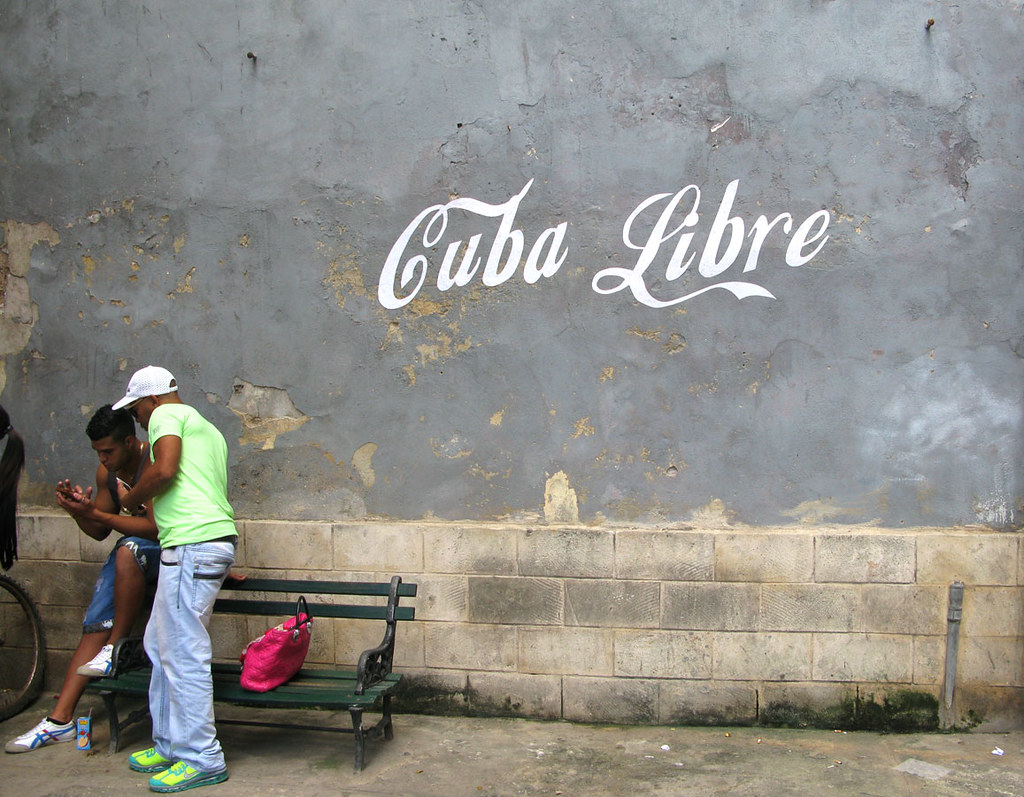
Who Decides Cuba’s Future?
The indictment of Raúl Castro is being presented as a matter of justice. In reality, it is better understood as part of a much longer effort to discipline a country that has spent more than six decades resisting incorporation into the political and economic order Washington believes should prevail in the Western Hemisphere. That effort has taken many forms. It has involved invasion attempts, sabotage, diplomatic isolation, economic sanctions, financial restrictions and increasingly, legal warfare. The instruments have changed with time, but the underlying objective has remained remarkably consistent: to make the costs of independence so high that Cuba eventually abandons the path it chose in 1959.
Yet there is something revealing about the persistence of this campaign. Countries that are irrelevant are ignored. Countries that have been defeated are forgotten. Cuba has been neither. The island remains under pressure precisely because it continues to represent an uncomfortable fact: a small nation, ninety miles from the world’s most powerful country, has refused to surrender its sovereignty despite extraordinary economic and political pressure.
None of this requires us to romanticise contemporary Cuba. The country faces serious problems. Its economy is struggling. Many young people have left. Public frustration is real. The future of the Cuban project remains uncertain and will ultimately be shaped by debates taking place within Cuban society itself. But that is precisely the point. Those debates belong to Cubans.
They should not be decided through sanctions designed to deepen scarcity. They should not be decided through measures that make medicines harder to obtain, fuel more difficult to import, or economic recovery more remote. They should not be decided through attempts to inflict enough hardship on ordinary people that political change becomes a product of exhaustion rather than democratic choice.
Behind every sanction, every blocked transaction and every act of legal coercion are human beings trying to live ordinary lives. There are families coping with blackouts, doctors working with limited resources, students wondering whether they have a future in their own country, and elderly people struggling to secure basic necessities. For them, economic warfare is not a geopolitical concept. It is part of everyday life. This is why the struggle over Cuba matters far beyond the Caribbean.
At stake is a principle that extends to all nations, large and small: who has the right to determine a country’s future?
If sovereignty means anything, it means that political systems rise or fall through the choices of the people who live under them, not through economic siege imposed from abroad. Cuba is not being punished because it poses a threat to the United States. It is being punished because it survived. And that is precisely why the question raised by Cuba remains relevant today. The issue is not whether one agrees with every decision made by the Cuban government. The issue is whether powerful states should be allowed to use hunger, scarcity, isolation and coercion to decide the destiny of other peoples. The question concerns not only Cuba but also the future of international politics itself.
About the Author

Editorial Board Member of Alternative Viewpoint