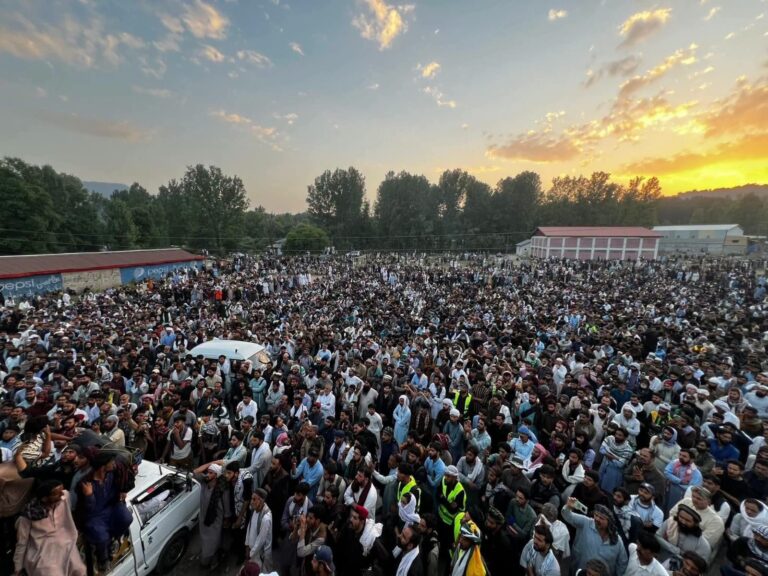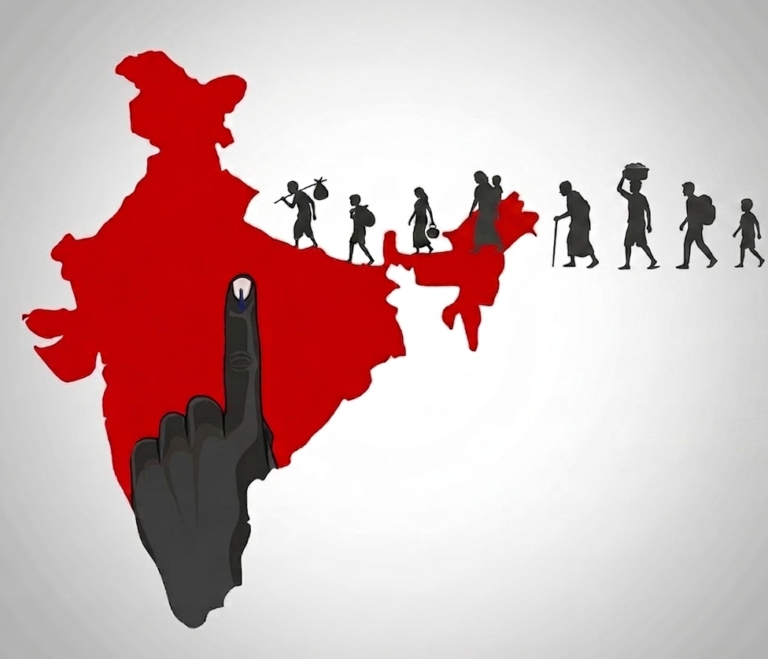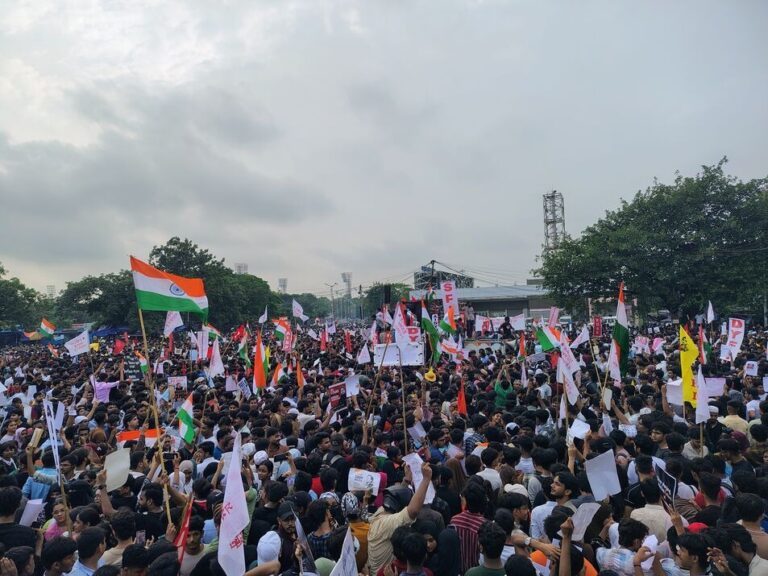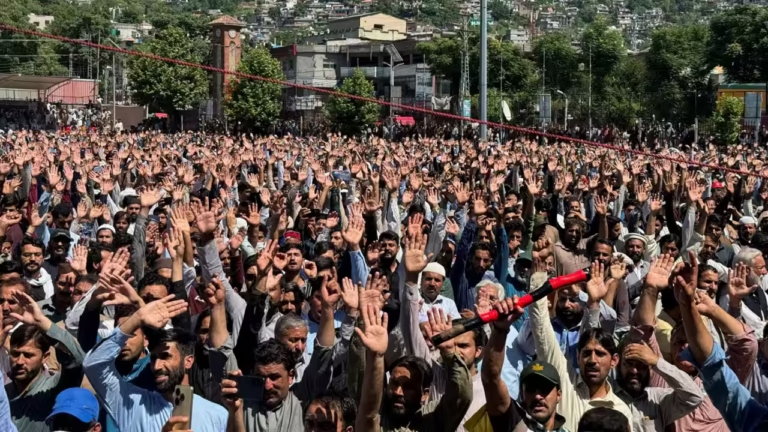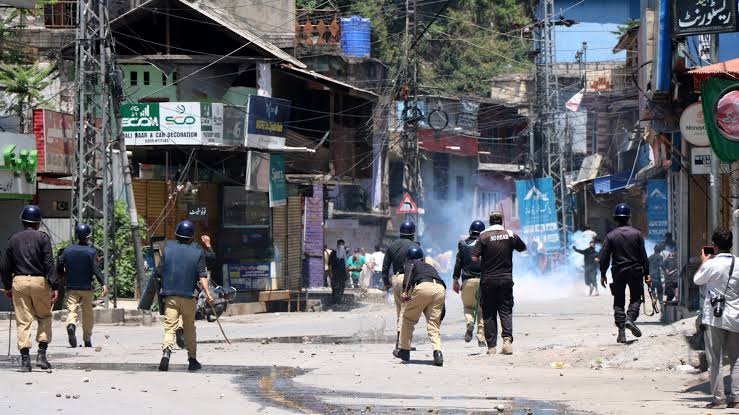
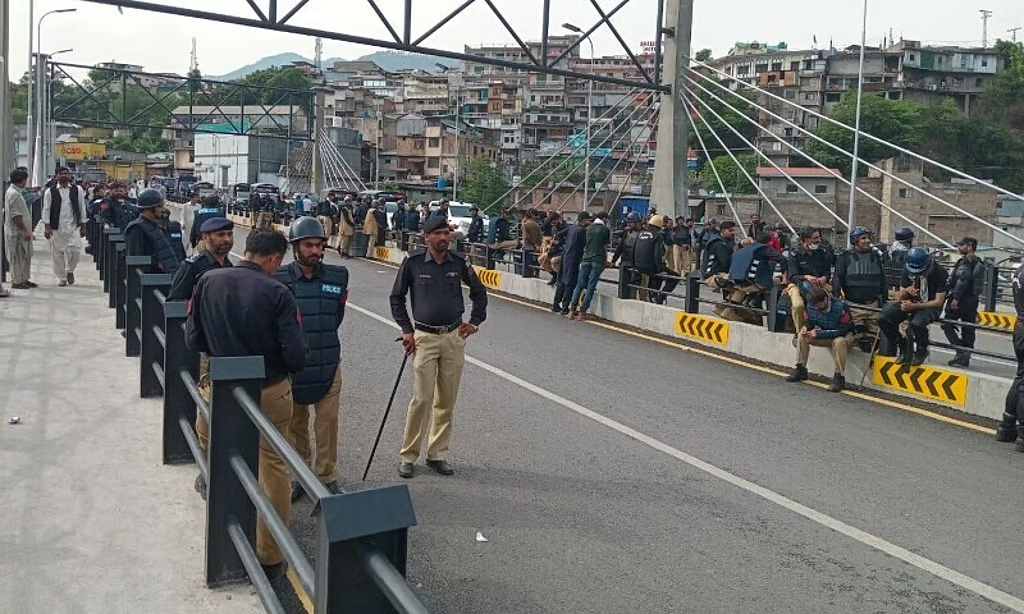
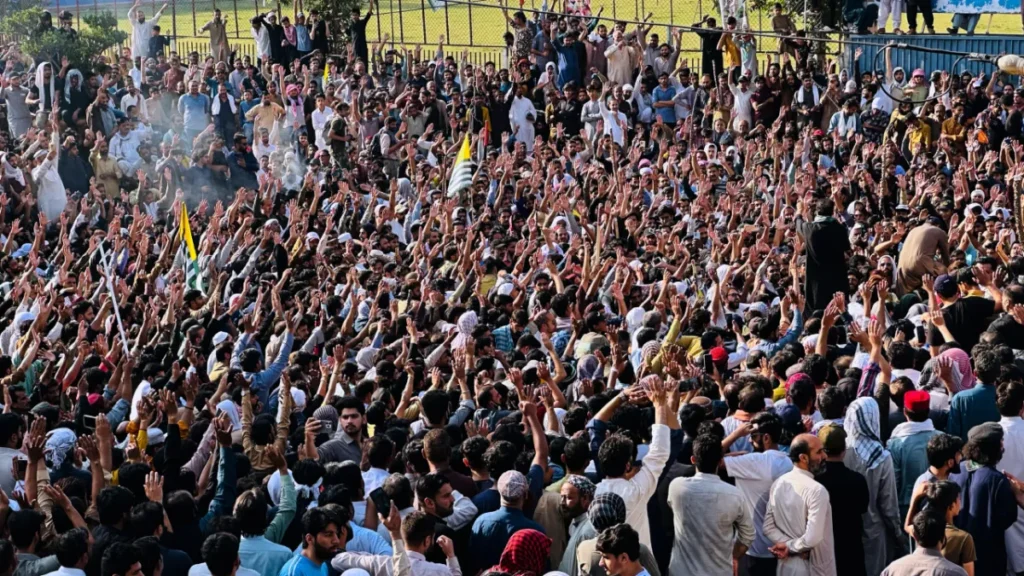
Pakistan-Administered Jammu and Kashmir (PAJK) is passing through one of the harshest phases of confrontation it has seen in years. The wave of mobilisation led by the Joint Awami Action Committee (JAAC) – which grew out of grievances over electricity, taxation, and the question of seats reserved for refugees settled in Pakistan – has met a sharply escalated state response. In June 2026, the authorities outlawed the JAAC under anti-terrorism legislation, even as protests, shutter-downs, and clashes left more than twenty people dead, filled the prisons, and brought internet shutdowns, curfews, and shortages of food and medicine across the region. All of this unfolds against the clock of assembly elections set for late July, and the still-unresolved dispute over the twelve reserved seats.
In this conversation, Alternative Viewpoint speaks with Umair Khurshid, of the Jammu Kashmir National Students Federation (JKNSF), founded in 1966, one of the oldest socialist student organisations in the region and, by its own account, among the forces that helped build the JAAC from the first day. The interview takes up what has changed since the proscription: how a movement built on mass participation and restraint survives being branded a terrorist threat; how it keeps organising under surveillance and detention without surrendering its public, disciplined character; and why, after a familiar cycle of agreements announced and then abandoned, the rank and file are increasingly demanding accountability from their own leadership.
The discussion ranges across the human cost of the shutdown, the debate over whether to boycott or contest the coming elections, the re-emergence of women in the movement against conservative pressure, the role of the diaspora in breaking the state’s information blockade, and the question of solidarity with Gilgit-Baltistan and across the Line of Control. Throughout, the JKNSF’s voice is a distinctive one: defending the movement against the state’s propaganda while insisting, from within, that immediate demands must be carried toward a deeper programme of popular sovereignty, democratic control from below, and socialist transformation. It is a reminder that the sharpest critics of a movement’s limits are often those who have given the most to build it. – ed.
Alternative Viewpoint: How did you first get involved in this struggle, what keeps you in it now that the risks have grown, and how do you see the movement, especially aspects not always covered in the media?
Umair Khurshid: The Jammu Kashmir National Students Federation, or JKNSF, was founded in 1966 and is one of the oldest socialist student organisations in Pakistani-administered Jammu Kashmir (PAJK). I joined JKNSF in 2016, and my involvement in this struggle grew out of that political tradition. From the beginning, JKNSF has stood with students, workers, and the oppressed masses, linking their immediate struggles to the broader fight against capitalism, exploitation, and the class rule that shapes their everyday lives.
Unlike some organisations that focus almost entirely on the national question while pushing local economic struggles into the background, JKNSF has always treated these questions as interconnected. We organise around the immediate problems that students and ordinary people face, including fee hikes, unemployment, inflation, state repression, and the everyday denial of their democratic rights. For us, these are not secondary issues. They are part of the same structure of exploitation and domination that shapes life in PAJK.
JKNSF was part of this movement from the first day. In fact, I would say it played a crucial, and in some ways foundational, role in helping build the movement and the Jammu Kashmir Joint Awami Action Committee, or JAAC. Our comrades were involved in shaping the initial charter of demands, organising on the ground, mobilising students and young people, and taking the risks that came with this work. Some of our comrades also faced arrest and injury during this process.
At the same time, it is important to be honest about the internal dynamics of the movement. There have been repeated attempts by some forces to sideline left-wing, socialist, and progressive voices, although these forces played a central role in building the movement from the beginning. There has often been a tendency to present the movement as the achievement of a few individuals while downplaying the contributions of students, workers, and progressive organisations that helped lay its foundations. We have disagreed with those tendencies and have argued consistently for a broader, more democratic, and more inclusive movement.
We support the committee as a front around shared demands, but we are not tailists. We neither blindly follow the committee leadership’s adopted position nor dissolve our organisation into it. JKNSF maintains its own political identity, programme, and analysis. We participate in common struggles where unity is necessary, but we also retain the right to raise criticisms, express disagreements, and argue for a different direction when we believe it is needed.
In particular, we believe that the movement cannot be reduced to negotiations over a few immediate demands alone. Those demands are important and worth fighting for, but the more profound questions of neocolonialism, class structure, democratic rights, and political power must also be addressed. On these questions, we have sometimes had differences with other forces within the movement, and we have never hidden those differences.
What keeps us in this movement, despite the risks, is that this is the struggle we have stood for from the very beginning. It is rooted in the real lives of the people, and it did not appear from nowhere. It was built through years of anger, organisation, and sacrifice.
From where we stand, what often does not make it into the wider coverage is the actual social character of this movement. It is often portrayed by the state and state-backed media as foreign-funded, Indian-backed, or driven by some hidden agenda. Alongside these efforts, there has been a wider smear campaign against the people of Jammu and Kashmir. Furthermore, there have been attempts to assign the movement an ethnic colour, to invoke divisions among people, and to present a struggle rooted in democratic rights, livelihood, dignity, and popular anger as if it were hostility toward some community.
This narrative does not stand up to even the most basic facts. People involved in this struggle, including JKNSF, have repeatedly condemned Indian occupation, military repression, and the violence faced by people in Indian-administered Jammu Kashmir (IAJK). A movement that has consistently opposed oppression on both sides of the Line of Control cannot honestly be reduced to the propaganda label of being Indian-backed. This movement belongs to the people who have come out despite curfews, bullets, arrests, propaganda, and fear.
That is why JKNSF has been part of it since the formation of JAAC in September 2023, and we will remain part of it. At the same time, we will remain part of it as an independent socialist organisation, defending the role of progressive forces and continuing to argue that lasting change requires not only resistance but also a clear political vision rooted in the interests of workers, students, and ordinary people.
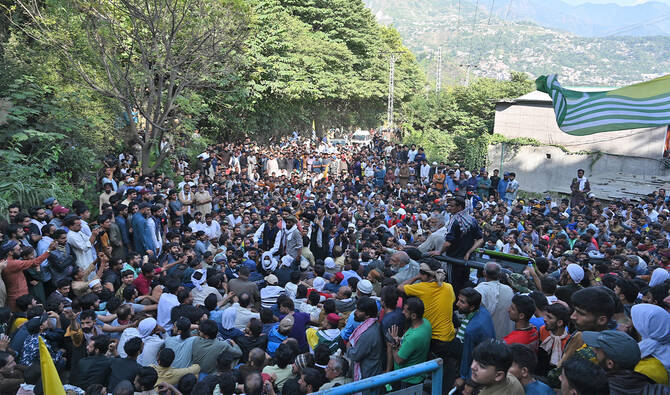
AVP: The JAAC has now been outlawed under anti-terrorism legislation. How has this designation practically changed the perception of a movement that has prided itself on restraint? Has it weakened you, or widened sympathy in ways the authorities may not have anticipated?
UK: The outlawing has changed things in two ways. Practically, it has increased the legal and physical risks for everyone associated with the movement. It gives the state a wider excuse for arrests, raids, intimidation, surveillance, and the criminalisation of even ordinary political activity. A person attending a meeting, helping organise a protest, sharing a statement, or raising their voice for the demands can now be treated as if they were part of something criminal. That is the immediate purpose of such a designation. It is meant to frighten people away from public participation.
But politically, we do not think it has had the effect the authorities hoped for. This movement has not been known for armed actions or adventurism. It has been known for mass mobilisation, shutdowns, sit-ins, negotiations, public demands, and restraint, even in the face of provocation and violence. When a movement with that character is suddenly called a terrorist threat, people can see the contradiction. They know who has been firing, who has imposed curfews, who has shut down the internet, who has arrested people, and who has used force against unarmed protesters.
So yes, there may be an immediate chilling effect. Some people may become more careful. Local organisers may have to think harder about how they move, speak, and gather, but I do not think the designation has weakened the movement in a deeper political sense. In many ways, it has widened sympathy, because it has exposed the state’s fear of even peaceful mass politics.
AVP: Hundreds have been detained, and there’s a heavy security and intelligence presence. How does a movement keep functioning under those conditions, guarding against infiltration and attempts to provoke it into violence?
UK: The first thing that changes is the atmosphere. Fear becomes part of daily life. People become careful about whom they meet, what they say, where they gather, and how they organise. Local activists understand that authorities may view a normal political conversation as suspicious, but a people’s movement operates beyond formal structures. The movement endures due to the widespread sharing of grievances; while a state can detain individuals, it cannot suppress the conditions that fuel the anger.
It is also important to understand that the masses in Jammu and Kashmir are highly politically conscious. People here have a long history of political engagement and collective struggle. They have learned from past experiences, including periods of repression, co-optation, and attempts to divide popular movements. Because of this history, many people understand the importance of organisation, discipline, and maintaining broad public support. The movement is not sustained by a handful of leaders alone; it is sustained by a politically aware population that understands the issues at stake and has developed its own collective memory of struggle.
Of course, repression creates real dangers. One danger is infiltration; another is provocation. The state often wants a restrained movement to lose its discipline, because once it can present the movement as violent, it becomes easier to isolate it, criminalise it, and justify further force. This is why political clarity matters so much. The movement has to keep reminding people that its strength lies in mass participation, public legitimacy, and restraint. It should not allow anger, however justified, to be turned into actions that help the state’s narrative.
From our perspective, the answer is not secrecy for its own sake or adventurism. The answer is political discipline; decisions should remain collective, demands should remain clear, and the movement should keep its public character.
AVP: There’s now a pattern of agreements announced and then left unfulfilled. What motivates the movement to return to the negotiating table, and what factors would lend credibility to any new agreement this time?
UK: The movement keeps returning to the table because it has never been afraid of negotiation. From the beginning, it has tried to show that its demands are public, reasonable, and rooted in the real conditions of the people. In that sense, going to the table is not a weakness; rather, it reveals whether the state is willing to resolve the crisis politically or is merely attempting to exhaust people through delay.
But there is now a clear pattern: agreements are announced, committees are formed, deadlines are given, and then implementation is delayed or abandoned. The state uses this process as a tactic which allows it to lower the temperature for a few days, divide the movement, create confusion among the people, and then return to repression once the pressure on the streets has been reduced.
This tactic means that any new agreement must be judged by its concrete steps, not by the words used in a press conference. It would need a written and public framework, clear timelines, legal and administrative guarantees, immediate implementation of the agreed points, release of detainees, withdrawal of cases, an end to the proscription of JAAC, justice for those martyred and injured, and a mechanism that the public can actually verify. Without that, an agreement is only another pause button for the state.
We also believe the movement must advance further. The demands raised so far are undeniably important, but if the movement remains only at the level of demands, the state always has room to respond with committees, partial concessions, technical delays, and promises of future reviews.
This is why we believe a proper political and economic programme is necessary. The movement should not only say what it rejects or what it wants. It should also say how it can be achieved and implemented and also address the question of political power.
This is where Bordiga’s argument in “Seize Power or Seize the Factory?” remains relevant. The point is not simply to win isolated concessions or occupy one limited space within the existing order. The real question is political power. So yes, the movement may return to the table, but it should do so with political clarity. Negotiation can be useful when it is backed by mass pressure, organisation, and a broader programme, but talks must not become a substitute for building a movement capable of forcing implementation and going beyond temporary concessions.
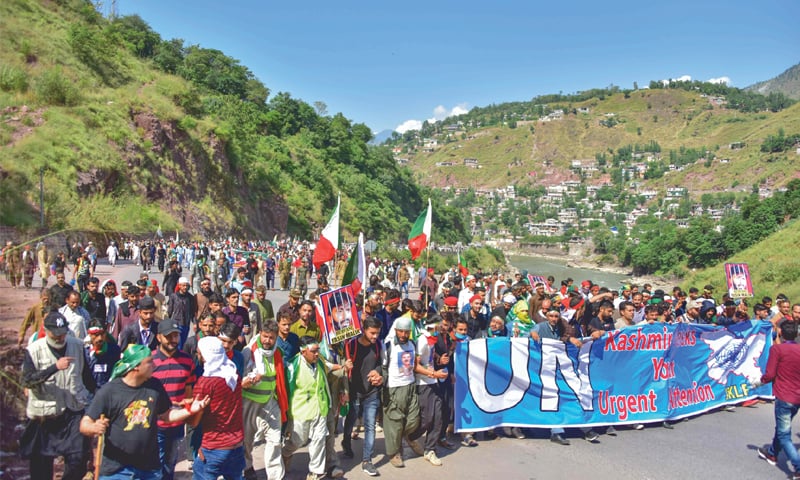
AVP: Have these repeated breakdowns changed how the rank and file view their own leadership’s readiness to settle?
UK: Yes, they have changed how many people view the leadership’s readiness to settle. There is now a debate inside the movement, and it would be wrong to pretend otherwise. Many people still understand the pressure the leadership faces, but there is also frustration that, at several key moments, the leadership appeared too willing to accept assurances from the state without enough concrete guarantees.
This debate did not begin only with the latest agreement. Even during earlier marches and negotiations, many activists argued that the leadership went soft at crucial points. One major example was the failure to insist more strongly on action against those who opened fire on protesters, resulting in martyrdom. For the families of the martyred, for injured comrades, and for those who stood on the streets facing bullets, this was not a secondary issue. Justice for those attacked by the state is central to the movement’s moral and political legitimacy.
That is why many of us believe the movement needs stronger democratic accountability from below. We should not view decisions about settlement, retreat, escalation, and negotiation as the sole responsibility of a few leaders. The people who face repression must have a real say in what is accepted in their name.
AVP: The shutdown has produced real shortages of food and medicine. Who bears the heaviest burden, how does the movement weigh that hardship against its goals, and what do you say to residents who have publicly blamed the JAAC for the disruption and the deaths?
UK: The heaviest burden is always carried by those who have the least cushion. Daily wagers suffer first because one closed day can mean no food at home. Similarly, small traders and poor households suffer the most.
So we should not romanticise hardship; the movement cannot treat people’s suffering as a small cost, but the central question is, who created this situation? The movement did not shut the internet, impose curfews or bring armed forces into villages and towns. The state created the crisis and then tried to blame the people for resisting it.
A large majority of people understand the situation, and they know that the same people who are now speaking about disruption ignored the suffering that existed before the shutdown.
That does not mean every criticism from residents should be dismissed. If someone says they are hungry, cannot obtain medicine, or that pain is real, it must be heard with seriousness, but there is a difference between genuine public distress and a manufactured campaign to blame the movement for violence and shortages caused by state repression.
As far as some of the public videos and statements blaming JAAC are concerned, many people locally do not see them as organic. In some cases, people appearing in such videos do not even reside in the state, leading to their mockery as rented propaganda. In other cases, they come from loyalists of mainstream parties who have always stood with the state structure. Some people are thought to be under pressure from old police cases or other vulnerabilities that can be used for blackmail. I would still avoid making it about personal abuse. The larger point is that the state amplifies these voices because it cannot answer the movement politically.
AVP: This is a coalition of traders, students, lawyers, nationalists, and the Left, and there’s been talk of currents pulling in different directions. Under this much pressure, what holds it together, where does it strain, and who is shaping its direction now?
UK: What holds this coalition together is the charter of demands and the wider question of popular sovereignty. The movement, as you rightly said, includes people from different backgrounds, so naturally there are different political currents within it, but these forces are connected by a shared set of democratic and local demands that come from the lived conditions of the people.
There is also a rising “Kashmiri” anticolonial consciousness that has become very important in PAJK. In this part of Jammu Kashmir, this consciousness has not always rested on one common ethnic or linguistic identity. It has developed more through resistance, through shared political experience, and through the way people have been treated by the state. Every act of repression strengthens the feeling that people here are being denied dignity and political agency as a collective.
This situation involves not only sentiment but also a political idea that is evolving into a social force. Marx captures this relation between consciousness and material struggle in his Critique of Hegel’s Philosophy of Right, where he writes: “… but theory also becomes a material force as soon as it has gripped the masses. Theory is capable of gripping the masses as soon as it demonstrates ad hominem, and it demonstrates ad hominem as soon as it becomes radical. To be radical is to grasp the root of the matter. But, for man, the root is man himself.”
That is what we are seeing in PAJK. A consciousness formed through lived oppression, political memory, and collective struggle is no longer confined to small political circles. This consciousness may have existed earlier in different forms, but I think it has become much stronger in recent years. The internet has played a major role in that process. Before the internet, many people were less connected to each other across districts, and many were less exposed to the history of the region, to the political debates, and to the questions that had been suppressed for decades. The state often restricts or discourages books and narratives that challenge its official version of history. People may still not have access to everything, but discussions that were once limited to small political circles now reach young people, students, workers, traders, and ordinary households rapidly.
That is also why the internet shutdown matters so much. It is not only a communication blackout but an attempt to break the social and political circulation through which people understand themselves as part of a common struggle. The state understands that the internet can amplify suffering, memory, and political clarity. A large section of the youth has become acquainted with this wider Kashmiri consciousness through these debates, videos, statements, histories, and experiences of collective struggle.
As for who is shaping its direction now, I think it is no longer only a matter of formal leadership. The JAAC leadership still matters, and different organisations inside the movement still matter, but the rank and file, local committees, youth, traders, student activists, and the families of those martyred and injured now carry enormous moral and political weight. The movement is being shaped from below as much as from above. That is one of its strengths, and also one of the reasons the leadership cannot simply settle everything behind closed doors without facing questions from the people who have paid the heaviest price.
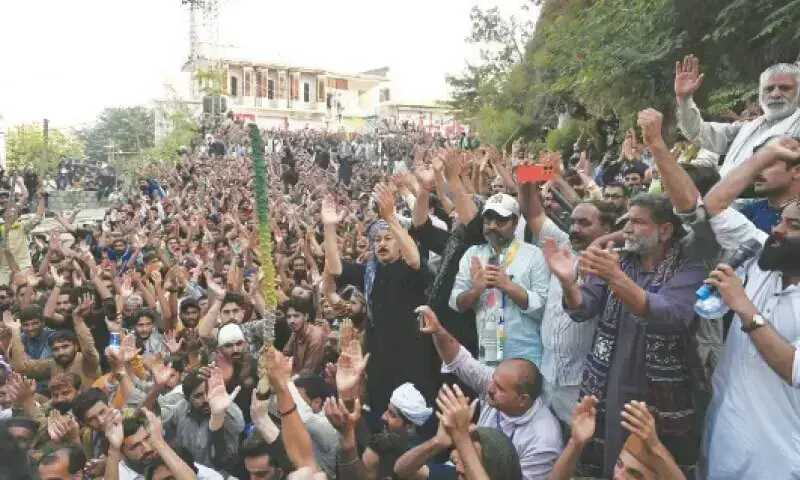
AVP: How accountable is the central leadership to the local action committees that do the day-to-day organising?
UK: As we mentioned earlier, understanding the movement requires looking beyond its formal leadership. The day-to-day strength of the movement comes from local action committees, district-level organisers, students and ordinary people who keep the struggle alive on the ground.
There have been real reservations about the structure of decision-making. JKNSF has expressed its own concerns, particularly regarding the core committee that oversees the broader JAAC and holds considerable influence in decision-making. We, along with individuals from other organisations and many members of the general public, have questioned their roles. These questions became sharper around the issue of elections, representation, negotiations, and who has the authority to settle or speak in the name of the movement.
So accountability is not perfect, and it would be wrong to pretend that there is no tension, but as discussed earlier, it would also be wrong to say that the central leadership or the core committee is completely unaccountable to the local level. The weight of the movement itself creates pressure. Even when leaders may want to avoid difficult questions, the scale of participation forces them to respond. The local committees, the rank and file, and the wider public have become too important to ignore.
In that sense, accountability exists, but pressure from below rather than a fully formal democratic structure produces it. That is both a strength and a weakness. It indicates that the movement is alive and rooted among the people, but it also shows the need for clearer mechanisms of consultation, representation, and decision-making, and our criticism should be understood in that spirit. We raise these questions because we want the movement to become more democratic, representative, and capable of carrying the struggle forward. This criticism is not the same as the propaganda of forces that want to weaken, discredit, or isolate the movement. We criticise from within the struggle, as part of it, and with the aim of strengthening it.
AVP: A very large share of families here depend on relatives abroad. Beyond remittances, what role is the diaspora playing — and has the movement managed to turn that overseas presence into real political pressure?
UK: The diaspora has played an important role, and not only through remittances. Families abroad are connected to almost every town and village here, so when repression takes place, it is not contained locally. News travels through family networks, political networks, student circles, community organisations, and social media. That has helped break the silence around what is happening in PAJK.
The overseas presence has also created diplomatic and international pressure, especially in the UK, where a large part of the diaspora is based. The demonstration in London on June 13, which brought around 10,000 people onto the streets, was one of the clearest signs of the situation. There have also been protests and campaigns across Europe, the United States, and Canada. In many ways, the demonstration may be one of the largest diasporic mobilisations around PAJK in recent years. The fact that the issue was discussed in the UK Parliament also shows that the movement has begun to convert overseas presence into visible political pressure. We can see that from the way the state responds to them. When the authorities condemn these activities as foreign intervention or try to present them as part of some external conspiracy, it indicates that they feel the pressure. If these actions had no effect, the state would not be so anxious about them.
International solidarity is important, and we cannot emphasise it enough. When people abroad raise their voices, it instills confidence in people here and makes it harder for the state to bury everything under blackout, propaganda, and repression. It also challenges the state’s public relations machinery, which is very active, especially in moments like these. The state wants to control the story, and diaspora activism helps contest that control.
But from our perspective, we should also be clear about the limits. We do not have any illusions that the UN or any international organisation will come and solve this question for us. These bodies may carry symbolic and diplomatic weight, and their statements can affect how states manage their image, but they do not usually intervene in any meaningful way against the interests of powerful states. We have seen these dynamics clearly in IAJK, where India was able to abolish Article 370, impose a long curfew and communications blackout, and carry out widespread repression without any serious intervention from international institutions.
AVP: Elections to the assembly are scheduled for late July. What is the movement’s posture toward them — contest, boycott, disrupt – and can electoral politics deliver what years of street mobilisation have not?
UK: The JAAC is divided on the question of elections. There is no single, fully settled position inside the movement. Officially, the stance of the JAAC has been that elections should be boycotted unless there are electoral reforms, especially the abolition of the 12 refugee or migrant seats and fresh delimitation. The argument is that elections under the existing structure only reproduce the same political engineering and keep power in the hands of the same mainstream parties.
But the issue is now a serious debate inside the movement. Some people still argue for a boycott; others believe the movement should contest. Public opinion is also divided. Many people understand the case for boycott, especially when the electoral system itself is considered manipulated, but many also worry that staying out of the election would leave the entire field open for the mainstream parties that have already failed the people.
From our perspective, the movement cannot simply abandon this arena. We do not believe that elections alone can resolve the questions raised by years of street mobilisation. The more profound issues of popular sovereignty, economic exploitation, representation, state repression, and democratic rights cannot be solved through the assembly as it currently exists, but leaving electoral politics entirely to the old parties also has a cost. It allows them to claim representation while the forces that built this mass movement remain outside the formal political field.
So the question is not just boycott or contest in the abstract. The real question is, with what program? If the movement enters the electoral field, it should not do so only to win seats or become another pressure group inside the same structure.
We think street mobilisation and electoral politics should not be treated as opposites. Without mass pressure, elections become a managed ritual, and without political organisation, street mobilisation can be pushed into repeated negotiations and delay tactics. These two questions are linked, and a movement that has built power in the streets should also think seriously about how that power is expressed politically, including through elections, without losing its independence or its programme.
Therefore, I would say electoral politics can deliver something only if it remains connected to the movement outside the assembly. It cannot replace struggle on the ground, but it can become another front, provided the movement enters it with clarity and a programme that goes beyond temporary concessions.
AVP: Participation by women was, candidly, limited in earlier phases. What’s changing — and what does a younger, more connected generation want that the older leadership may not yet represent?
UK: Women did have a role in the movement from the beginning, and comrades from our organisation were actively involved in it. For instance, our women comrades took the lead in organising a women’s march in Rawalakot. So it would not be correct to say that women were completely absent in the early phase.
But thereafter, we saw the influence of conservative forces increase inside the core committee and around the movement’s leadership. These forces tried not only to push women back but also to sideline progressive elements, left organisations, and others who wanted the movement to take a broader political direction. That had an effect, and women’s participation became more limited, and the public face of the movement became more male-dominated than it should have been.
Now, the pressure from the movement itself and the scale of repression have led to an increase in women’s participation again. The movement has created a situation where conservative forces have had to step back to some extent because much of the day-to-day organising is being done by people who have already been politically active through student organisations, political organisations, and local committees. In many of these spaces, women already have a presence, especially in progressive and student circles.
At the same time, we have to be honest about material reality. Jammu Kashmir, despite its history of political consciousness and resistance, is still in many ways a conservative mountainous society. Women do not receive the same space for political expression that men receive. Even in politically advanced circles, patriarchal thinking exists. Women are often expected to support politics from the background, while men speak, negotiate, lead, and represent. That has to be challenged within the movement itself.
If this movement continues, women’s participation can become one of its most important gains. Not only because it strengthens the movement numerically, but also because it challenges the conservative limits of politics in our society. A movement for dignity, democratic rights, and popular sovereignty cannot remain complete if half of society is kept at the margins.
AVP: Is there a shared cause with Gilgit-Baltistan, and how does this movement relate to Kashmir on the Indian side while keeping itself from being instrumentalised by outside powers?
UK: There is certainly a shared cause with Gilgit-Baltistan, especially because the Gilgit-Baltistan Awami Action Committee also emerged around economic, democratic, and local demands. In that sense, there is a clear connection. People there have also raised questions about resources, representation, taxation, rights, and the decision-making process that affects their lives without their meaningful consent. These are not identical situations, but there is a shared structure of denial, dependency, and political control.
However, I think there has been some hesitation from parts of the leadership in PAJK in fully expanding solidarity with the movement in Gilgit-Baltistan and seeing it as part of a connected regional struggle. That hesitation is rooted in political and historical reasons, as well as fears about how the state might interpret such solidarity; however, we believe that democratic and economic struggles across the region should not be viewed in isolation. If ordinary people in Gilgit-Baltistan are fighting for control over their resources, dignity, and democratic rights, then that is a struggle we should recognise and support.
As far as IAJK is concerned, the movement is obvious against Indian occupation, military repression, and the denial of democratic rights to the people on that side. In fact, one of the most popular slogans of the movement roughly translates to “This land (Jammu Kashmir) is ours, and we (the people on both sides of LoC) will decide its future.”
There have also been voices from IAJK that have expressed support for this movement, and some of that support is genuine. People there understand what state repression, blackout, military presence, arrests, and political humiliation mean. They can see those patterns here, even if the political conditions on both sides of the Line of Control differ.
We should also be clear that some forces aligned with the Indian state try to use this movement to push their narrative. Such forces do not help the movement. They make things worse by allowing the Pakistani state and its supporters to present a genuine people’s struggle as some Indian-backed project. I wouldn’t call this a joint conspiracy, but it is an attempt to use our movement for their propaganda.
The Indian state lacks any moral superiority in this situation. People in PAJK are familiar with India’s holier-than-thou attitude, and they also know the record of the Indian state in Kashmir. More than one lakh people have died and endured mass repression, disappearances, arrests, curfews, and prolonged communications blackouts. A state with that record cannot present itself as a defender of the rights of people of Jammu and Kashmir.
We welcome genuine solidarity from people across the Line of Control, especially from those who understand repression through their own lived experience, but we reject any attempt by Indian state-aligned forces to appropriate this movement for their own nationalist propaganda.
AVP: What would genuine de-escalation require right now, what are your red lines in any settlement, and a year from now, what do you expect to be doing?
UK: Genuine de-escalation right now would require the state to move first, because the state has the armed power, the prisons, the cases, the checkpoints, and the ability to impose or lift a siege. It would require the withdrawal of deployed forces from civilian areas, the lifting of curfews and restrictions, the restoration of internet and communications, and an immediate end to raids, arrests, and intimidation. It would also require the release of detained activists, workers, students, and ordinary protesters, along with the withdrawal of cases filed against people for taking part in the movement.
There also has to be urgent relief for ordinary people. Food and medicine must be allowed to move without obstruction. Hospitals must remain open and accessible. The injured must be treated without fear of arrest. Families of the martyred must be given justice, dignity, and the right to bury and mourn their loved ones without pressure. If the state is serious about de-escalation, it cannot speak the language of peace while keeping the machinery of repression in place.
At the same time, any agreement must acknowledge those who were martyred and injured. There can be no settlement that leaves detainees in prison or keeps cases hanging over people’s heads as a tool of future blackmail.
From the perspective of JKNSF, we also believe that even a good settlement cannot be the end of the struggle. The movement has shown the power of the people, but it has also shown the limits of raising demands without a broader political and economic programme. We need to build organisation, political education, student and worker participation, women’s participation, and democratic accountability from below. The struggle has to move from protest alone toward a clearer vision of power, resources, representation, and social transformation.
A year from now, JKNSF expects to remain actively engaged in this work. We will continue organising among students and youth, raising political awareness, defending democratic movements against repression and propaganda, and ensuring that the sacrifices made by the people are not reduced to a handful of temporary concessions. Whether the struggle takes place on the streets, in educational institutions, through local committees, public forums, elections, or political education initiatives, our commitment will remain the same: to help transform the courage, anger, and sacrifices of the people into lasting democratic organisation and a progressive political programme rooted in the interests of workers, students, youth, women, and the oppressed masses of Jammu and Kashmir. For us, this struggle cannot stop at temporary relief or administrative reforms. It must move toward socialist transformation, where resources, power, and decisions are placed under the democratic control of the working class.
About the Author
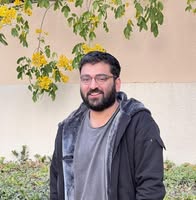

Umair Khurshid
Umair Khurshid is the Editor of Azam, the organ of the Jammu Kashmir National Students Federation (JKNSF).