On May 15, the Chief Justice of India, hearing a routine contempt matter about fraudulent legal credentials, reached for an aside about the country’s unemployed youth. They were, he said, like cockroaches parasites feeding on a system. It was the kind of remark a powerful man makes when he assumes no one who matters is listening. Within a day, thirty one year old graduate named Abhijeet Dipke had turned the insult into a name: the Cockroach Janta Party. Within three days it had crossed a million followers. By July it had more Instagram followers than the ruling Bharatiya Janata Party. It had no office, no treasury, no manifesto beyond a joke that refused to stop being funny.
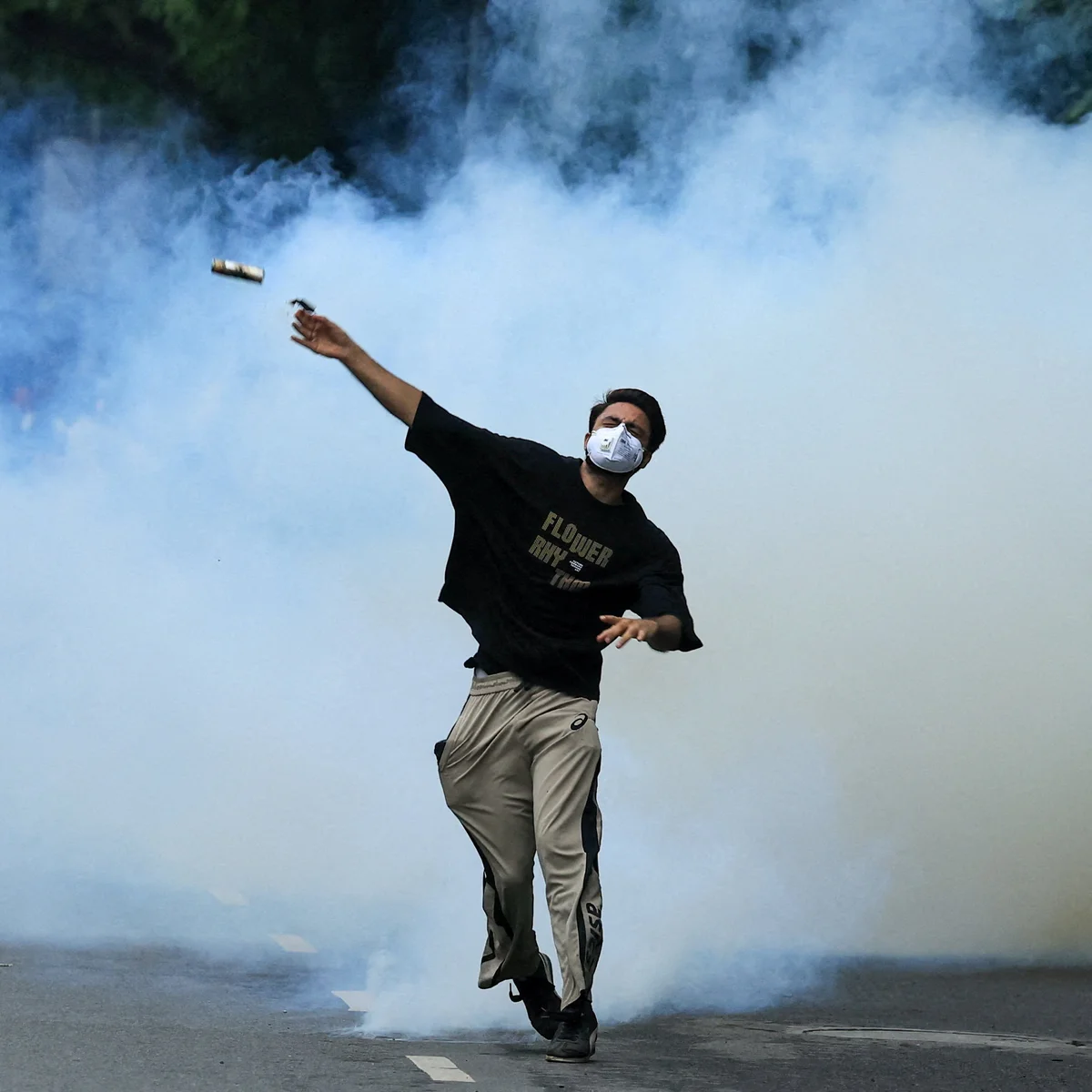
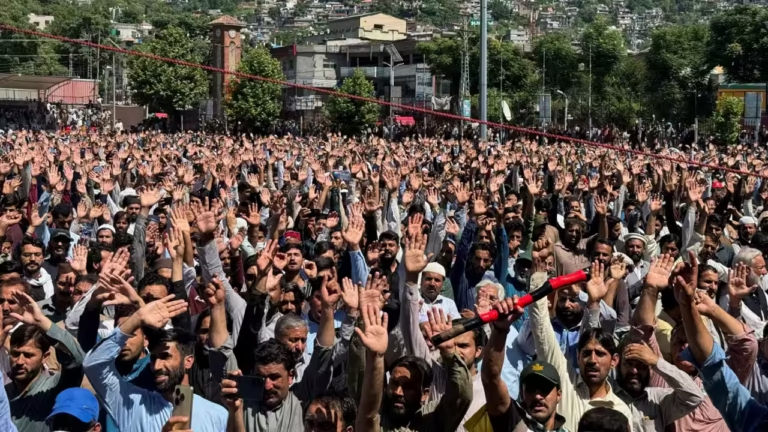
Then, on June 4, the National Eligibility cum Entrance Test, the exam that decides which of India’s medical aspirants get to become doctors, was compromised by yet another leak. Roughly 2.2 million young people had sat for 130,000 seats. It was not the first leak. It was the seventieth in seven years, and this time the joke found its grievance. What had been an online meme became an occupation of Delhi’s protest grounds, then a march on Jantar Mantar, then a march toward Parliament itself, through tear gas and baton charges broadcast in real time on the same phones that had built the movement. On July 25, eight weeks after a judge compared them to insects, India’s education minister resigned. It was the first time in Narendra Modi’s twelve years in power that a street movement had taken a minister’s head.
This is the part of the story that travels well: the satire, the speed, the improbable scalp. It is also the smaller part. The more important story is what kind of country produces a movement like this, from exactly the students it does, at exactly this moment in its economic life. That story does not start with a judge’s bad joke. It starts with a boom.
A generation nobody expected to fight
For a decade, India’s Gen Z has been the subject of a specific kind of contempt from its elders: too online, too individualist, too busy building a personal brand to organize for anything larger than itself. The cockroach movement did not so much refute this as reroute it. The same instincts that supposedly made this generation self-absorbed irony, meme fluency, and an ease with performing a persona for an audience became the movement’s actual weapons. A student marched dressed as Gandhi and said nothing; the image did the political work language usually does. Protesters filmed themselves “confessing,” in a register of deadpan sarcasm, that Chinese operatives had wired them sixty rupees for bus fare and Pakistani handlers forty for lunch, a satirical pre-emption of the anti-national charge before the state could even finish making it. This was not spontaneous cleverness. It was a generation using the only organizing language it had ever needed to build a following, and discovering that the same language could hold a crowd in the street.
What the movement actually revealed, underneath the wit, was fear, a specific, generational, previously unspoken fear that had been circulating privately for years and had never before found a collective form. Not the fear of poverty in the abstract, which Indian politics has always managed to keep at arm’s length as someone else’s problem. The fear of having done everything asked of you the exams, the coaching classes, the degree and finding that none of it converts into a future. That is a harder feeling to organize around than hunger, because it doesn’t look like deprivation from the outside. It looks, on paper, like credentialed success. The movement’s real achievement was making that private, embarrassing fear visible and collective at the same moment.
The boom that stopped hiring
The backdrop to all this is not an economy in crisis, in the way that phrase usually gets used. India’s GDP grew 7.7 percent in the last financial year, up from 7.1 percent the year before, and the most recent quarter came in at 7.8 percent, a three-year high, beating market expectations. Manufacturing has posted double-digit growth in two of the last three years. By the government’s own labor force survey, the overall unemployment rate fell to 3.1 percent in 2025, an eight-year low. On every headline number the finance ministry likes to cite, India is not slowing down. It is accelerating.
And yet: unemployment among graduates runs at roughly 29 percent nine times the rate among people who never learned to read. At some of the country’s most selective engineering institutes, more than a third of the graduating class registers for campus placement and finds nothing. Between 2021 and 2024, twenty-two of India’s twenty-three IITs saw their placement rates fall, in some cases by more than twenty percentage points; the overall share of engineering graduates dropped from over 90 percent to just above 80. Youth unemployment nationally sits somewhere between 15 and 16 percent depending on the month you check, and in urban India it runs closer to 18 nearly six times the headline rate the government advertises. These are not the numbers of an economy failing to grow. They are the numbers of an economy that has learned to grow without them.
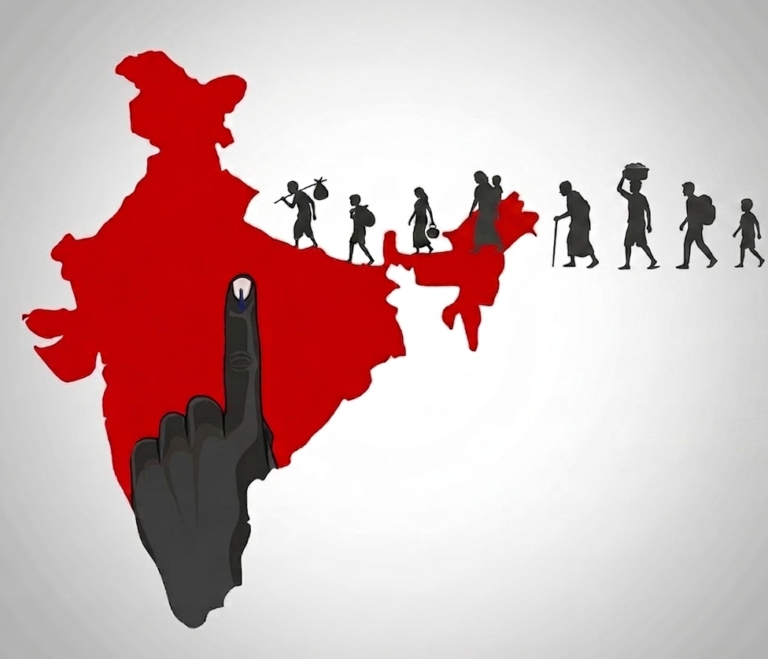
This is worth dwelling on precisely because it is not a paradox but a mechanism. None of this is happening against a backdrop of currency collapse or fiscal panic though there is real stress layered on top, and it is worth naming honestly. The rupee hit an all-time low against the dollar this spring, battered by an oil shock and a historic flight of foreign capital out of Indian markets. External debt has climbed past $760 billion. These pressures are real, and they compound the mood of precarity radiating out from every family with a graduate in it. But they are weather, not climate. The climate is that credentials have been manufactured faster than jobs, because credentials are cheap for the state to supply a university seat, an entrance exam, a certificate and jobs are not. What growth produces, under these conditions, is not shared prosperity. It is a widening reservoir of the certified and idle: people declassed in advance of ever holding a job, and increasingly aware of it before they turn twenty-five.
A new insecure class
Here is what the BJP did not calculate. Its electoral coalition since the 2000s has rested heavily on India’s upper-middle and middle classes precisely because the organized left and caste-based parties held stronger, older footholds among the working class and the rural poor. That coalition was built by a specific generation, the one that came of age inside India’s liberalization years and the software-export boom, and that used the escalator of neoliberal growth to lift its own household into a durable, if modest, comfort. For that generation the promise of the market economy was, on the whole, kept. Not lavishly, but visibly enough to be believed.
Communalism did real work for this constituency for a long time, and it is worth being honest about why. A majoritarian identity offered a kind of psychic compensation status, belonging, the sense of being the nation’s default citizen that could sit comfortably alongside modest, rising material comfort. It did not need to substitute for that comfort; it supplemented it. But that arrangement depends on the material floor holding. It cannot manufacture the thing it was never designed to provide, which is an income. Once a generation’s insecurity stops being abstract and becomes as concrete as an empty placement cell or a cancelled exam, communal consolation has nothing left to compensate for, and it starts to lose its grip precisely where it once worked best.
Their children are living a different story, on the same ideological script. It has been the accepted wisdom for years now that not every graduate will find work. The market absorbed this as a kind of background noise, a cost of scale that neoliberal common sense normalized as simply how a large, young country’s labor market behaves. What broke that acceptance was who started failing to find work. When the unplaced are exiting a Tier-3 college, the state has had two decades of practice absorbing that story into fatalism. When they are exiting an IIT, a National Law University or premiere management institute like IIM, the institutions that are themselves the country’s promise of meritocratic ascent, the reward for having played by every rule the system set, the fatalism stops working. This is a demographic the BJP’s growth story was written for, and it is the demographic now discovering that the story has an ending it was never told about.
For many of these students, medicine was the last door that still seemed to open on merit rather than connections hence the ferocity attached to a leaked exam that, on its own, might read as a minor administrative scandal. The NEET leak did not create the crisis. It reached a generation already standing at a wall with nowhere else to go, and it took away the last direction they thought they could walk. What followed has been described, not wrongly, as a social movement, a generational revolt, a digital-native uprising. It is also something more specific: a visible sharpening of class contradiction inside a bloc of the well-off, credentialed, urban middle class that Indian politics has for thirty years treated as post-political, safely arrived, no longer available for radicalization. That assumption no longer holds.
What the movement cannot yet do
The cockroach movement’s great structural strength was also its great vulnerability: it had no center. There was no politburo to arrest, no headquarters to raid, no single leader whose silence could end it. When the stage at Jantar Mantar was dismantled and internet access was cut during the march toward Parliament, the movement did not have a command structure to fall back on it had thousands of small, improvised, overlapping acts of leadership: someone directing the crowd here, someone carrying the injured there, no one in charge of the whole. This is precisely what let the state’s usual playbook fail in sequence. Delegitimization didn’t stick because there was no organization to accuse of foreign funding. Enforcement action, the machinery that has spent a decade disciplining Indian opposition politicians through prosecutions that rarely convict but reliably exhaust, has no leverage over nineteen-year-olds with no career left to protect. What was left was simply force batons, tear gas, over a hundred injured by the movement’s own count deployed against a target that could absorb the blow and re-form somewhere else the next day.
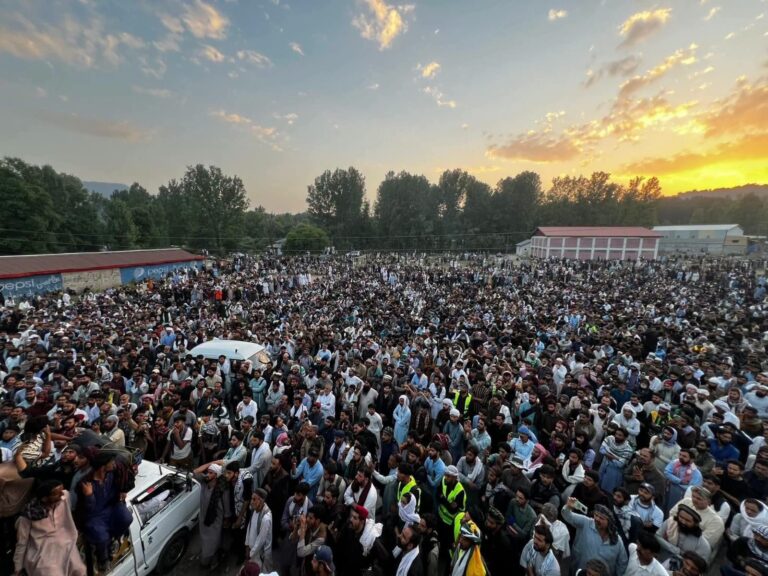
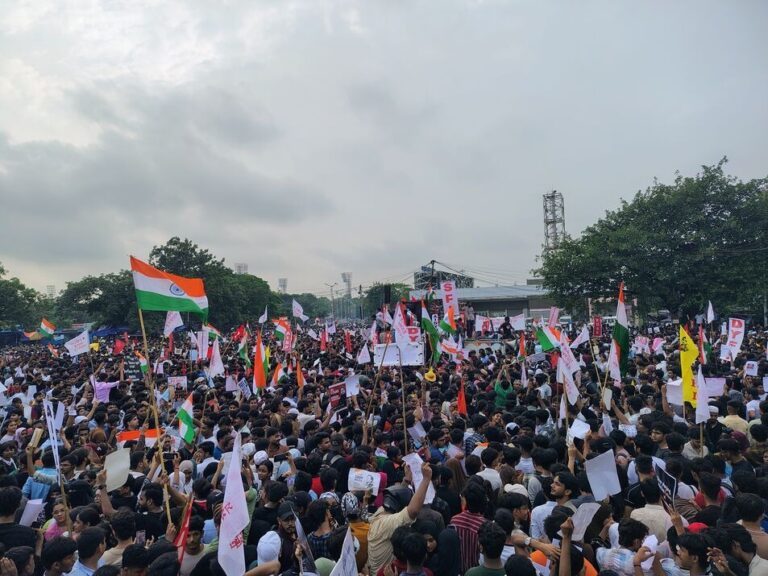
But a movement organized this way also has no mechanism for consolidating what it wins, and no natural bridge to anyone outside its own social position. The people who filled Sansad Marg were disproportionately urban, credentialed, and from households with something to lose: parents, professionals, the retired, a student in a Gandhi costume, alongside the actual test-takers. That composition is not a moral failing; it is a structural fact about who this movement’s grievance directly touches. It means the movement, as constituted, has very little organic contact with the country’s larger working population: the informal laborer, the contract worker on an industrial corridor, the migrant on a construction site, the person for whom “jobless growth” was never news. Where the farmers’ movement of 2020–21 grew directly out of an agrarian class defending its material position for over a year at Delhi’s borders, the cockroach movement is closer to Brazil’s June 2013 a leaderless, ironic, extraordinarily fast-moving revolt built on a single sectoral demand, brilliant at disruption and comparatively fragile once that demand is even partially met. Brazil’s energy, released without an organized left prepared to receive it, was harvested instead by the right. India’s Hindu-nationalist government could not communalize this particular uprising; it carries no religious marker, and its base is drawn from the regime’s own core constituency but that difficulty will not repeat itself indefinitely, and the government will try again.
The settlement that ended the march followed exactly this logic: concede a person, keep the structure. The prime minister never appeared. Two ministers negotiated. A minister resigned and compensation was promised. The testing agency remains untouched. The four Labour Codes remain untouched. The underlying question of where a graduating generation is supposed to work remains completely unaddressed. A day after the resignation, the protest ground was empty.
What comes next
Students and Gen Z have already done the only thing a movement without organization can do well: they made the discomfort visible, undeniable, and impossible to dismiss as somebody else’s problem. That is not nothing: twelve years of an unbroken government just lost a minister to a joke about insects. But the resignation was always the recoverable part. The real product of these eight weeks was the demonstration, delivered live and in public, that this government can be made to move.
Whether that demonstration becomes a force rather than a memory is not a question this movement can answer by itself, because it was never built to answer it. That work belongs to whoever is serious about connecting a declassed, credentialed youth to the working class whose insecurity is older, deeper, and far less telegenic the informal worker, the contract laborer, the migrant on the industrial corridors of Haryana and Uttar Pradesh, for whom jobless growth has never been a discovery but a lifelong condition. The bridge between them does not build itself. Whether the Indian left does that work deliberately, and before this particular pulse of anger fades back into the scroll it came from will decide whether the cockroaches’ summer was a beginning or simply the loudest word in a very long sentence that ends, once again, in nothing changing.
About the Author


Editorial Board Member of Alternative Viewpoint
You have hit the nail on the head. While appreciating the gen-z movement you have pointed out that unless a bridge is built between the gen -z and the toilling classes there won’t be any system change.