A reorganisation of legal recognition is underway in India, marked by the growing centrality of documentation in determining access to rights. Recent years have seen the expansion of bureaucratic regimes—most visibly in processes such as the National Register of Citizens and the implementation of the Citizenship Amendment Act 2019—through which individuals are required to establish their status via authorised records. These mechanisms do not merely verify identity; they actively constitute regimes of inclusion and exclusion. These are not deviations from an otherwise neutral system, but expressions of a broader reorganisation in which rights are increasingly structured through verification. By shifting the burden of proof onto individuals, privileging certain forms of documentation, and enabling discretionary evaluation of claims, they distinguish those who can substantiate their status from those who cannot.
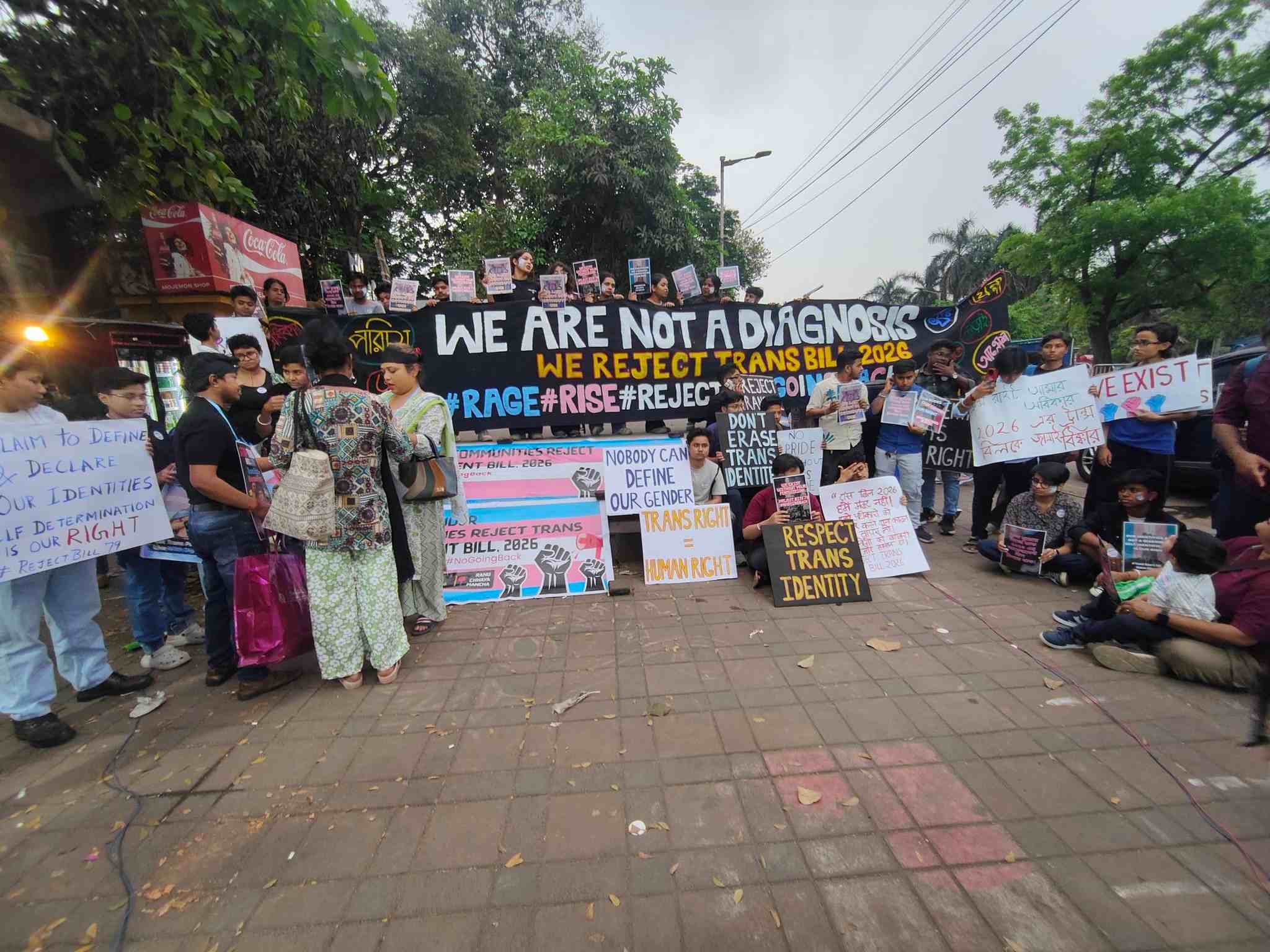
The Transgender Persons (Protection of Rights) Amendment Act, 2026 extends this logic into the domain of gender. What had been a matter of self-identification is reconstituted as certification mediated by medical and administrative authorities. Identity ceases to be the basis of rights and becomes their object of demonstration. What appears as a technical adjustment marks a more substantive shift: from the acknowledgement of identity to its verification.
The significance of this shift lies less in its immediate juridical effects than in what it reveals about the changing modalities of governance. The movement from “selfhood to proof” is not merely a conceptual inversion; it signals the incorporation of gender identity into a broader apparatus of classification, filtration and control.
This shift should not be understood as the outcome of a fully coherent or uniformly implemented state project. The institutions involved in governing gender recognition operate unevenly and are not always aligned in interpretation or enforcement. Such inconsistencies do not mitigate the shift toward verification; they are constitutive of the conditions under which it operates. They mark the fragmented and contested terrain through which a broader reorientation is underway: the movement of authority over identity from self-declaration toward institutional verification.
From Recognition to Proof
The 2014 National Legal Services Authority v. Union of India judgement established self-identification as the operative principle for legal recognition of gender. The 2026 Amendment reverses this by routing recognition through medical boards and bureaucratic procedures. The individual’s declaration is no longer sufficient; identity must be substantiated. This shift, however, does not translate into a uniformly applied regime. Its implementation is mediated by institutions and administrative discretion, generating uneven and sometimes contradictory outcomes. Such unevenness does not displace the movement toward verification; it constitutes the terrain through which it is realised. Reports from earlier implementation of certification procedures under the 2019 Act have already indicated delays, inconsistencies, and barriers in accessing identity documents across states.
These processes are not uncontested. Legal challenges, administrative workarounds, and community practices may partially mitigate or reconfigure the effects of certification, even as the broader movement toward verification remains in place.
The issue is not whether gender identity can be verified, but the function served by the demand for verification. Certification operates as a mechanism for redistributing authority and structuring access. It relocates decision-making power from individuals to institutional actors, establishes thresholds for recognition, and ties those thresholds to material entitlements. In this respect, the amendment does not simply misunderstand identity. It reorganises it as an administrative category.
Who Counts, Who Doesn’t
The narrowing of the legal definition of “transgender” to specific socio-cultural formations and medically legible cases has predictable consequences. Populations that do not conform to these criteria—trans men and women outside recognised communities, non-binary persons, those who do not or cannot undergo medical transition—are rendered legally ambiguous or invisible.
The effects are not confined to symbolic recognition. Legal status mediates access to documentation, employment, housing, and healthcare. Exclusion from recognition translates into exclusion from these domains. As the earlier account notes, omission functions as a mode of erasure. The law does not prohibit; it delimits, and thereby excludes.
The reintroduction of medical certification reinstates a familiar form of regulation. Gender variance is made legible only insofar as it can be incorporated into diagnostic frameworks. Medical institutions are positioned as arbiters of authenticity, while bureaucratic bodies retain final authority over recognition.
This produces a double movement: identity is standardised to fit assessable criteria, and made contingent on institutional navigation. Recognition depends on navigating institutional processes that are neither neutral nor uniformly accessible. The individual is thus displaced from the position of rights-bearing subject to that of evaluated object.
The Price of Recognition
The reintroduction of medical certification does not merely restore institutional authority over identity; it also reorganises the conditions under which recognition can be obtained. While the amendment does not formally mandate surgical transition in all cases, it establishes a hierarchy of legitimacy in which medically legible bodies are more readily recognised than those that are not.
This produces a form of indirect compulsion. Individuals seeking recognition are incentivised to align with medical authority through diagnosis, hormonal regimes, or surgical intervention. The pressure is not codified as obligation, but emerges from the unequal distribution of recognition itself. Those who conform are processed; those who do not are delayed, questioned, or excluded. Such a structure is better understood not as the enforcement of transition, but as the conditioning of recognition on bodily conformity.
At the same time, this arrangement expands the role of the medical sector in mediating access to rights. Gender affirmation becomes entangled with a series of institutional and commercial processes: certification, clinical evaluation, therapeutic intervention, and, in many cases, surgical modification. In a healthcare system marked by privatisation and uneven access, these processes are neither uniformly available nor socially neutral. Access to gender-affirming procedures and certification remains concentrated in urban, private healthcare settings, where costs are often prohibitive and public provision is limited or inconsistent.
The result is the emergence of a stratified field in which recognition is, in practice, partially commodified. Those with the financial and social resources to navigate medical pathways are better positioned to secure legal status; those without are left in conditions of prolonged precarity. What appears as a technical requirement thus functions as a mechanism of differentiation within the transgender population itself. Recognition is no longer simply granted or denied; it is produced through institutions that function at once as regulatory authorities and economic gatekeepers.
Recognition Without Equality
The amendment also raises a broader question regarding the status of “social justice” within this framework. If social justice is understood in distributive terms—as the extension of rights, resources, and protections to historically marginalised groups—the shift introduced by the amendment appears contradictory.
Rather than universalising access to recognition, the law introduces additional thresholds. Legal status becomes conditional on meeting criteria that are unevenly accessible, thereby transforming recognition into a selective mechanism. This selectivity maps onto existing inequalities of class, geography, and institutional access.
Those able to secure medical certification—typically individuals with greater economic resources or proximity to urban infrastructures—are incorporated into the framework of rights. Others, lacking such access, remain effectively excluded. The result is not simply the marginalisation of transgender people as a whole, but the differentiation of that population into segments with unequal degrees of recognition and protection.
In this respect, the amendment does not negate the language of social justice; it reconfigures it. Recognition is no longer a corrective to structural inequality but a process that reproduces it in new forms. This is not a failure of recognition, but an indication of its limits as a form of redress under existing social relations. What is presented as regulation in the name of fairness operates, in practice, as a mechanism for managing and stratifying an already precarious population. This selectivity is not only administrative or economic in its effects; it is also tied to the reproduction of normative social institutions.
The restriction of recognised gender identities must also be read in relation to the persistence of the heterosexual family as a central institution of social reproduction. The family organises care, dependency, and the intergenerational transmission of labour power, and presupposes relatively stable gender roles.
Expanded recognition of gender diversity introduces a degree of indeterminacy into this arrangement. By delimiting the category of the “transgender” to forms that are either historically contained or medically codified, the state circumscribes this indeterminacy. Recognition is granted selectively, in ways that do not fundamentally disrupt existing social structures. The language of dignity, which has often framed struggles around gender recognition, remains present but limited in this context. To assert dignity is to demand recognition as a subject of rights; yet where recognition itself is made conditional, mediated, and stratified, dignity becomes dependent on institutional validation. It persists as a claim, but one that cannot secure its own material conditions. The problem, therefore, is not simply the denial of dignity, but its subordination to mechanisms that determine who may be recognised as deserving of it. Dignity and recognition thus persist as necessary claims, but under present conditions they are readily subordinated to institutional logics that mediate and limit their emancipatory potential.
Nation, Culture, Recognition
The reconfiguration of gender recognition in the 2026 Amendment cannot be understood solely in administrative or economic terms. It unfolds within an ideological field shaped by the consolidation of Hindutva nationalism, whose relationship to gender and sexual minorities has been marked less by outright exclusion than by a strategy of selective incorporation.
Public positions articulated by the Rashtriya Swayamsevak Sangh (RSS) illustrate this dynamic. While recent statements acknowledge the presence of LGBTQ individuals as part of society, such recognition remains conditional and subordinated to cultural legibility. It is framed not in terms of autonomy or rights, but in relation to cultural continuity, social order, and the preservation of the family. Non-normative identities are thus rendered acceptable only insofar as they can be accommodated within an existing civilizational narrative, rather than as claims that might transform it.
This mode of incorporation operates through a selective process of legibility. Certain gendered forms—particularly those associated with historically recognised communities such as hijras or kinnars—can be situated within a repertoire of mythological and cultural references. Their presence is naturalised within a putatively continuous Hindu social order. At the same time, identities that do not conform to these frames—non-binary, transmasculine, or self-defined gender positions that lack such cultural anchoring—are rendered less intelligible, and therefore less eligible for recognition.
The law reflects and consolidates this hierarchy. By narrowing the definition of “transgender” and embedding recognition within institutional processes that privilege medically and culturally legible identities, it produces a field in which some subjects can be recognised as citizens while others remain marginal or excluded. Recognition is not denied wholesale; it is differentially distributed.
This process bears comparison with what has been described, in other contexts, as the incorporation of sexual minorities into nationalist projects through the production of “acceptable” identities. In the Indian case, such incorporation is mediated by the specific logics of Hindutva, in which national belonging is articulated through a majoritarian cultural framework. The result is not the resolution of gender variance within the nation, but its reorganisation along lines of cultural compatibility.
At the same time, this incorporation remains unstable. As studies of transgender citizenship in India have shown, the alignment between nationalist narratives and gender non-conforming communities is uneven and contested. The extension of recognition to certain identities generates new exclusions, often along axes of class, caste, and access to institutional resources. Working-class and lower-caste transgender individuals, as well as those outside established community structures, are less likely to be rendered legible within both cultural and administrative frameworks .
The amendment thus participates in a dual movement. It expands the domain of recognition to include select forms of gender variance, while simultaneously narrowing the conditions under which such recognition can be obtained. In doing so, it aligns the governance of gender identity with a broader ideological project: one that seeks not to eliminate difference, but to organise it within a hierarchical and culturally bounded conception of the nation.
Precarity and Incorporation
These processes are not confined to the sphere of recognition. Their effects are most clearly registered in the organisation of labour. Legal identity is a precondition for participation in formal labour markets and for access to social protections. Transgender people in India are already disproportionately concentrated in precarious and informal sectors, a result of long-standing exclusion from education and employment. Existing studies and community reports have consistently documented exclusion from formal employment, pushing many into informal economies such as sex work, begging, or community-based livelihoods.
By tightening the conditions of recognition, the amendment intensifies this marginalisation. Those unable to secure certification are further distanced from formal employment and associated protections, reinforcing their concentration in informal and stigmatized forms of labour.
The law thus contributes to a broader pattern of differential incorporation: some populations are integrated into regulated circuits of labour and welfare, while others are managed through exclusion and informality.
Rule by Documentation
This is less a conceptual error than a structural reorganisation. The amendment aligns with a wider tendency towards governance through documentation. Access to rights is increasingly mediated by certificates, records, and procedures of verification. Identity becomes an object of audit—subject to verification, documentation, and periodic reassessment across institutional sites.
Yet such regimes do not operate as coherent or uniformly applied systems. Their implementation is fragmented across institutions with differing capacities, interpretive frameworks, and degrees of discretion. Verification, in this context, does not produce a stable or transparent order of recognition. Rather, it redistributes and institutionalises ambiguity by subjecting identity to multiple sites of evaluation, each capable of affirming, delaying, or denying recognition.
The insistence on proof thus expands the role of discretionary authority. Individuals are required not only to establish their identity, but to do so repeatedly across shifting administrative contexts. What emerges is not a resolved classification of subjects, but a condition of regulated uncertainty in which eligibility remains contingent, revisable, and unevenly enforced.
The discourse of identifying “genuine” beneficiaries provides the ideological complement to this administrative apparatus. By positing a distinction between legitimate and illegitimate claims, it renders exclusion both necessary and justifiable.
Such distinctions are not grounded in stable criteria. They function as flexible instruments of regulation, enabling discretionary inclusion and exclusion. The “genuine” is not a descriptive category but a product of institutional processes.
What Is at Stake?
The 2026 Amendment should not be understood solely as a departure from prior legal principles, nor as an instance of conceptual confusion. It is better seen as part of a reconfiguration of the relationship between state, identity, and rights.
The defence of self-identification is not merely a matter of recognition. Nor can it be secured solely at the level of legal form, where recognition remains subject to institutional mediation and reversal. It is a challenge to the extension of institutional control over the terms on which individuals are granted access to social and economic life.
At the same time, the material dimensions of this process—its effects on labour, welfare, and social reproduction—indicate that the struggle cannot remain confined to juridical terrain. It requires forms of organisation capable of contesting both the administrative mechanisms of exclusion and the broader conditions that sustain them.
The movement from self-identification to certification marks a shift in the mode through which identity is governed. What is at stake is not simply the definition of gender, but the conditions under which recognition is granted and withheld. The amendment thus points beyond the immediate domain of gender regulation, indicating a broader transformation in which recognition itself becomes conditional, mediated, and subject to continuous verification. What emerges is not merely a redefinition of gendered subjectivity, but a reorganisation of citizenship as a status no longer presumed, but repeatedly demonstrated within institutional frameworks of validation.
About the Author

Amar Mukherjee
Queer, activist, documents history of Bengal through audiovisual media.