Gen Z revolts have learned to topple governments. The question of who succeeds them has barely been posed.
The Interregnum of the Young
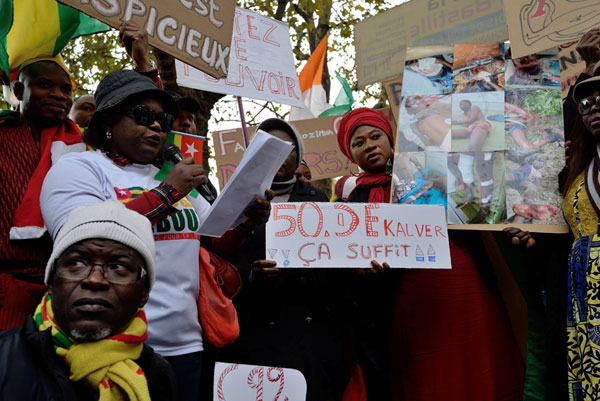
On the afternoon of 5 August 2024, Sheikh Hasina boarded a military helicopter and fled Dhaka as hundreds of thousands of students and workers converged on her residence. Fifteen years of increasingly authoritarian rule ended in a matter of hours, brought down by an uprising that had begun five weeks earlier as a protest over public-sector job quotas; and that the state had tried to drown in blood, killing an estimated 1,400 people before it fell. Thirteen months later, in September 2025, a ban on social media platforms tipped Kathmandu into revolt; within two days, at least seventy-seven protesters were dead and Prime Minister K.P. Sharma Oli was gone, his party headquarters in flames. Weeks after that, young Malagasy who had taken to the streets over power cuts and water shortages watched Andry Rajoelina, a president who, it emerged, held the citizenship of the former colonial power, leave Antananarivo aboard a French military aircraft. Three years earlier, the Aragalaya had already given the region its template, when Sri Lankans occupied the presidential palace in Colombo and swam in Gotabaya Rajapaksa’s pool while he fled the country his family had treated as an estate.
Add the near-misses and the sieges: the storming of Kenya’s parliament in June 2024 over an IMF-scripted finance bill; the burning of regional assemblies in Indonesia after a police vehicle crushed a young motorcycle-taxi driver; the Discord-organised Gen Z 212 movement in Morocco demanding hospitals instead of World Cup stadiums; eighteen months of student blockades in Serbia that in June 2026 finally forced Aleksandar Vučić to announce his own resignation; the eruptions in Peru, the Philippines, Togo, Timor-Leste, Mongolia. Measured by the crude metric of governments felled or shaken, the youth revolts of 2022–2026 constitute the most successful wave of popular insurgency since decolonisation.
And yet in almost every case, someone else took the prize. In Dhaka, the February 2026 election delivered a two-thirds majority not to the students who had bled for the uprising but to the Bangladesh Nationalist Party, the oldest surviving machine of the very political order the July uprising had set out to bury, with an Islamist party as the main opposition and the students’ own party reduced to the margins. In Antananarivo, the colonel whose unit refused to fire on protesters is now consolidating a military regime, arresting the movement’s leaders and taking delivery of Russian weapons. In Kathmandu, the ballot box rewarded an anti-corruption party of engineers and television presenters. In Nairobi, the president the young tried to unseat remains in office, and the finance bill they forced him to withdraw has returned, clause by clause, in quieter legislation. The generation that proved it could empty the palace has, almost nowhere, managed to occupy it.
Let’s think about that gap between eruption and inheritance, without lapsing into either of the two registers that dominate commentary on Generation Z. The first celebrates: youth as the conscience of a fractured world, morally clear, digitally fluent, instinctively internationalist. The second dismisses: youth as impulsive, fragmented, oversensitive, incapable of sustained commitment. Both treat the generation as a moral character rather than a social location; both mistake a symptom for a cause. The real question is not whether this cohort is more radical or more shallow than its predecessors. It is why this generation, at this moment, has been forced into political visibility at all, and why the visibility it has won converts so poorly into power.
A Generation Summoned
To pose the question that way requires treating Gen Z as a socio-political category rather than a demographic one. Generational consciousness does not arise from shared birthdates; it is produced at the intersection of material conditions, institutional breakdown and historical impasse. A cohort becomes politically legible when it encounters the social order at the point where its contradictions can no longer be privately absorbed. The older sociology of generations was careful to distinguish between a generational location, a shared exposure to historical conditions, and a generational unit: a fraction of that cohort that becomes politically constituted, organised around a reading of its situation. Much of the confusion in contemporary commentary comes from collapsing the two. “Gen Z” names a location, not a subject. Whether subjects form within it, and of what kind, is precisely what is being fought over in Dhaka, Belgrade and Antananarivo.
The location itself can be specified. Four conditions define it, unevenly distributed but globally recognisable. The first is permanent economic instability. Unlike earlier generations whose radicalisation unfolded inside expanding or at least reformable economies, this cohort has entered adulthood in a capitalism where crisis is no longer the exception but the organising principle. Wages stagnate while productivity rises; housing has been converted from a social good into a speculative asset; education, once sold as a ladder, now functions as a debt-collection mechanism that chains future labour to present extraction. In the Global North this appears as the casualisation of once-secure work; in the South, as mass informality, vanishing formal employment and compulsory migration. Nepal exported more than a tenth of its people to labour markets abroad before its uprising; the September revolt was, among other things, a revolt of the families of exported labour against the political class that lives off their remittances.
The second is climate breakdown as lived condition rather than future risk; extreme heat, failing harvests, water rationing, displacement. It is worth insisting that the Malagasy uprising began not over an abstraction called corruption but over blackouts and dry taps: the infrastructure of social reproduction giving way.
The third is pandemic socialisation. COVID-19 did not merely interrupt this generation’s education and employment; it functioned as a pedagogical event, exposing with brutal clarity whose lives were considered expendable and whose labour was deemed “essential” yet disposable. It stripped away lingering illusions about state capacity at exactly the moment this cohort was forming its picture of the world.
The fourth is formation inside privately owned digital infrastructure; a condition to which we return, because it is routinely misdescribed as a matter of “media habits” when it is in fact a class relation.
To these must be added a fifth, too often treated as a separate story: the crisis of social reproduction falls first on women, and young women have been at the front of nearly every eruption of the period; from the feminist tides of Latin America to the schoolgirls facing gendarmes in Antananarivo. Where commentators saw a “youth” revolt, they were often looking at a revolt organised through the labour and rage of young women, whose unpaid work absorbs every withdrawal of the state.
Together these conditions explain the central paradox of the period: a generation summoned into politics by the exhaustion of the system it inherited, rather than one that announced itself. For decades, neo-liberal governance thrived on depoliticisation – fragmenting collective identities, privatising risk, presenting insecurity as personal failure. The re-emergence of youth as a visible political actor marks the limit of that project. When precarity becomes permanent and the future collapses into managed survival, the generational experience itself becomes political, whether or not anyone intends it.
1968 in Reverse
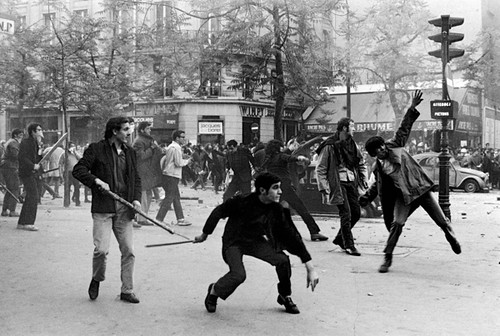
Any account of these revolts invites comparison with the great student rebellions of the late 1960s, and the comparison is worth making, not to measure authenticity, but to clarify how the structure of capitalism has reshaped what youth revolt can be.
The revolts of 1968 erupted inside a specific configuration: Fordist production, relatively stable employment, expanding welfare states, universities growing fast enough to draw in new social layers whose expectations outpaced the system’s capacity to absorb them. Crucially, that generation confronted capitalism not as a system in terminal crisis but as one defined by the contradiction between abundance and hierarchy, productivity and alienation, formal democracy and imperial war. Its radicalism was fuelled by that tension. Students could imagine themselves as detonators of a broader transformation because the broader forces existed: May 1968 in France mattered not because students paralysed the country but because their revolt coincided with the largest general strike in European history. And the ideological air they breathed was thick with living socialist and communist traditions. Even those who rebelled against the official parties did so in dialogue with them; spontaneity defined itself against structure because structure was there to be defied.
Today’s revolts unfold in a landscape that is almost the photographic negative. The capitalism this generation confronts can no longer stabilise itself through growth or absorb dissent through reform. The working class appears not as a concentrated social force but as a fragmented condition – informal, platform-mediated, migratory, chronically underemployed. The mass parties and unions that once transmitted theory, memory and strategy across generations have been hollowed out or converted into instruments of management. The boundary between student and worker, still meaningful in 1968, has collapsed in lived experience: students are already workers, juggling lectures with gig shifts, anticipating precarity not as a phase but as a destination.
This reversal explains an apparent puzzle. Governments fall more easily now than they did then – de Gaulle survived 1968; Hasina, Rajapaksa, Oli and Rajoelina did not survive their own. But the fall changes less. The regimes of the postwar boom had something to concede, and conceding was how they survived: wages, welfare, university reform. The regimes of the permanent crisis have nothing left to concede except personnel. So personnel is what they concede. A president flees; the debt remains. A cabinet resigns; the IMF programme continues. The state sheds its skin and keeps its spine. The revolts of the 1960s faced a system strong enough to reform itself; the revolts of the 2020s face one weak enough to collapse locally but structured enough to reconstitute itself immediately, usually with the insurgents locked outside.
The comparison should therefore produce neither melancholy nor disdain. The radicalism of 1968 was not the fruit of superior consciousness; it was enabled by a configuration in which capitalism still had room to manoeuvre and therefore something to lose. Gen Z’s revolt emerges from a world in which that room has largely disappeared. Its intensity reflects not the imminence of victory but the depth of the impasse – and the ease with which it topples governments reflects not the strength of the movement but the hollowness of what it topples.
The Ledger of Eruptions
The period 2022–2026 now offers something the debate about youth politics long lacked: a ledger of completed sequences. Uprisings have run their course; interims have given way to elections or consolidations; the harvests have been gathered. Reading the ledger case by case is more instructive than any general theory, because the cases diverge , and the divergence has a pattern.
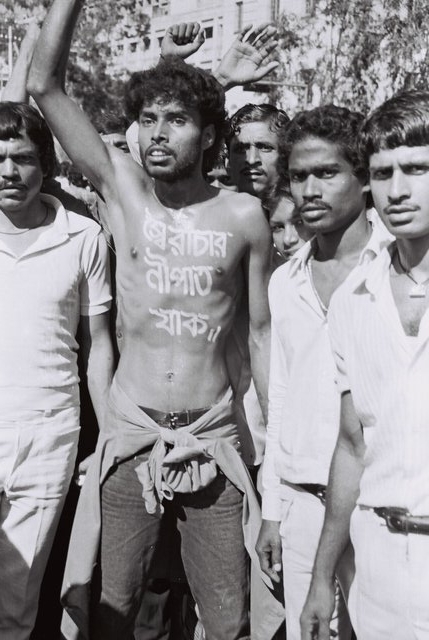
Bangladesh: the old order inherits. The July uprising of 2024 was the most massive of the wave and paid the highest price. It began over job quotas – that is, over the distribution of scarce formal employment in an economy of garment factories and labour export – and escalated, under murderous repression, into a revolt against the regime as such. That students led it surprised no one in Dhaka: in Bangladesh the student movement is the oldest organised force of popular politics, with a genealogy running from the language martyrs of 1952 through the mass upsurge of 1969 to the fall of Ershad in 1990 – a repertoire of regime-toppling that the July uprising consciously inherited and renewed. When Hasina fled, the movement’s advisers entered an interim government under Muhammad Yunus; a National Citizen Party was formed out of the uprising’s leadership; a “July Charter” was drafted and put to referendum. Yet when the vote finally came in February 2026, the Bangladesh Nationalist Party, out of power for two decades, its machinery intact through every year of exile, took over two hundred of the three hundred seats, with Jamaat-e-Islami emerging as the main opposition. The students who had toppled the regime could not convert eighteen months of moral authority into an electoral machine, because a machine is precisely what cannot be improvised: it is accumulated, ward by ward, over decades. The uprising cleared the field; the oldest surviving organisations walked onto it. Meanwhile, in the months after Hasina fell, waves of garment-worker strikes swept the industrial belts; a reminder that the class question the quota movement had posed in displaced form remained open, and remains open under the new government.
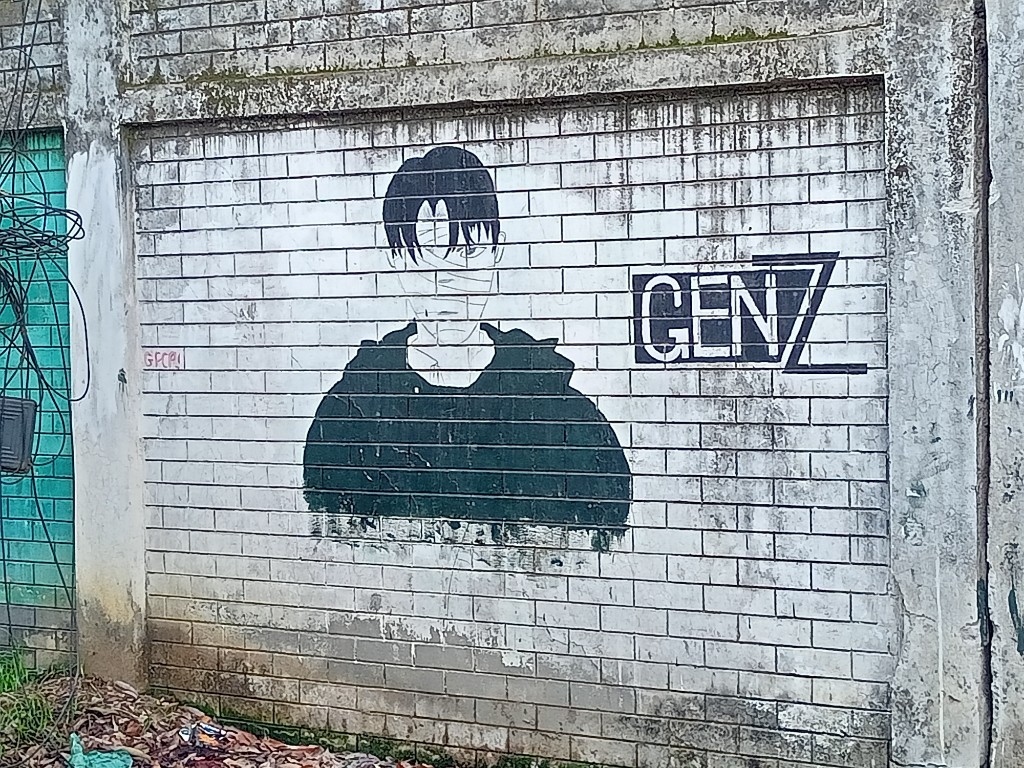
Madagascar: the barracks inherit. The Malagasy sequence is the darkest and most clarifying. It is also the one with the longest national memory: it was a student uprising, the rotaka of May 1972, that brought down the neocolonial First Republic, a precedent every Malagasy government since has had reason to fear. A movement launched from Facebook and Instagram over blackouts and water shortages grew within weeks into a national revolt; security forces killed at least twenty-two people; and the turning point came when Colonel Michael Randrianirina’s CAPSAT unit refused orders to fire and sided with the crowds. The protesters greeted the defection as deliverance; “free at last,” one organiser recalled shouting. Within days Rajoelina was gone, the constitutional court had handed power to the colonel, and the vocabulary of the uprising was being spoken from the presidential palace. Within months the promised inclusive transition had become six hundred unilateral appointments, a finance act passed over the movement’s objections, the arrest of Gen Z leaders on conspiracy charges, Russian weapons deliveries and Africa Corps trainers guarding the new president as he prepared his own candidacy. Analysts coined the word “coupvolution,” but the sequence has older names: Egypt 2013, Sudan 2019. Where a revolt has no organised force of its own, the best-organised force in the country – which is almost always the army – inherits it. The military did not have to steal the revolution; it filled a vacancy the revolution could not fill.
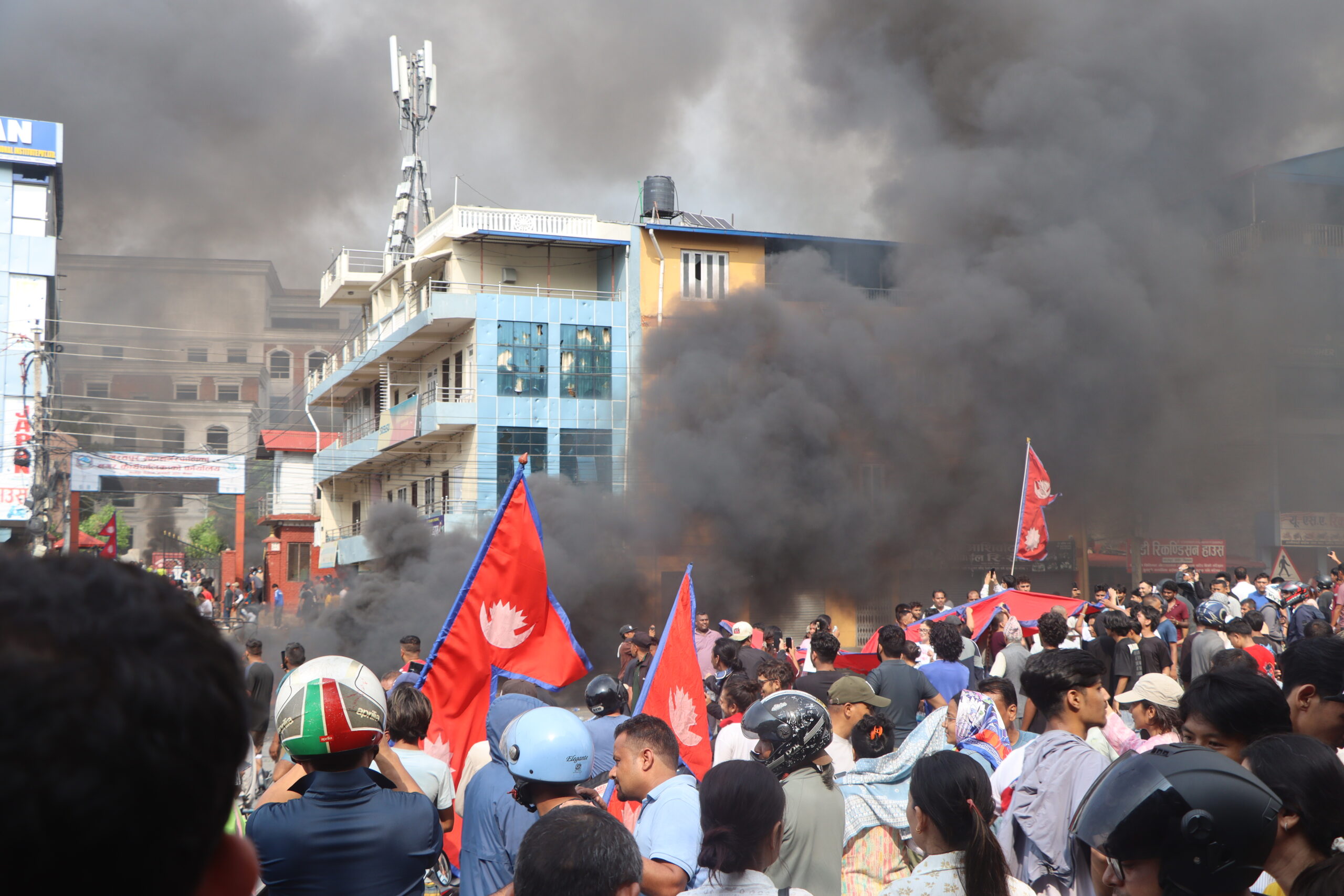
Nepal: the anti-political centre inherits. Kathmandu’s September 2025 uprising compressed the whole grammar of the period into two days: a social-media ban as trigger, Discord servers as assembly halls, parliament in flames, seventy-seven dead, a prime minister gone. It was the third time in four decades that the Nepali street had redrawn the state – after the Jana Andolan of 1990, which ended the Panchayat autocracy, and the second of 2006, which ended the monarchy itself – but the first conducted without the parties and unions that had led the earlier two. What followed was without precedent, an interim prime minister, the former chief justice Sushila Karki, selected in part through an online poll of the movement itself, an experiment in digital plebiscite that fascinated the world’s press. But when the election came in March 2026, the landslide went to the Rastriya Swatantra Party of Balen Shah, the rapper turned Kathmandu mayor: 182 of 275 seats, nearly half the proportional vote, the first single-party majority in the history of Nepal’s federal constitution, with the old communist parties reduced to rumps and Oli losing his own constituency. This was a genuine electoral translation of the uprising, the one case in the ledger where the ballot box registered the squares almost directly. But it registered them in a particular key: anti-corruption, technocratic competence, generational replacement of personnel. The RSP’s programme promises clean government and business-friendly reform inside the same remittance economy, the same debt structure, the same subordination to larger neighbours. The uprising’s class content – the revolt of exported labour’s children – has been translated into a promise of better management. Whether that translation satisfies or merely defers is the next chapter of Nepali politics.
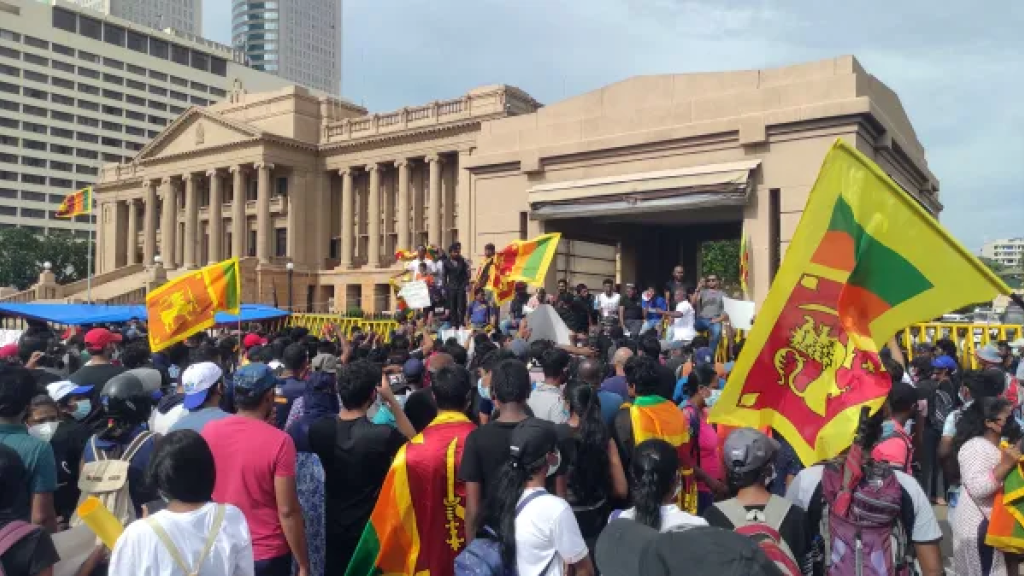
Sri Lanka: an organised left inherits, because it already existed. The Aragalaya of 2022 is the exception that proves the rule, and it proves it twice. First negatively: when Gotabaya Rajapaksa fled, power passed not to the occupied squares but to Ranil Wickremesinghe, a six-time prime minister with a single seat in parliament, the system’s own fixer, who promptly cleared the encampments and signed the IMF’s seventeenth programme for the country. The eruption, having no vehicle, was dispossessed within days. But then positively: two years later, the National People’s Power alliance built around the JVP – a party with half a century of cadre, catastrophe and reconstruction behind it – won the presidency and then a parliamentary landslide, carried by an electorate whose common sense the Aragalaya had transformed. The squares did not take power, but they made it possible for an organisation that predated them to take power constitutionally. Despite our critique of NPP in office, and its continuation of the IMF framework, invites a hard one, the structural lesson stands: the only case in the ledger where anything resembling a left inherited an uprising is the case where a left with decades of accumulated organisation was standing by when the eruption came. Inheritance went to the prepared.
Kenya: containment, and the purest debt revolt. Nairobi’s June 2024 uprising deserves a special place in the ledger because it named the enemy with a precision most movements never achieve. The Finance Bill the young Kenyans rose against was not a metaphor: it was the domestic instrument of an IMF programme, a schedule of taxes on bread, sanitary pads and mobile money designed to service external creditors. The movement was leaderless, tribe-less, a genuine novelty in Kenyan politics, organised through X and TikTok, and briefly triumphant: after protesters breached parliament on 25 June and police killed dozens across the weeks of revolt, President Ruto withdrew the bill. Then came the demonstration of what containment now means. The withdrawn taxes returned piecemeal in later legislation; the movement’s visible figures began disappearing into unmarked cars, dozens abducted by plainclothes units; and the anniversary protests of June and July 2025 – held, pointedly, on Saba Saba, the date of the 1990 revolt that forced multiparty democracy from the Moi dictatorship – were met with live fire that killed dozens more. Ruto remains in office. Kenya identified the enemy more precisely than any movement of the period, and was outlasted more precisely in turn, because you can storm the parliament that passes a finance bill, but not the debt that dictates it.
Indonesia: the convergence glimpsed. The Indonesian August of 2025 began with the obscenity of parliamentary housing allowances worth many multiples of a Jakarta wage, and became a mass movement the night a police armoured vehicle ran over Affan Kurniawan, a twenty-one-year-old ojol, a motorcycle-taxi driver for a delivery platform. What followed was the clearest image the period has produced of the recomposed working class in motion: thousands of green-jacketed platform drivers, the most visible fraction of informal labour, riding in convoy alongside the students, their grief and the students’ rage momentarily fused. The state’s response combined concessions – some allowances scrapped, apologies offered – with force and mass arrest: the response of a ruling class that remembers 1998, when students brought down Suharto, and calibrates accordingly. The convergence did not congeal into organisation; the platforms that employ the drivers algorithmically discipline exactly the coordination the moment required. But for a week, the class that is usually described as ‘unorganisable’ organised itself around a martyr, and every ruling class in Southeast Asia took note.
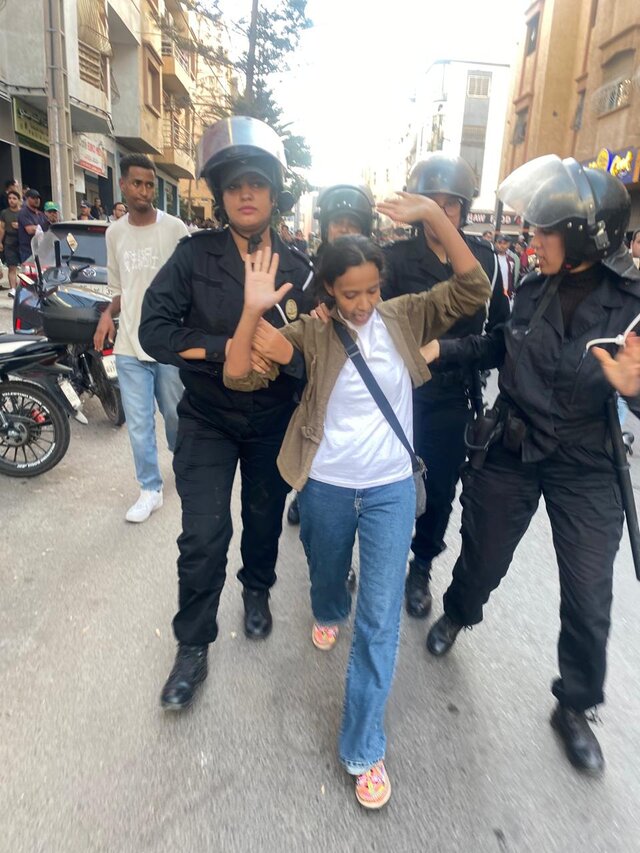
Morocco: the monarchy absorbs. The Moroccan sequence adds a variety of containment the republics of the ledger cannot deploy. GenZ 212, named for the international dialling code, assembled on a Discord server that swelled past 200,000 members and voted nightly on its own actions, erupted in late September 2025 after eight women died following caesarean sections at a public hospital in Agadir, a short drive from a stadium being lavishly renovated for the 2030 World Cup. The slogan that followed, “stadiums are here, but where are the hospitals?”, was the period’s most concentrated audit of accumulation by spectacle, and its trigger, the deaths of women in childbirth, made explicit what most of the eruptions carried implicitly: that the deepest front of the crisis runs through social reproduction. The state’s response combined the familiar repertoire – three killed, more than 2,000 arrested including minors, over 1,400 prosecuted – with an instrument unavailable to Rajoelina or Oli: a throne standing above the government, able to absorb the revolt by sacrificing ministers, announcing social budgets and receiving petitions addressed, deferentially, to the king himself. It is the same mechanism that carried the monarchy through 2011, and it worked again: the government was blamed, the palace was spared, the movement’s demands were translated into royal benevolence. Yet Morocco also produced one of the ledger’s most suggestive gestures: in mid-October, GenZ 212 suspended its own protests, announcing the pause as “a strategic step to strengthen organisation and coordination”, a movement discovering, in real time and in its own words, that the question is no longer how to erupt but how to endure.
Serbia: endurance as organisation. Against the grain of the whole ledger stands Belgrade. When a renovated railway-station canopy collapsed in Novi Sad in November 2024, killing sixteen people, the students who took the streets refused both of the forms the period had made standard: the leaderless flash mobilisation and the charismatic front-man. Instead they built plenums: assemblies in blockaded faculties, with rotating spokespeople, decisions taken slowly, marches paced across months rather than days. The form has a genealogy. Belgrade’s students occupied their university in June 1968 too, denouncing the “red bourgeoisie” of the party-state and forcing Tito himself to answer them on television; the assembly as an organ of power descends from Yugoslav self-management, and had its most recent rehearsal in the Bosnian citizens’ plenums of 2014. Whether or not today’s students cite these ancestors, and their own politics is studiedly non-ideological, they mobilise inside a political culture that remembers assembly as a way of exercising power, not merely of expressing opinion. Memory, too, is a form of accumulation. The movement made the corruption of infrastructure contracts its wedge into the corruption of the state as such, forced the prime minister’s resignation within three months, absorbed tear-gas, terrorism charges and organised loyalist violence for a year and a half; and in June 2026, Vučić himself announced his resignation and early elections. It is the longest sustained protest campaign in Europe in a generation, and its duration is not a mystery: it is the direct product of organisational form. The plenum distributed the labour of mobilisation that elsewhere burns out a small core; the blockaded faculty gave the movement territory and rhythm; the refusal of celebrity denied the state a head to cut off. The limits are equally instructive. The movement’s demand horizon – elections, rule of law, accountability – remains within the constitutional frame, and Vučić has resigned the presidency while openly manoeuvring to return as prime minister; the fight over inheritance in Serbia is only beginning. But Belgrade has already falsified the claim that this generation is constitutionally incapable of duration. Given form, it endures.
The Global North: visibility without leverage. The Gaza solidarity encampments that spread across hundreds of campuses in 2024 belong in the same ledger, though their sequence ran differently. They confronted not a fragile state but the most heavily institutionalised environment in the ledger – universities integrated into debt, credentialing and security regimes – and the response was correspondingly administrative: more than three thousand arrests, suspensions, expulsions, the machinery of discipline replacing the machinery of negotiation – at Columbia, police entered the campus for the first time since the Vietnam-era occupations of 1968, an anniversary that measures exactly how the university’s tolerance for its own students has narrowed. Measured in divestment achieved, the encampments won little. Measured in ideological ground, they shifted more than any movement of the period: they broke a decades-old consensus in the imperial core about what could be said regarding Palestine, at the price of demonstrating exactly how little leverage moral clarity carries when it cannot touch accumulation. And behind them stands the earlier warning of Chile, where the estallido of 2019, the eruption that seemed most likely of all to become a refoundation, was routed into a constitutional convention whose draft was then defeated at referendum, in 2022 and again in 2023, leaving the neo-liberal constitution it rose against still standing. Eruption channelled into procedure, procedure into defeat.
One more Latin American thread belongs here, because it points in the opposite direction: the feminist tides. The movements against gender violence and for abortion rights that swept Argentina and the region were youth-heavy, assembly-based, and decisively, durable, accumulating through annual encounters, neighbourhood organisation and sustained campaigns until, in Argentina, the law itself changed. They are the period’s standing demonstration that movements rooted in the crisis of social reproduction, organised through patient assembly rather than episodic eruption, can win structural victories and survive backlash. It is no accident that the durability the youth revolts lack was achieved first by movements of women organising around reproduction; the sphere where the permanent crisis is lived daily and cannot be logged off from.
Read together, the ledger yields a brutal regularity. The uprisings vary enormously; the inheritances do not. Where the movement had no accumulated organisation, the prize went to whoever did: the oldest party (Dhaka), the army (Antananarivo), the system’s fixer (Colombo, at first), the anti-political centre (Kathmandu). Where accumulated organisation existed – the JVP’s half-century, the Serbian plenums’ eighteen months, the feminist assemblies’ decade – the movement kept a hand on its own harvest. The variable that decides the aftermath is not courage, clarity or scale. It is what existed before the square filled, and what was built while it was full.
The Question of Class, Retested
The original wager of this analysis was that Gen Z’s condition is a class condition experienced without class language; that class is everywhere as experience and almost nowhere as articulation, felt but not organised, lived but not theorised. The eruptions of the past two years have tested that claim, and largely confirmed it, while complicating it in one important way.
Confirmed, because in case after case the content of the revolt was unmistakably material even where its vocabulary was moral. “Corruption”, the master-word from Nairobi to Kathmandu to Belgrade – is the form in which a generation without class language names expropriation: the observation that the social surplus is being siphoned upward, that taxes fund creditors and capitalists rather than hospitals, that the children of the political class study abroad on the remittances of everyone else’s children. The Kenyan movement raged against a finance bill, which is to say against debt service. The Nepali movement raged against “nepo kids,” which is to say against the private appropriation of a remittance economy. The Malagasy movement raged against blackouts, which is to say against the collapse of the infrastructure of social reproduction. The Moroccan movement counted stadiums against hospitals, which is to say it audited accumulation by spectacle. In every case the critique of corruption is a displaced political economy’ accurate in its instinct, disarmed in its form, because “corruption” implies that the system would work if only cleaner men ran it. That is precisely the promise on which a Balen Shah rises, and the ceiling against which his voters will eventually strike their heads.
Complicated, because the period also produced real, if fleeting, convergences between youth revolt and the recomposed working class; the convergences the earlier analysis said were structurally blocked. The ojol convoys of Jakarta; the informal transport workers and street vendors who fed and shielded the Nairobi protests; the garment strike waves that followed the fall of Dhaka; the trade unions that joined the later phases of the Aragalaya and the Serbian blockades. The boundary between student and worker has collapsed in lived experience, and in these moments it briefly collapsed in political practice too. What did not happen, anywhere, was the conversion of convergence into common organisation. The gig platforms atomise; the informal economy disperses; the unions that survive are hollowed or defensive. The recomposed class met itself in the streets and had nowhere to keep meeting. That, and not any deficiency of consciousness, is the strategic problem of the period: not to teach this generation that it is a class, which its instincts already know, but to build the mediations through which a class scattered across platforms, borders and informal labour can act as one – mediations that do not yet exist at scale.
The Platform Is Not a Commons
One of those missing mediations hides in plain sight, misdescribed as a tool. Every account of these movements dwells on their digital fluency: the Discord servers of GenZ 212 and the Nepali uprising, the TikTok pedagogy of the Kenyan revolt, the hashtag internationalism that let a Malagasy organiser say he knew his moment had come when he watched Kathmandu burn. All of this is real. But to describe platforms as the movements’ infrastructure is to repeat, in digital form, the oldest error of agrarian struggle: mistaking the landlord’s field for a commons because one is allowed to assemble on it.
The platforms on which this generation’s political life is conducted are not neutral terrain. They are enclosures – privately owned, rent-extracting, surveilled by design – and their owners are not bystanders to the class conflicts staged upon them but parties to those conflicts, integrated into the same circuits of capital the movements confront. The attention that movements generate is harvested as revenue; the coordination they attempt is legible to every security service with a subpoena or a purchase order; the amplification they enjoy is an algorithmic grant, revocable without notice. The Nepali state understood this better than most commentators: it triggered an insurrection by attempting to ban the platforms, an act the young correctly read as the confiscation of their assembly hall. But the deeper lesson cuts the other way. An assembly hall that can be confiscated by the state or reformatted by its owner was never the movement’s own. The same architecture that lets a revolt scale in hours lets it be mapped in real time, starved of reach at the flip of a ranking, and, as the Kenyan abductions demonstrated, mined for target lists afterwards. Digital-native mobilisation is thus not simply fast politics; it is politics conducted on expropriated ground, paying rent in data to a fraction of capital that will always, in the last instance, side with order. Any strategy for durable organisation that does not include building infrastructure the movement actually owns – federated, encrypted, boring, unprofitable – is a strategy for assembling in perpetuity on someone else’s land.
Repression, Capture, Absorption
If these movements are marked by intensity rather than endurance, it is not because this generation lacks stamina. It is because the political environment has become expert at containing dissent before it accumulates, and the past two years have displayed the full repertoire.
Repression has become pre-emptive and increasingly extrajudicial. The Kenyan abductions, activists taken by plain-clothes units, some returned broken, some not returned, mark the frontier: a state that no longer bothers to criminalise dissent through courts because disappearance is cheaper. Serbia charged student organisers with terrorism; Madagascar’s junta arrests the very Gen Z figures in whose name it claims to govern; Bangladesh’s uprising was met, before it won, with the largest state massacre in the country’s peacetime history. Surveillance is woven into the platforms themselves, so that the infrastructure of mobilisation doubles as the infrastructure of the manhunt.
Capture, the ledger shows, comes in three varieties. Military capture, where the armed forces adopt the uprising as legitimation for their own seizure – Antananarivo, following Cairo and Khartoum. Electoral capture by the old order, where parties that survived in the deep freeze of authoritarianism thaw out and collect the votes the uprising liberated – Dhaka. And technocratic capture, where the revolt’s anti-corruption vocabulary is translated into a programme of better management under unchanged social relations – Kathmandu, and before it a hundred municipal experiments. Each variety works on the same vacancy: an eruption that has produced legitimacy without producing an organisation capable of holding it.
Absorption, finally, remains the softest and most continuous mechanism. NGOs, foundations and liberal institutions convert insurgent energy into projects, campaigns and careers; radical language is rebranded as inclusion and resilience; the movement’s most capable organisers are hired, one by one, into the administration of the grievances they once mobilised. Electoral cycles periodically summon youth anger and return it, lightly used. And beneath all of it runs exhaustion – burnout not as psychological failing but as political condition, the predictable result of asking a small unorganised core to sustain, on donated time and rented platforms, a confrontation with states and creditors organised on a planetary scale. The system has learned to outlast outrage, wait out occupations, professionalise dissent and criminalise persistence. What appears as activist fatigue is the ledger entry of a prolonged asymmetry between mobilisation and power.
From Messenger to Subject
Earlier, it was argued that Gen Z is not the subject of history but its messenger; that its eruptions signal the exhaustion of the old mechanisms of consent without themselves constituting the force that will replace them. The two years since have delivered the message with a violence no one predicted: five governments down, several more besieged, the political map of South Asia, the Balkans and the Indian Ocean redrawn by people too young to remember the Cold War. The messenger, it turns out, can burn down the post office. What the messenger still cannot do is dictate the reply.
But the ledger also forbids the fatalism that conclusion might invite, because it contains its own counter-cases, and they converge on a single variable. Sri Lanka shows that an uprising can put an organised left in power, where the left spent fifty years building before the uprising came. Serbia shows that a youth movement can sustain confrontation for eighteen months and force an autocrat’s resignation, where it invented assembly forms that distribute labour, hold territory and refuse decapitation. The feminist movements of Latin America show that struggles rooted in social reproduction can accumulate across a decade and change law and common sense alike. In every case the lesson is the same, and it is the oldest lesson in the workers’ movement, returned in new conditions: spontaneity poses the question of power; only organisation can answer it. The eruptions have done their work. They have shattered the illusion that the present order is stable or legitimate, dragged debt, climate, war and expropriation back into the realm of political choice, and demonstrated, five times over, that the palaces are emptier than they look. To ask them to do more than that, as eruptions, is to ask fire to build.
What must be built are mediations adequate to the class that actually exists: forms that can hold together the gig driver and the graduate, the garment worker and the coder, the migrant and the one who stayed; that own their own infrastructure instead of renting it from the enemy; that can pace struggle across years, as the plenums and the feminist assemblies have learned to; that treat elections as one terrain among several rather than the harvest itself; and that link the national uprisings to the international architecture of debt and empire that guarantees each national restoration. No generation can build this alone, and none is excused from it. The young have already done what messengers do – they have made the crisis undeniable and the interregnum visible. Whether the interregnum ends in inheritance or restoration will be decided by what is organised now, in the flat years between eruptions, when the cameras are gone and the platforms have moved on.
The ledger, meanwhile, is still being written, and its next entry may be the largest. As these lines are drafted, India, so far absent from the sequence, has produced its opening move: the Cockroach Janta Party, a satirical formation conjured out of nothing in the weeks after the Chief Justice of India likened unemployed youth to “cockroaches”; twenty million followers within a month, cockroach masks and dog-eared exam guides at Jantar Mantar, an encampment demanding the education minister’s resignation over leaked entrance examinations. Every element of the period’s grammar is already present: the elite insult reclaimed as an identity, the platform scale that outstrips every established party, and the trigger located, as in Bangladesh, at the gates of scarce formal employment, where a generation’s years of unpaid preparation can be annulled by a single leaked paper. Whether the cockroaches remain a meme, are absorbed, or begin to accumulate is exactly the question this article has posed of every case before it. The largest generation of young people in history will now pose it on the hardest terrain, against the most formidably organised ruling party in the ledger
The uprisings have posed the question of power with a clarity no manifesto could match. The answer will not be generational, and it will not be spontaneous. It will be organised, or it will not come at all.
About the Author

Editorial Board Member of Alternative Viewpoint

Its a great read. I really liked the analysis of youth movements across the world and its historical legacy. I couldnt agree with his analysis of the “platform” which according to him is not a not neutral terrain. The other is about the inheritance of the movement. His understanding of the digital media as privately owned, rent-extracting, surveilled by design is correct but also conventional. I have studied the digital platform as a mode or protest very carefully during this movement and it is a site of mobilization, learning and articulation. There is no commons that is without survellance or ownership unless we beleive in liberal “public space” ideas. This is the commons of today’s politics.
Regarding its inheritance, this current movement had established leftwing students organizations such as AISA and SFI leading, alongside the CJP. Neha Bora, the gen sec of AISA was one of those on hunger strike, and she left for Bihar immidiately to continue the movement. I dont see this just an “eruption” this a movement.
The term “eruption” reminds me of Ranajit Guha’s identification of terms such “unrest” in the colonial lexicon as those which were elitist.